Southern Italy For Food & Wine Lovers

While everything south of Rome is generally considered southern Italy, exactly where ‘the south’ starts depends on who you ask.

Southern Italian Food Lovers’ Guide – Matera

The wife of a Calabrian once told me her husband “wasn’t southern”. Well of course not, there’s still all of Sicily further south than Calabria, right? Yet to a Florentine, Rome is in the south, and to a Milanese ‘the south’ may well start at the Lombardy-Emilia border! For me, southern Italy includes Lazio, Campania, Calabria, Basilicata, Puglia, Abruzzo, Molise and Sicily – some of my favourite Italian regions. I love ‘Il Mezzogiorno’ (as it’s called) for its laid-back hospitality, pasta at almost every meal, wealth of simple vegetable dishes, sun-ripened fruits, and generous use of robust olive oil, chilli and garlic – plus the way people take time to share the enjoyment of ‘le piccole cose’ (the little things) because – at the end of the day – that’s what makes life worth living. This Southern Italian food guide shares some of the places I love most in ‘my’ southern Italy.

Regiacorte - Hotel Sant'Angelo Restaurant Matera - Southern Italy Food Lovers' Guide

Where to Stay in Basilicata Hotel Sant’Angelo
Matera’s sassi districts are carved into the soft limestone of the Gravina ravine that forms part of the border between Puglia and Basilicata. They’re among the world’s oldest continuously inhabited places and the caves that housed families until the mid-1960s are now restaurants and hotels. At this cave hotel in the historic centre, you can sleep enveloped in the history of this UNESCO-listed town while enjoying all modern comforts.

Ristorante da Ciccio - Spaghetti Vongole Amalfi - Southern Italy Food Lovers' Guide

Where to Dine in Campania Ristorante da Ciccio 
The Amalfi Coast clings to the cliffs of the Campania coast, and its villages sit where lemon terraces and farms meet the sea. Perched on a cliff edge just north of Amalfi, this family-run trattoria is one of the best reasons to visit this section of Campania. The seafood comes daily from local fishermen, and the spaghetti with tiny vongole veraci cooked ‘al cartoccio’ and served tableside is a real treat!

U rùcchele at Agricola Capone Gravina in Puglia

Where to Lunch in Puglia Agricola Capone 
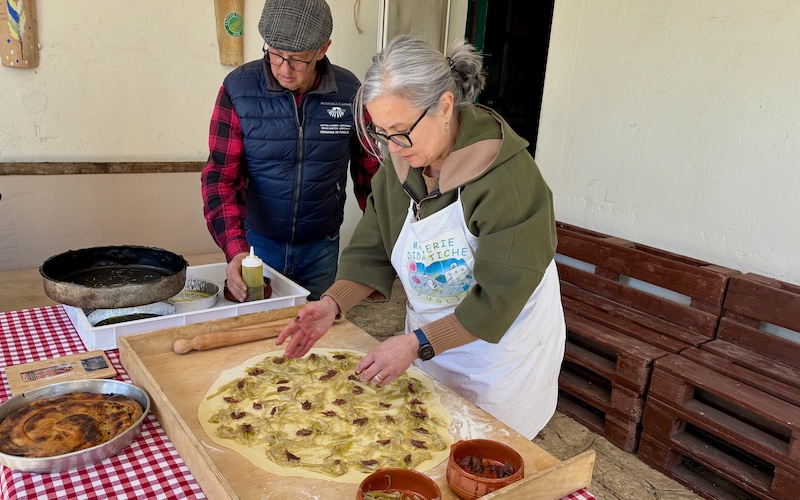
At this traditional masseria (fortified farmhouse) near Gravina in Puglia, Michele and Pina introduce guests to regional Lucanian cuisine and traditional crafts. Pina demonstrates u rùcchele – a local spiral pastry filled with anchovies, thick spring onions, and sultanas (a remnant of the Arabic influence here) – before Michele cooks it in the wood-fired oven. The food is hyper-local, the wine Michele’s own, and the hospitality genuine.

Carlo Noro Winery Lazio - Southern Italy Food Lovers' Guide

Where to Drink in Lazio Carlo Noro Winery 
At least by my definition, this unique winery about 50km from Rome qualifies as southern Italy. Carlo Noro is one of Europe’s leading exponents of biodynamics and his 5-hectare farm south-east of Rome is a hub of natural winemaking, biodynamic farming and training for those who want to know more about organic-dynamic agriculture. His wines are delicious too!

Catania Fish Market Sicily - Southern Italy Food Lovers' Guide

Where to Shop in Sicily Catania Fish Market
The Sicilian city of Catania is built from the lava of Mount Etna, the volcano that has destroyed it more than once. Nowhere shows this more than its fish market, La Pescheria, where the black lava walls hold the smell of the sea, lemon and herbs. Go early, when the catch is at its most abundant. The market continues in the surrounding streets with vegetables and other produce and it’s one of my favourite Italian food markets.

Updated 19 Oct 2026

Southern Italy Food & Wine Tour

Southern Italy FAQ

Why is southern Italy called Il Mezzogiorno?

Mezzogiorno is Italian for midday (literally half-day) and southern Italy is often referred to as ‘Il Mezzogiorno’. The name came about because, in the northern hemisphere, when you look toward the sun at midday you are looking directly south. Therefore ‘south’ and ‘midday’ became naturally linked in Italian, similar to the French use of Midi for southern France.

While the concept is ancient, the term became popularised during unification in 1861 specifically referring to the regions that made up the former Kingdom of the Two Sicilies: Campania, Calabria, Basilicata, Puglia, Abruzzo, Molise, Sicily and south-eastern Lazio.

What is the Gravina of Matera and Gravina in Puglia?

Gravina (gravine in the plural) is a spectacular network of deep limestone gorges carved through the Murge plateau, forming part of the border between the southern Italian regions of Puglia and Basilicata.

It’s a continuous geological ‘scar’ across the countryside created by ancient tectonic shifts and river erosion, given different names as it passes through different settlements.

It creates a breathtaking backdrop to two of southern Italy’s most historic towns:

  • Gravina di Puglia, where the gorge is spanned by the famous multi-tiered Ponte Acquedotto bridge that featured in the James Bond film ‘No Time to Die’; and
  • Matera, where the canyon walls become even more rugged, forming the steep cliffs into which ancient cave dwellings (Sassi di Matera) and rock churches are carved.
  • Since the Paleolithic era people have carved settlements into the soft limestone walls of the gravine, including homes, tombs, and frescoed churches.

Today, the Gravina stands as a striking mix of wild, prehistoric nature and ingenious ancient engineering, much of which has been repurposed for modern hotels, restaurants and shops.

What is u rùcchele?

U rùcchele (also spelled u rùccl or ruccolo) is a spiral-shaped stuffed flatbread from the town of Gravina di Puglia. The name is dialect for ‘the roll’, a reference to its coiled shape.
It’s also called ‘focaccia di San Giuseppe’ as it was originally made for the feast day of San Giuseppe (Saint Joseph). It’s not, however, a focaccia as most people know it, rather a yeasted pastry that’s rolled around a filling of anchovies, cooked local spring onions (sponsali) and raisins then coiled into a spiral before being baked, traditionally in a wood-fired oven.

U rùcchele is a staple of Puglian cucina povera and every family has its own variation on the classic recipe with some adding olives to cut through the sweet onion and dried grapes and others including capers and black pepper, while some with an even sweeter tooth add sugar to the dough. What locals say is non-negotiable are the thick spring onions called sponsali. They aren’t available outside Italy, and the best alternative is a combination of 2 parts leek (using white and pale green part only) to 1 part scallion/green onion (using both the white and green parts). Leeks provide the distinctive creaminess and sweetness of sponsali which almost ‘melt’ when cooked, while green onions provide the fresh allium aroma and flavour.

The Feast of San Giuseppe – 19 March (which is also Italian Father’s Day, Festa del Papà) – always falls during Lent so traditional rùcchele are meat-free; modern versions served at other times of the year however may include salsiccia secca, the local semi-dried sausage.


Why is Catania built from black stone?

Catania’s black stone is the basalt of Mount Etna which provided cheap, readily-available building material after the city was destroyed by an earthquake in 1693.

Mixed in with the abundant black lava stone, Baroque architects used white limestone from quarries around Syracuse in south-eastern Sicily to highlight Baroque columns, cornices, and window frames. UNESCO recognised the rebuilding in 2002 as part of the Late Baroque Towns of the Val di Noto.

Catania’s distinctive black stone has led to it being nicknamed La Città Nera (the black city).

What Other Travellers Say

Diane (Cremorne Point, NSW, Aus.)
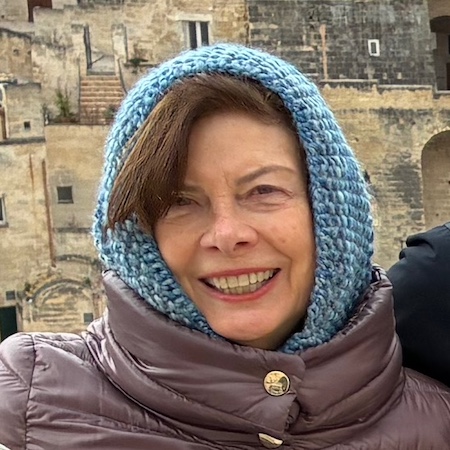
Relaxed, organised and well-paced – a wonderful bespoke small group tour, starting in Rome, then travelling down the Amalfi Coast to stay at a family estate where we were treated like old friends. This tour included some hidden gems too, notably on our way to Matera, a fascinating town built into the side of a mountain. We finished with Naples and Pompeii – with plenty of wine and more new tastes. Roberta is a specialist and very personable as she hosts and explains every detail of the food and wine experience.
Belinda (Balmain, NSW, Aus.)
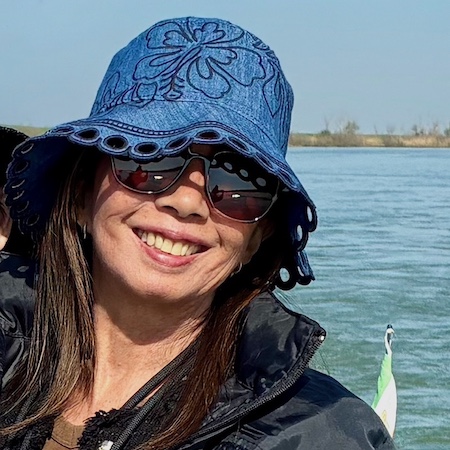
I’ve been on three of Roberta’s food and wine tours so far and each one has been an amazing well-organised experience. From historic Rome and Pompeii to the spectacular Amalfi Coast, remarkable Venice and the charming villages of Switzerland, each tour offers something special. Then there’s the food in fabulous places where you can truly eat like a local. I highly recommend Roberta’s tours to anyone who wants to discover inspired travel through great food, wine and company. I’m already looking forward to the next one!
Michael (Cremorne, NSW, Aus.)
Starting in Rome then spending time on the Amalfi Coast and further south before heading back to Rome for the last couple of days made for a nice ‘round trip’. Roberta’s choice of eateries was excellent with some very enjoyable meals – and a nice mix of other activities, like vineyard visits, between meals. Everything was very well organised: transport, nice hotels in close proximity to most activities, and a relaxed pace with enough time to follow your nose if that took your fancy. A very worthwhile tour and I’m already looking forward to another!
Di (Manly, NSW, Aus.)
I absolutely recommend Roberta’s Southern Italy tour! We’ve always been independent travellers so were a little apprehensive – by day 2 we knew we’d made a great decision! Roberta knows people and places far from the tourist trail so we visited wineries where we were always invited for lunch as well as wine-tasting, a family lemon grove high on the Amalfi Coast and a 3rd generation cheesemaker. We stayed in a stunning cave hotel in Matera and a gorgeous family hotel in Scala – and book-ended the tour with the vibrancy of Rome. So many highlights, such a brilliant experience. We will do another tour with Roberta.
Neville (St Ives, NSW, Aus.)
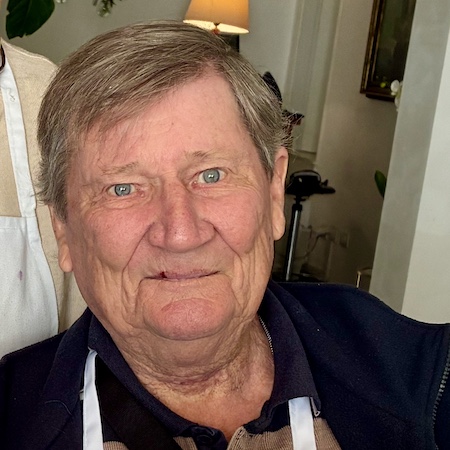
We had an absolutely fantastic time in Southern Italy and Rome with Roberta. Incredible food and wine experiences combined with authentic cultural encounters, fascinating history and breathtaking scenery. From the charming streets of Trastevere and the stunning Amalfi Coast to Matera, Pompeii and the hidden gems of Basilicata, every day brought something memorable. Meeting local winemakers, farmers, chefs and families who welcomed us with genuine warmth made this trip exceptional. Roberta's passion for Italy, attention to detail, warmth, knowledge and care for every guest made the experience unforgettable. We will gladly travel with Roberta again.
Subscribe To My Newsletter & Get A Free Online Italian Cooking Class (RRP $39)