I spent a week roving all over the World Heritage-listed city of Matera in 2009, discovering the local Lucanian cuisine. Matera was still off the tourist trail back then, though it’s been doubling as Jerusalem in films since the ‘60s.
That Aston Martin chase scene in the 2021 James Bond movie ‘No Time to Die’ was the final straw. Now Matera is definitely one of southern Italy’s most visited destinations and – movie locations aside – justifiably so. The good news is, many tourists come on whirlwind day trips from neighbouring Puglia, so by spending a few days here, especially out of season, you can still experience the magic of this unique place. Matera’s physical location is stunning, clinging to the side of a deep ravine with rows of rock churches opposite. With cave dwellings dating to at least the 10th millennium BC, it’s one of the world’s oldest settlements – and remained a troglodyte city until the mid-1960s, when the last of the cave houses carved into the soft limestone were forcibly evacuated. Today many of the original dwellings have been turned into hotels, restaurants and shops, clustered around the two historic sassi: north-facing Barisano and south-facing Caveoso. The term ‘sassi’ comes from Latin ‘saxum’, meaning hill or great stone, and the buildings of the sassi are piled on top of one another over about 12 levels. Matera is a great place to discover Basilicata’s distinctive Lucanian food and there’s a lot of history, culture and nature to explore too. This Matera food guide will tell you all you need to know. Andiamo!
Where to Stay & Dine in Matera Hotel Sant’Angelo
A night in this cave hotel is a bucket-list experience. It’s right in the heart of the historic centre where ancient churches and modern restaurants are all carved out of the soft ‘tufo’. Ask for a room with a view of the church of San Pietro Caveoso and the piazza named for it. The hotel’s cave restaurant, Regia Corte, is a great place to enjoy local produce and recipes with a modern twist, and the breakfast buffet is a great experience too.
Where to Lunch in Matera Trattoria I Due Sassi
This casual restaurant overlooking the ravine hasn’t changed a bit in 20+ years, despite Matera’s increased popularity. Cosimo still serves my all-time favourite pasta, orecchiette con cime di rapa (see video below), and plates of fried peperone crusco (the local dried mild red peppers), both of which I first tasted here. And his Nonna’s chilli relish makes everything even better!
Where to Drink in Matera Peperoncino
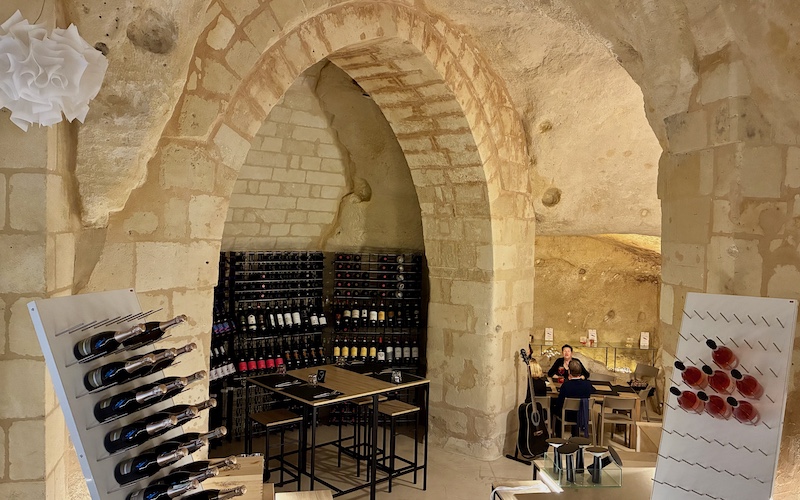
This wine bar – just off Piazza San Pietro Caveoso – was once a cave house and is now my favourite spot in Matera for an aperitivo, especially a Murgia Spritz of Campari and local sparkling rosato. The owner, Grazia, explained that the lower room where I like to sit would have been the animal stall – saying the family were obviously wealthy if they had a separate section for their animals as most slept literally beside their owners.
How to See Matera Ape Vito Tour
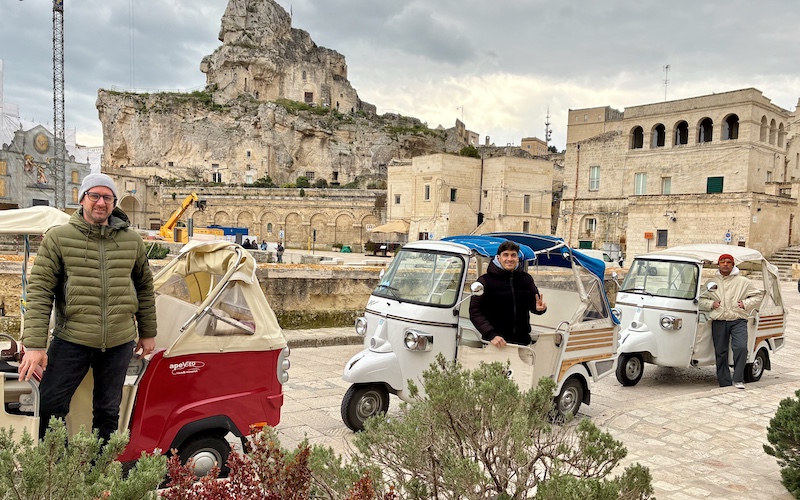
The best way to navigate the narrow cobbled streets of the sassi is in the 3-wheeled vehicles called ape. And the best possible tour guides are Vito and his mates who love sharing their parents’ and grandparents’ first-hand stories of life in the cave houses. They know their city’s history, the best spots for panoramic photos, and will take you to all the key sites. A tour with Vito is the best way to experience the sassi.
What to Visit in Matera Casa Grotta del Casalnuovo
Wandering randomly through the sassi is a great way to explore Matera too, especially in the early morning and late afternoon when the day-trippers aren’t around. On your strolls, be sure to visit this fascinating cave house museum. A real home of the sassi, furnished as it was in 1958 when the family living there left, it’s a fascinating glimpse into relatively recent daily life; the kitchen and equipment are especially interesting for food lovers.
Where to Walk in Matera Parco della Murgia Materana
This Regional Park opposite Matera contains the remnants of around 150 rock churches dating from the 8th to 13th centuries. I love to scramble down the rough path from Matera to the river, across the suspension bridge and up the other side of the ravine to see them and the outstanding view back to the sassi, which puts this unique location into context. You can also drive around to the park and start your exploration from there.
Updated 1 Sep 2026
Matera’s sassi were evacuated because their living conditions became a national scandal after World War II.
In his 1945 memoir Christ Stopped at Eboli, Carlo Levi – exiled to Basilicata by the Fascists in 1935–36 – described families crowded into single cave rooms alongside their animals, amid poverty and malaria.
In 1948 politician Palmiro Togliatti called the sassi a ‘national shame’. After Prime Minister Alcide De Gasperi visited in 1950, a special law passed in 1952 began moving around 15,000 people into new districts on the plateau above. The relocations took until 1965 to complete.
The sassi stood largely empty until a 1986 law funded their restoration, and today they’re alive again with homes, hotels and restaurants.

Matera’s resemblance to ancient Jerusalem has made it a favourite film set since Pier Paolo Pasolini shot ‘The Gospel According to St Matthew’ there in 1964.
Mel Gibson filmed ‘The Passion of the Christ’ in the sassi in 2004, and Matera has since appeared in ‘The Nativity Story’ (2006) and ‘Ben-Hur’ (2016).
Matera also played the Amazons’ island of Themyscira in ‘Wonder Woman’ (2017) and starred in the opening sequence of the James Bond film ‘No Time to Die’ (2021), from a motorbike leap beside the cathedral to the Aston Martin DB5 chase through its piazzas.
In 1993 UNESCO listed the Sassi and the Park of the Rupestrian Churches of Matera as an outstanding example of a cave settlement shaped to its landscape over thousands of years.
The listing helped transform Matera from what was once dubbed a ‘national shame’ to a symbol of renewal.
In 2019 it was named European Capital of Culture alongside Plovdiv in Bulgaria – the first city in southern Italy to hold the title.
Pane di Matera is the traditional bread of Matera, which is protected by an IGP appellation stating that it can only be made in the province of Matera.
It’s made in large, horn-shaped sourdough loaves from fine durum wheat semolina flour (semola rimacinata), salt and water and has a very thick, crunchy dark crust.
Until the sassi were evacuated, families prepared the dough at home, marked each loaf with their own distinctive carved wooden stamp and carried it to the communal oven to bake. Today examples of the stamps are in Matera’s National Archaeological Museum and often seen in other displays.
Matera’s rock churches are cave churches that were carved into the soft limestone between the 8th and 13th centuries by Benedictine and Byzantine monks. They’re also called rupestrian churches, from the Latin ‘rupes’, meaning rock or cliff.
Many are decorated with Byzantine and early medieval frescoes that have survived the centuries. One of the most remarkable is the Crypt of Original Sin, whose 8th–9th-century frescoes of the Creation and Adam and Eve – by an unknown artist called the ‘Painter of Flowers of Matera’ – have earned it the nickname ‘Sistine Chapel of rupestrian art’. Forgotten for centuries, it was rediscovered by a group of young locals in 1963.