Ciciones (pronounced chee-choh-nes and also spelled cicciones or cigiones) means ‘fat ones’ in Italian, which is such an appropriate name for this hand-rolled Sardinian pasta!
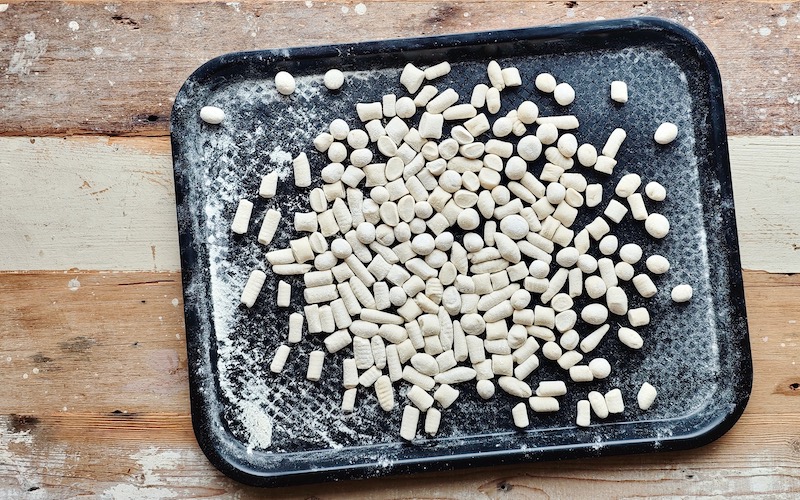
Ciciones can be simply cut into little fat chunks, rolled into chickpea-sized balls, or rolled down a gnocchi board (similar to cavatelli) to give them a grooved texture that the sauce clings to even better; the photo on this page shows all three.
I’ve seen the grooved version referred to as ciccioneddos (literally ‘little fat ones’ in Sardinian dialect), but this could just be a regional difference as Sardinia has many dialects.
Ciciones are made from the same simple pasta dough used to make lombrichi (see video below) and are perfect served with rich pork sausage ragù (alla Campidanese).
Learn more about how to make fresh pasta here – including tips on technique, equipment and ingredients – and see my page on how to cook pasta for perfect results every time.
To make enough ciciones to serve 6–8 as a starter, you’ll need:
Here’s how to make ciciones:
Here’s how to cook ciciones:
Share page on:
Ciciones are closely related to malloreddus – Sardinia’s best-known pasta – small ridged shells of semolina and water also sold as gnocchetti sardi.
The family goes by different names around the island: malloreddus in the Campidano plains of the south, and cigiones or ciccioneddos (cicioneddos) around Sassari in the north.
Ciciones are generally chunkier, somewhere between gnocchi and malloreddus.

Ciciones are often coloured with saffron, which gives the pasta a lovely golden colour.
Sardinia grows more than half of Italy’s saffron – mostly around the Medio Campidano in the south of the island, where it’s used in many traditional Sardinian dishes.