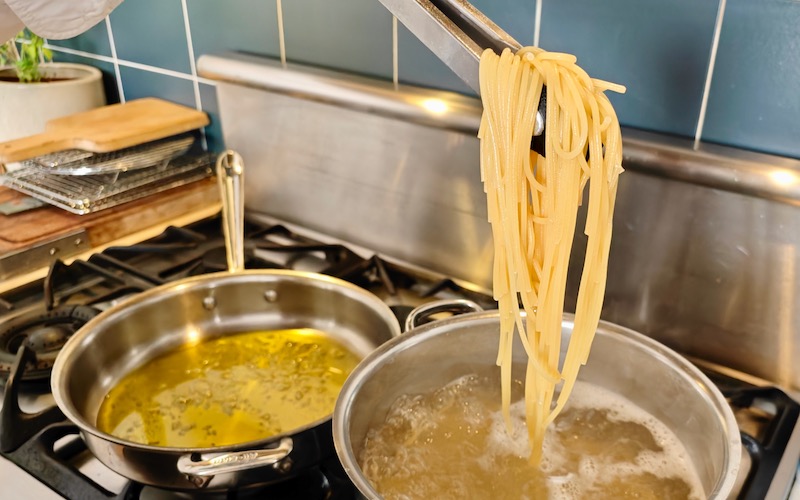
Pasta comes in two basic forms: dried and fresh. Both are good, but suitable for different sauces. Scroll down to find classic pasta sauce recipes for fresh and dried pasta.
Fresh pasta is typical of more affluent northern Italy where it usually contains egg. It’s most often served with rich meat ragùs and creamy or buttery sauces.
Dried pasta is typical of poorer southern Italy. It’s made from just flour and water and best dressed with olive oil, tomato and bolder Mediterranean flavours.
Fresh pasta made in the south generally contains just flour and water (occasionally a little olive oil) and is egg-free.
If you’re buying dried pasta, Italian is best. Under Italian law dried pasta sold in Italy can only be made with durum wheat flour. Durum, a particularly hard variety of wheat, is what gives dried pasta its signature ‘al dente’ bite when it’s cooked. Any other variety of wheat creates a dried pasta that’s too soft when cooked.
Fresh pasta is made with softer wheat varieties, so is never al dente – when it’s perfectly cooked it is tender.
The best dried pasta is extruded through bronze dies rather than the more commercial Teflon-coated ones. Bronze leaves a rougher, more porous surface for the sauce to cling to. This pasta is also called bronze-extruded or bronze-drawn pasta.
Here’s what you’ll need to cook perfectly al dente dried pasta and tender fresh pasta:
Follow these simple rules to cook pasta perfectly every time (scroll down for a step-by-step video):
Share page on:
Neither is better – they’re different products suited to different dishes. Dried pasta’s firm, durum-wheat bite holds up well to robust, oil-based sauces, while fresh egg pasta’s tender texture suits rich, creamy or meat-based sauces. It comes down to what you’re serving, not which is superior.
I buy Australian whenever I can, but when it comes to pasta, Italian is best! Dried pasta should be made from just water and durum wheat (a particularly hard variety of wheat); under Italian law no other wheat variety is allowed. Any other wheat creates a pasta that is too soft when cooked.
The best pasta is extruded through bronze dies rather than the more commercial Teflon-coated ones. This leaves a rougher, more porous texture to give the sauce a better surface to cling to; it’s also called bronze extruded pasta or bronze drawn pasta.
Artisanal means that the pasta is made in relatively small quantities and in a traditional way, for example bronze extruded. Some however are quite temperamental and go from hard to soft very quickly. I find a good commercial Italian dried pasta reliable for consistent results, and a little more forgiving if it’s in the pan for a minute too long.
Always add dried pasta to plenty of well-salted water that’s been brought to a rolling boil, ideally 1 litre of water and 10-15g of salt for every 100g of pasta (2 pints water and ⅓–½oz salt per 3½oz pasta), depending on how salty the sauce is. Use the packet timing as a guide, but check by biting a piece regularly during cooking, and cook it until it’s just al dente (literally ‘to the tooth’), meaning it has some resistance or bite to it. It will continue to cook in the heat of the sauce, so be brave and drain it just before you think it’s ready.

Always add fresh pasta to plenty of well-salted water that’s been brought to a rolling boil, ideally 1 litre of water and 10-15g of salt for every 100g of pasta (2 pints water and ⅓–½oz salt per 3½oz pasta), depending on how salty the sauce is. Fresh pasta cooks much quicker than dried pasta, due to its higher moisture content. It’s ready almost as soon as it floats. Use recipe timing as a guideline and check by biting a piece. Cook fresh pasta just until it’s tender – although the term ‘al dente’ doesn’t apply to fresh pasta, it should still have a pleasant firmness. It will continue to cook in the heat of the sauce, so be brave and drain it just before you think it’s ready.

The pasta cooking water contains starch from the pasta and tossing a little of this through the pasta and sauce gives a creamy consistency and helps bind the sauce and pasta together. Once pasta is cooked, act quickly. Drain it, reserving some of the cooking water, add pasta to the sauce and toss together so that every strand is coated.
The sauce is meant to dress the pasta and flavour it, not drown it. Non-Italians often serve pasta with a lot more sauce than would ever be served in Italy. If you sauce your pasta correctly, by tossing the freshly cooked pasta through the hot sauce, the pasta will absorb the sauce so that every bite has flavour and you’ll need less sauce.
Risottata, meaning ‘in the style of risotto’, is a traditional way of cooking pasta in the sauce rather than by boiling it first then adding it to the sauce at the end. Some recipes cook the dried pasta directly in the sauce, others par-boil it then finish it off in the sauce. Either way the pasta absorbs flavour from the sauce and is extra delicious.
‘Al dente’ literally translates as ‘to the tooth’, meaning the pasta has some bite, or resistance to the tooth. It is how Italians describe dried pasta (or risotto) that is perfectly cooked, meaning it is tender but still firm enough to have some resistance when bitten. The term only applies to dried pasta, not fresh which is cooked until tender.
‘Al dente’ refers to pasta that still has a firm resistance to the tooth when bitten. Dried pasta has this because it’s made from a particularly hard wheat flour (durum). Fresh pasta is made from softer wheat flour which doesn’t give the same firm texture, so it is said to be cooked until it’s tender. It should still have a pleasant firmness though.
Share page on: