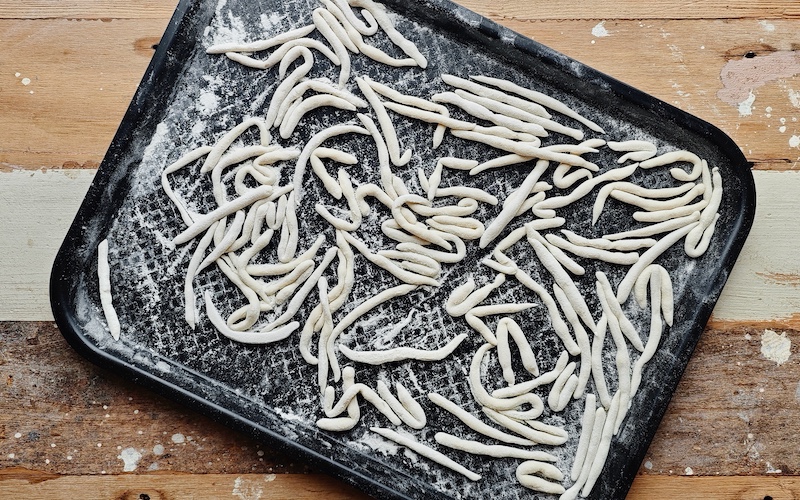
Lombrichi (pronounced: lom-bree-kee) are a traditional hand-rolled pasta from Sardinia. The name means ‘earthworms’ and the pasta dough for lombrichi is often coloured with squid ink so it looks even more worm-like.
This hand-rolled Sardinian pasta is made from the same dough used to make ciciones and is perfect served with a simple tomato sauce or classic pesto Genovese.
When Sardinian chef Giovanni Pilu taught me how to make lombrichi, he showed me that if the dough starts to slip on the bench rather than roll, you put a drop of water on your hands to stop it slipping.
Don’t confuse lombrichi with lombrichelli, a hand-rolled pasta from Lazio whose similar name also refers to its worm-like shape. Lombrichelli are much longer than lombrichi – like thick spaghetti.
Learn more about how to make fresh pasta here – including tips on technique, equipment and ingredients – and see my page on how to cook pasta for perfect results every time.
To make enough lombrichi to serve 6–8 as a starter, you’ll need:
Here’s how to make lombrichi:
Here’s how to cook lombrichi:
Share page on:
Lombrichi and pici are similar – they both belong to the family of rustic, egg-free pasta strands rolled by hand that are known by different names around Italy.
In Tuscany they’re pici, in Umbria umbricelli, and around Viterbo in Lazio they’re lombrichelli. Sardinian lombrichi are cut into shorter lengths, however, rather than left as long, thick strands.

Lombrichi are often coloured with squid ink, which turns the dough black and makes the pasta look even more like the earthworms it’s named after.
For the best result, freeze the pasta dough rather than the shaped lombrichi, then shape the pasta on the day you want to cook it. Frozen pasta dough can be thawed in the fridge overnight.