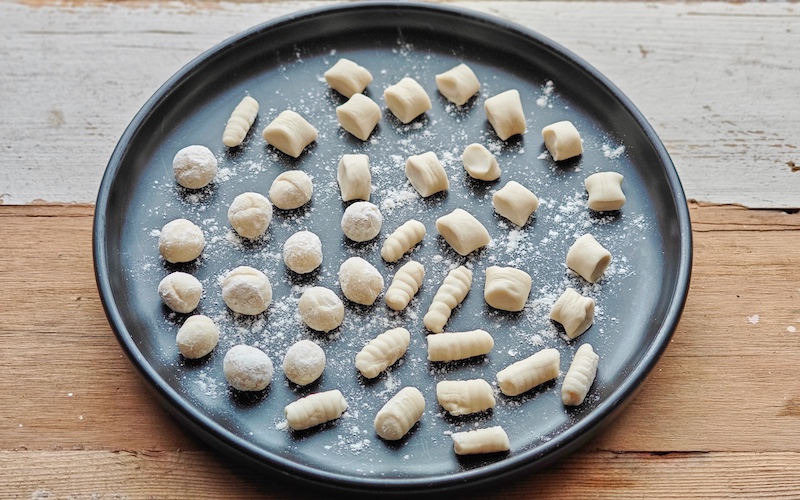
I learned to make this simple Sardinian pasta dough from my friend Giovanni Pilu when we were working on A Sardinian Cookbook together. It can be used to make several different hand-rolled rustic pasta shapes with a lovely chewy texture, including my favourites: ciciones and lombrichi (see video below). I use baker’s flour, a high-protein flour made from a harder wheat than the soft wheat flour used for the tender egg-rich pasta of northern Italy, but not as hard as the durum wheat flour used for my southern Italian pasta dough. Durum wheat flour (semola rimacinata di grano duro) can be substituted for the baker’s flour if that’s what you have; basically the harder the wheat, the firmer and chewier the pasta will be. Sardinian pasta dough keeps wrapped in plastic in the fridge for a day or 2 and freezes well too. This quantity will make pasta for 6–8 people.
Makes about 550g (1lb 3oz)
Share page on:
Baker’s flour (also called bread flour) is a high-protein flour that gives egg-free pasta dough strength and elasticity.
Milled from harder wheat, it typically contains around 12–13% protein, compared with about 10% for plain flour.
That extra protein builds a stronger gluten network, so a simple flour-and-water dough can be rolled into thin ropes by hand without tearing, then hold its shape in the pot and cook to a pleasantly chewy texture.

You can use plain flour instead of baker’s flour for egg-free pasta, but the pasta will be softer and less chewy, and the dough will be more likely to tear when rolled into thin ropes.
If baker’s flour is unavailable, for the best result use durum wheat flour (semola rimacinata di grano duro) – the hardest flour traditionally used for pasta – or a mixture of plain flour and durum wheat flour.