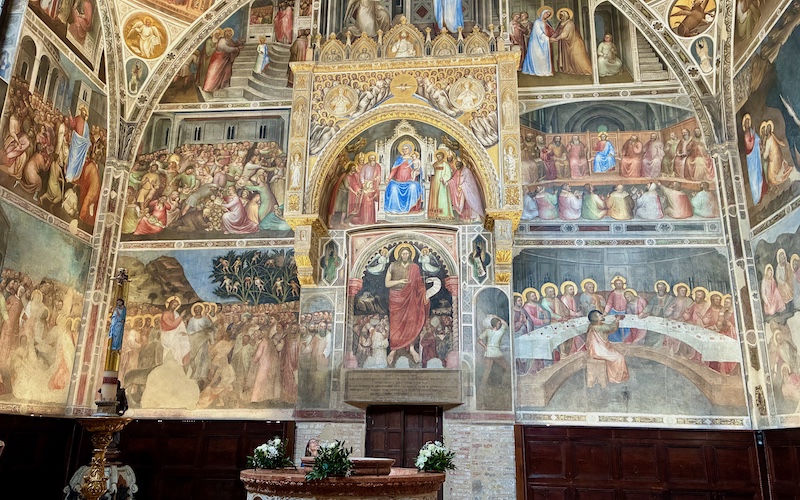
Padua, ‘the painted city’ (Padova Urbs Picta), is UNESCO-listed for its extraordinary 14th-century frescoes painted by Giotto and his followers.
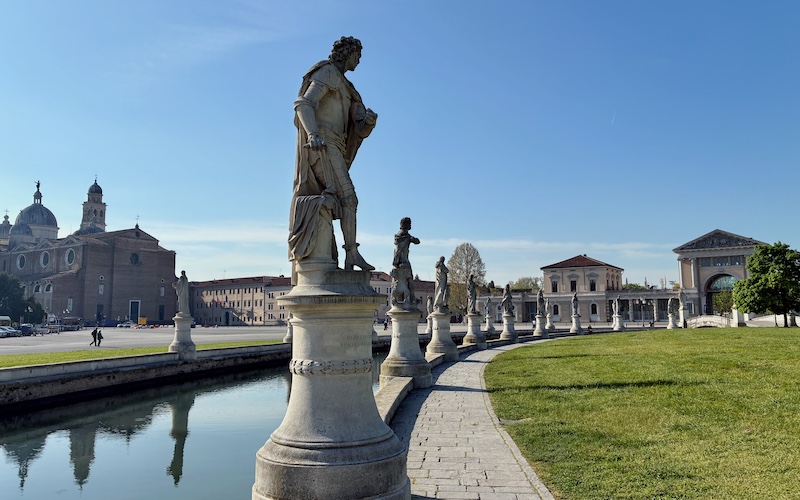
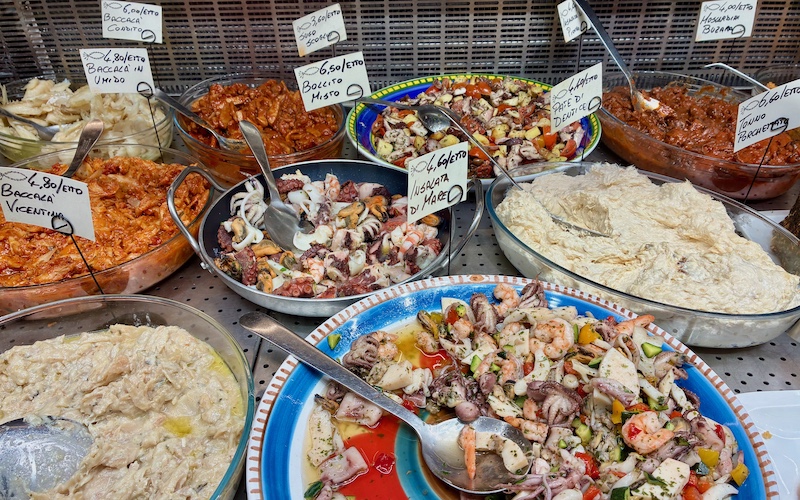
Called Padova in Italian, this lovely city punches well above its size for food and wine too – which is what brings me back again and again. It’s home to one of my favourite food markets in Italy, the Mercato Sotto il Salone beneath the frescoed grand upper hall of the Palazzo della Ragione with its 300+ panels portraying astrological entities and 14th-century life. Beyond frescoes and food, Padua has Italy’s largest piazza – Prato della Valle ringed with statues of notable Paduans (above) – and the country’s second oldest university where Galileo once taught. My Padua food guide brings together everything a food lover needs to know about staying, eating, drinking and exploring one of Italy’s most beautiful cities – that’s also only a 30-minute train ride to Venice with all its delicious bàcari and restaurants.
Where To Stay in Padua Massimago Wine Tower
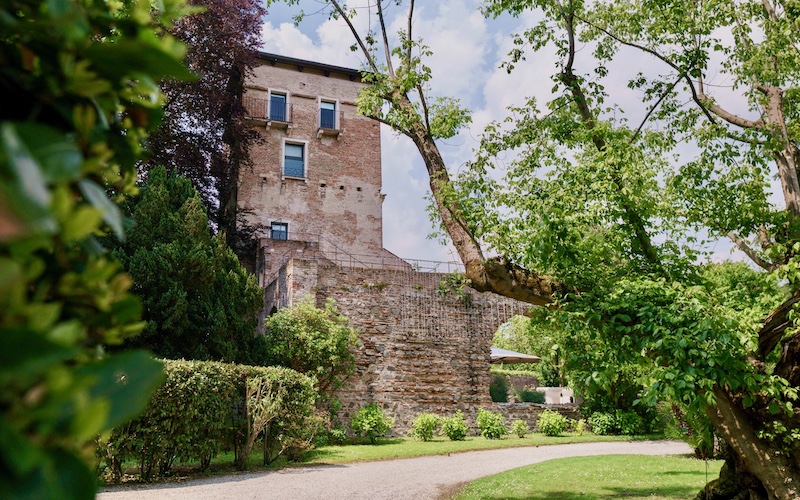
In the beautiful countryside around neighbouring Verona, I stay at Massimago wine estate in the heart of Valpolicella. In Padua I recommend Massimago’s suites in the 14th-century Soccorso Tower, once part of the city’s fortifications. The tower’s peaceful parkland setting on the river is a 20-minute stroll to the market, baptistery and all my favourite restaurants and sites in Padua’s centro storico.
Where To Eat (& Drink) in Padua Bacaro Padovano
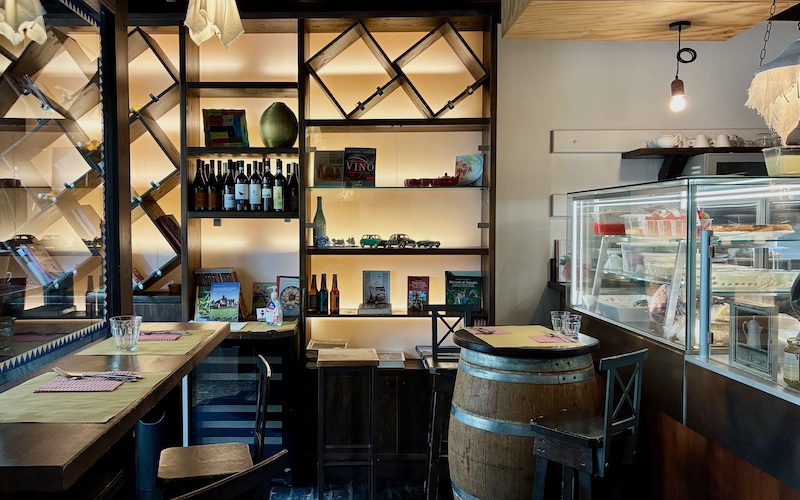
This casual bacaro is a versatile wine bar/osteria perfect for a snack or something more substantial. The short menu of traditional local cuisine and specialties from across the Veneto includes plenty of fresh seafood and baccalà (see video below) plus regional salumi and formaggi, and distinctive Paduan dishes rarely seen elsewhere – like gallina in saòr. The wine list is impressive and the staff friendly and knowledgeable.
Where To Have Coffee in Padua Caffè Pedrocchi
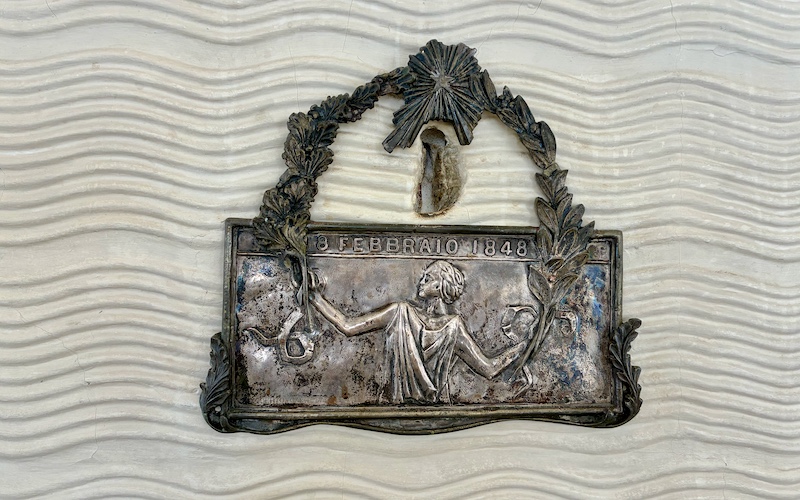
Padua’s oldest café, opened in 1831, was a hangout for students, writers, academics and other free-thinking patriots. It still bears a bullet hole from the students’ clash with soldiers during the 1848 uprising against Austrian rule. Known as ‘the café without doors’, it was famously open day and night. It’s a Paduan ritual to sip a signature caffè alla menta – layers of coffee, cream and mint syrup – standing at the counter or in one of the ornate salons.
Where To Shop in Padua Mercato Sotto il Salone
Padua’s medieval town hall and law courts, Palazzo della Ragione, sits between the Piazze delle Erbe and della Frutta, historically the city’s main food markets. Today, stalls on delle Erbe still brim with beautiful seasonal produce (including regional specialties you may not have seen before), and the palazzo’s ground floor is packed with shops selling pasta, seafood, salumi, cheese and baked goods, plus plenty of cicchetti and wine.
What To See in Padua Battistero del Duomo
If you only see one historic site in Padua, make it the baptistery. In the 1370s, Giusto de’ Menabuoi covered nearly the entire interior with brilliantly coloured, highly detailed biblical scenes. The audio-tour of them is one of the best tourist experiences I’ve ever had – an impressive video presentation in the antechamber sets the scene, then the tour continues in the baptistery using spotlighting of different sections to highlight the details.
Padua City Tour Caterina Tiso
There are tour guides, and there are people who bring their city to life. Caterina is passionate about creating an experience to remember. Walk through the historic centre with her, admire the vast Basilica di Sant’Antonio – its domes and bell towers echoing ancient ties with Byzantium – wander the Renaissance courtyard of Palazzo del Bo, browse the food market, and finish at the baptistery. You’ll fall in love with Padua, as I did.
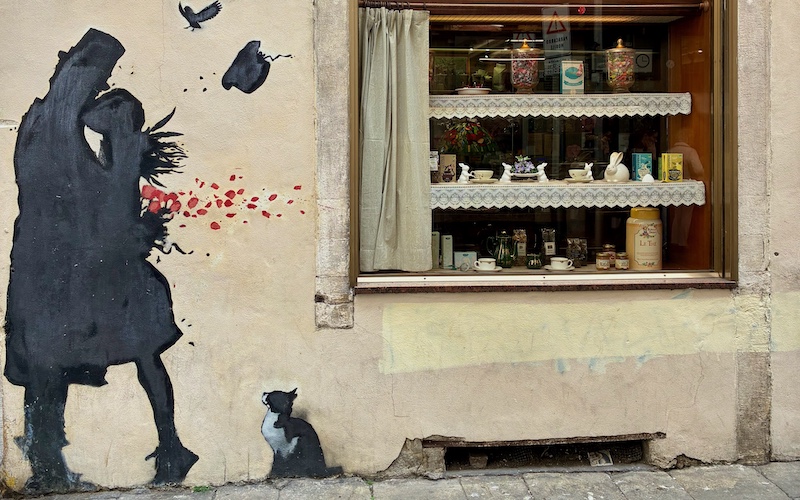
Above: ‘The Kiss’ by Kenny Random, on a shop wall near the mercato, is among the silhouette murals that epitomise Padua’s subtle, poetic street art.
Published 23 Jul 2026
Yes — Padua is the English name and Padova is the Italian name for the same city. You’ll see both used interchangeably by locals, on transport signage and in guidebooks, so don’t be thrown if your train ticket or hotel booking says Padova while everything you read in English calls it Padua.
Absolutely, Padua is an easy day trip from Venice. Though it’s really worth more than a rushed half-day — the frescoes, market and historic centre easily deserve at least an overnight visit if you can manage it. Its 30-minute train connection with Venice makes it an easy add-on for a taste of the Venetian mainland.
Alongside its Renaissance frescoes, Padua has a lively contemporary street art scene, with murals scattered through the historic centre and surrounding neighbourhoods. Look out for ‘The Kiss’ on a shop front near the market by Padovan artist Kenny Random (Andrea Coppo). This striking silhouette piece is typical of the city’s understated, poetic style.