While Verona is called ‘the city of lovers’ as the setting for Romeo and Juliet, there’s a lot more to see in this UNESCO World Heritage-listed city than Juliet’s alleged balcony (see FAQ below for more on that).
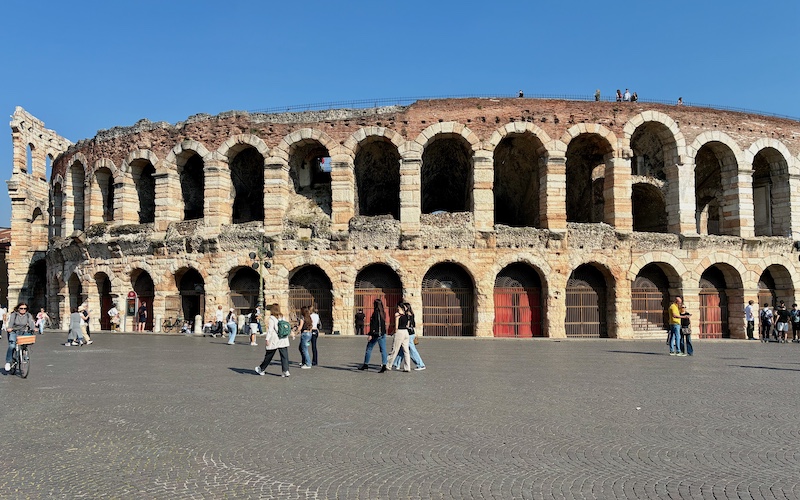
Built on the banks of the Adige, Italy’s second longest river, and also nicknamed ‘la piccola Roma’, Verona has a remarkable concentration of Roman, medieval and Renaissance architecture. The Piazza delle Erbe, once home to the city’s produce markets, is flanked by frescoed medieval houses. The grounds of Romanesque Santa Maria Antica hold the ornate Gothic tombs and sarcophagi of the Scaligeri family who, in the 14th century, ruled most of Veneto (and even further afield) from their Verona base. And of course there’s the famous Arena di Verona, an amphitheatre that pre-dates Rome’s Colosseum. The wine regions of Valpolicella and Soave are in the wider Verona province, an easy day trip from the city as well. This Verona food guide covers everything a food lover needs to know before visiting this historic city.
Stay in Verona Massimago Wine Suites
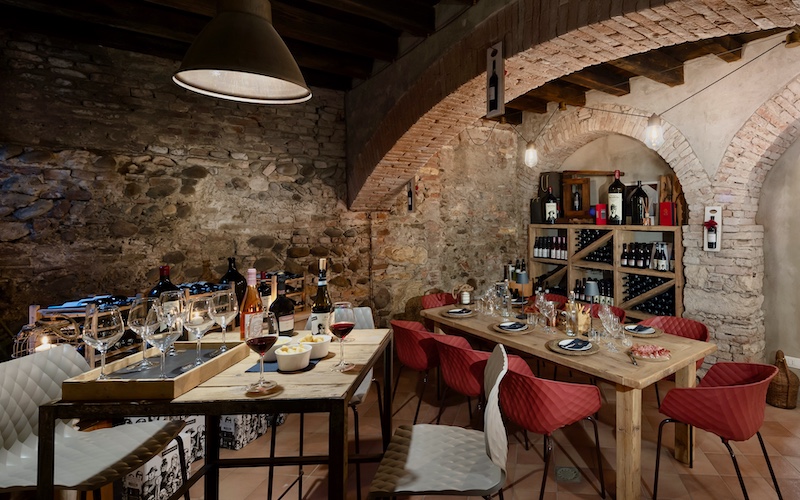
In the beautiful countryside around Verona, I stay at Massimago Wine Estate in the heart of Valpolicella. In Verona city I recommend their suites just a few minutes’ walk from the Arena. The modern rooms are spacious and comfortable with furnishings by Veronese artisans. Parking is available (a rare treat in most historic city centres) and you can enjoy a tasting of Massimago’s excellent wines in the building’s ancient cellar.
Eat in Verona Trattoria al Pompiere
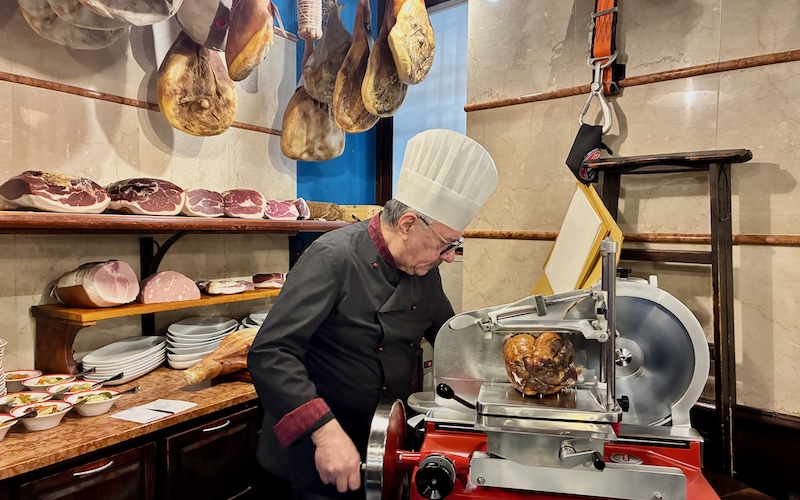
This traditional restaurant is named for the retired fireman (pompiere) who opened it over a century ago. Its extensive selection of salumi and cheese, with a dedicated Maestro Salumiere to source and prepare it, means you can taste different prosciutti side by side (including Parma, Veneto, Sicilian, and pata negra aged San Daniele-style) before feasting on Veronese specialties like pasta fagioli, guinea fowl ravioli and seasonal risotti.
Gelato in Verona Gelateria Savoia
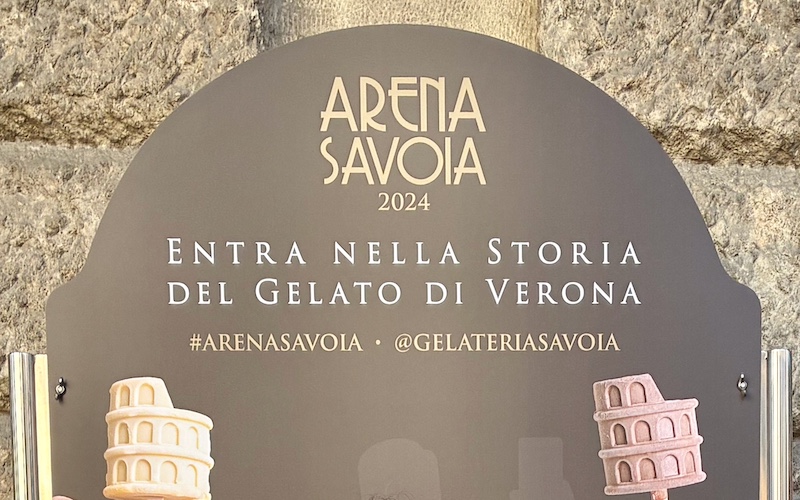
Verona’s most famous gelateria was opened beside the Arena in 1939 by Vittorio Bonvicini and his wife Luigia. Today it’s run by the couple’s great-grandson, Marco, with distinctive gelati including gelato cakes and a stick-mounted gelato model of the Arena in gianduia (hazelnut-chocolate) flavour or exotic mango that’s limited to just 100 pieces/day. Grab a gelato to enjoy while strolling through nearby Giardini Vittorio Emanuele II.
Shop in Verona Antica Salumeria Albertini
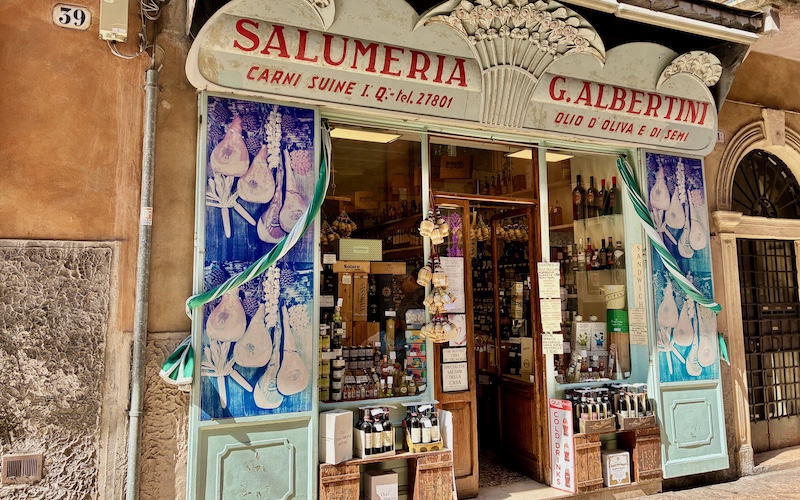
This eye-catching deli has been trading in Verona’s cobbled centro storico since 1938. One of Verona’s protected ‘Botteghe Storiche’ (historic shops), its original painted metal shopfront, folding shutters and marble shelving are all still intact. This family business is the best place in Verona to buy authentic soft Soppressa Veronese salami and aged Monte Veronese cheese, alongside other regional specialties that make perfect souvenirs.
City Tour in Verona with Monica Zulian
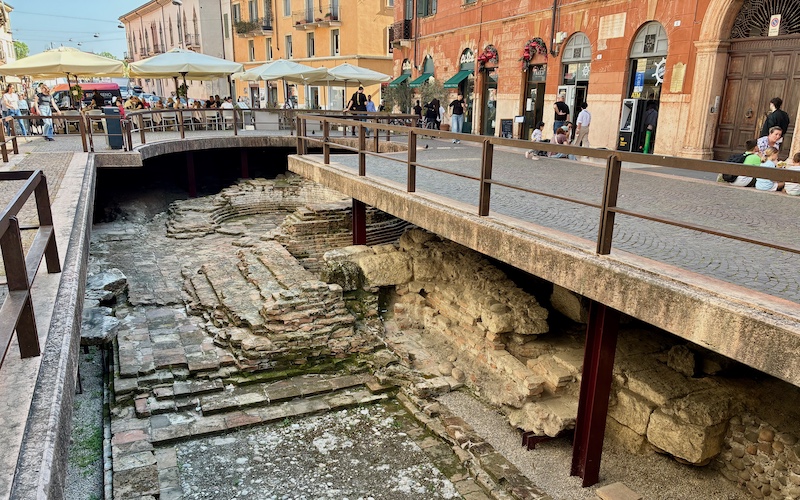
I find it invaluable to take a tour with a local guide when visiting a new city and I struck gold with Monica, whose passion for Verona runs as deep as her knowledge. Meet her in frescoed Piazza delle Erbe for a fascinating stroll through Verona’s historic centre, including Roman Porta Leoni – once part of the ancient city walls, now embedded in the side of a 13th-century palazzo – and the excavated ruins beneath the street beside it.
Published 22 Jul 2026
Sadly the balcony at Verona’s Casa di Giulietta is not authentic but was added to a 13th-century inn in the 1930s to boost tourism. Spoiler alert – medieval houses didn’t have balconies as they were heavily fortified and a balcony would be an easy point of ingress. Furthermore, there isn’t a balcony in the play’s script – originally Juliet spoke from an upper window to Romeo standing in the orchard below. The ‘balcony scene’ is an interpretation popularised in later productions for better visibility.
On a narrow side street beside the Santa Maria Antica church and ornate Scaligeri sarcophagi is a medieval fortified palazzo known as the Casa di Romeo. Despite this name, it does not appear to have ever been owned by the powerful Montague (or Montecchi) family to which the fictitious Romeo Montague belonged and who historically controlled and inhabited the central quarter of Verona where it’s located. Unlike the crowded Casa Giulietta, the Casa di Romeo is a private residence closed to visitors. A marble plaque on the outside wall reads: “House of Cagnolo Nogarola called Romeo, XIV century” with a quote from the play: “Tut, I have lost myself, I am not here: This is not Romeo, he’s some other where.”

Romeo and Juliet are fictitious characters created by William Shakespeare for his tragedy set in the city of Verona. Their feuding families are however loosely rooted in history. In 13th-century Italy, the terms Montecchi (Montagues) and Cappelletti (Capulets) were used as nicknames for rival political factions rather than strictly private family names. Dante Alighieri mentioned both in his 14th-century Divine Comedy (Purgatorio, Canto VI) and later writers, including Shakespeare, built on this.