Italians love an aperitivo, but Venice does bar culture like nowhere else in Italy. Long before craft cocktails and natural wine lists became a global trend, the best bars in Venice had perfected the art of ‘cicchetti e un’ombra’.
The tradition of small savoury bites (cicchetti) paired with a little glass of wine (un’ombra) – enjoyed standing at a counter, perched on a stool or leaning against an outside ledge – is as Venetian as gondolas. Un’ombra literally means ‘a shadow’, allegedly because vendors once sold wine from carts in Piazza San Marco and moved throughout the day to stay in the shade and keep their wine cool. I’ve spent years tracking down the best bàcari in Venice and my favourites are divided between centuries-old institutions with wine in flagons and cicchetti counters that haven’t changed in generations, alongside the new generation of bars reshaping the tradition with sharp wine lists featuring small local producers. Some take bookings, but many are strictly walk-in and standing-room only. Some sit on quiet canal-side fondamente, others spill onto lively campi. A bit like a Spanish tapas crawl, a giro d’ombre (‘shadow tour’) is a great way to enjoy cheap eats in Venice: drop into a bar, have a snack, drink a little, then move on to the next bàcaro. What the best Venice bàcari have in common is the sense that you’re somewhere real, not staged for the tourists. Here’s my pick of the best bars in Venice to drink like a local.
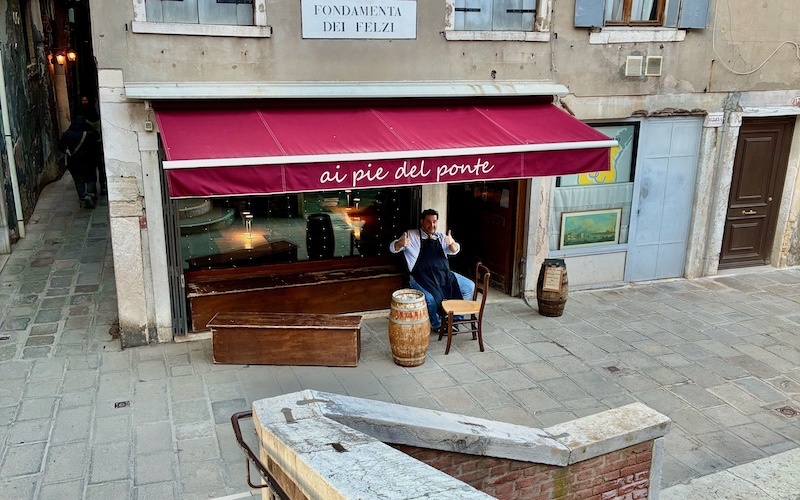
Ai Pie del Ponte Castello
I love this traditional little bàcaro that’s literally ‘ai pie del’ (at the foot of) Ponte Minich. Unlike most Venetian bàcari – which work on a walk-in only basis – hospitable Andrea takes bookings. I’m impressed by his selection of gins and natural or organic wines and beers, as well as the entertaining and personable service. Salumi and cheese are a specialty among his cicchetti and he also opens for lunch.
Al Mercà San Polo
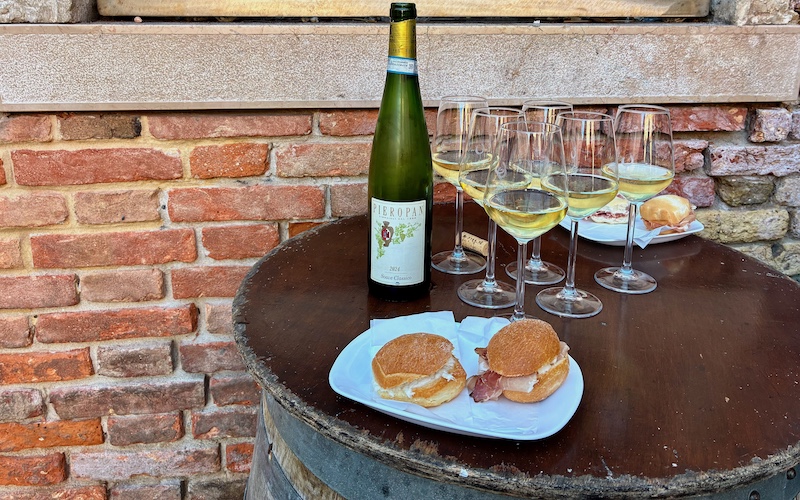
A favourite with locals shopping at Rialto Market, Al Mercà is a literal hole-in-the-wall with no seating – arrive early (it opens at 10am) to nab the wine barrel against the outside wall. The wine list runs surprisingly deep for such a tiny spot – chalked up across four blackboards of whites, reds, bubbles and spritz. Grab a glass and a small crisp panino to go with it, and don’t let the time of day stop you from enjoying un’ombra – ‘when in Venice…’.
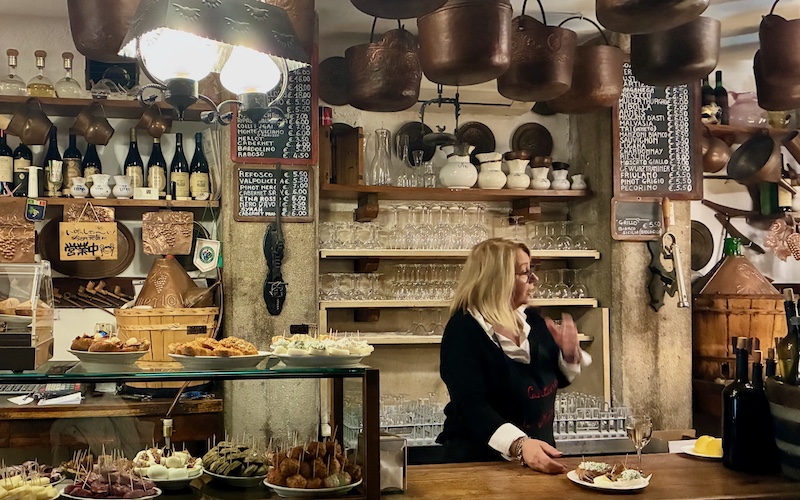
Cantina Do Mori San Polo
This old-fashioned bàcaro near Rialto Market is cool and dim inside, its dark wooden ceiling hung with an impressive collection of copper pots once used for carrying water. The excellent cicchetti, including baccalà prepared many different ways, sit alongside a good range of wines by the glass. There are no tables, so perch at the counter against the wall or on one of the few stools out front for a proper Venetian bàcaro experience.
Vizietto San Polo
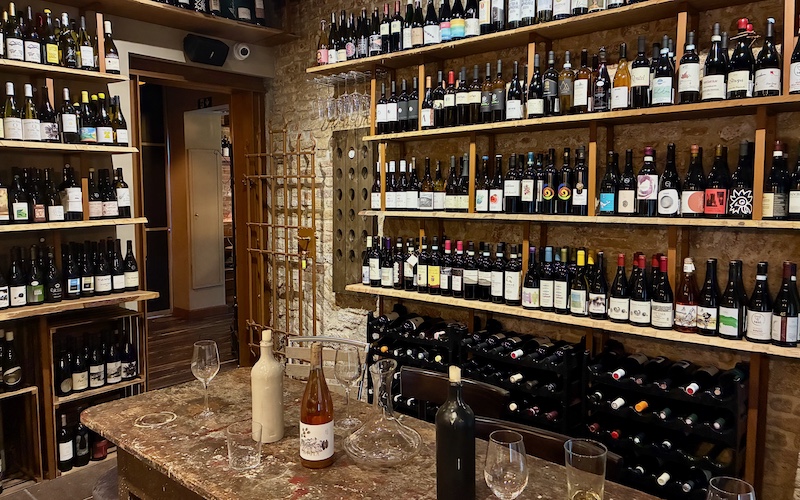
This lovely bàcaro on a lively piazza is bustling inside and out – it’s a bit hip and a bit noisy, especially in the crowded front bar. For somewhere quieter, ask for a seat at the rustic wooden table in the cellar, an oasis lined with interesting wines. Vizietto is a spritz-free zone, a natural wine bar focusing on small producers – trust the knowledgeable staff to guide you toward a ‘col fondo’ Prosecco or Trentino rosato for the perfect aperitivo.
Bar Ducale San Marco
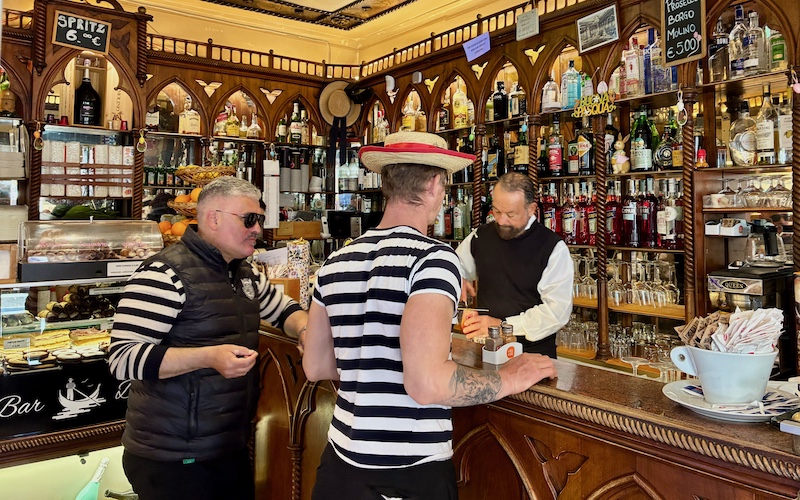
On my first visit to Venice, I asked the hotel concierge where he goes for coffee, not where he sends the tourists. He pointed me around the corner to Bar Ducale, adding that it’s also where the gondoliers have their coffee. I’ve been coming back ever since, leaning on the small outside counter for a glass of pinot grigio or Campari and snack, watching the gondolas glide past on the canal below.
Harry’s Bar San Marco
It won’t be the cheapest drink you’ll buy in Venice, but a bellini and finger of croque monsieur (they call it a Pierini) at Harry’s Bar is an affordable way to experience a Venice institution. Service from white-coated waiters is old-school, fitting for this long-time haunt of foreigners – frequented by royals, artists and celebrities including Ernest Hemingway, Peggy Guggenheim and Truman Capote – since the Cipriani family opened in 1931.
Bea Vita Cannaregio
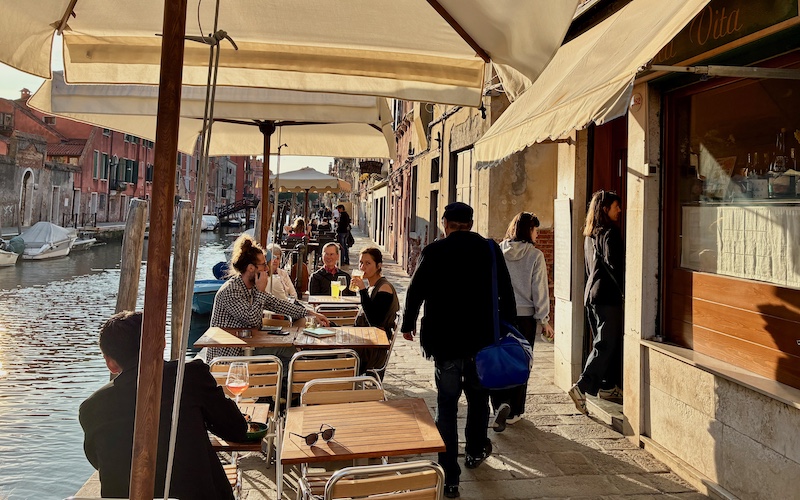
Bea Vita is in one of my favourite corners of Venice, an authentically local stretch of Cannaregio where young Venetians gather for a drink and snack. Unusually for a bàcaro, it takes bookings and has canal-side seating. Owners Matteo and Mara also run nearby Vino Vero (standing-room only, no bookings), and both offer an inspiring selection of wines from artisanal producers. It’s one of the best bars in Venice for a drink on a sunny day.
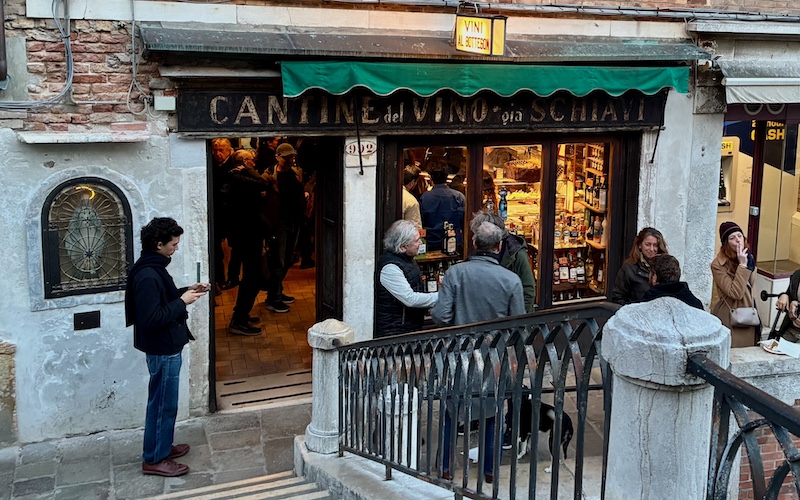
Cantine del Vino già Schiavi Dorsoduro
At the foot of a small bridge, this old-school bàcaro is full of locals drinking €1.50 house white or red poured from flagons. There’s Campari too (though no Aperol spritz in sight), and a glass counter piled with very reasonably priced cicchetti. With no seating, guests rest their snacks wherever they can – on a shelf, or spilling out onto the fondamenta to prop glasses against the wall. One of the best-value spots for cicchetti e un’ombra in Venice.
Published 21 Jul 2026
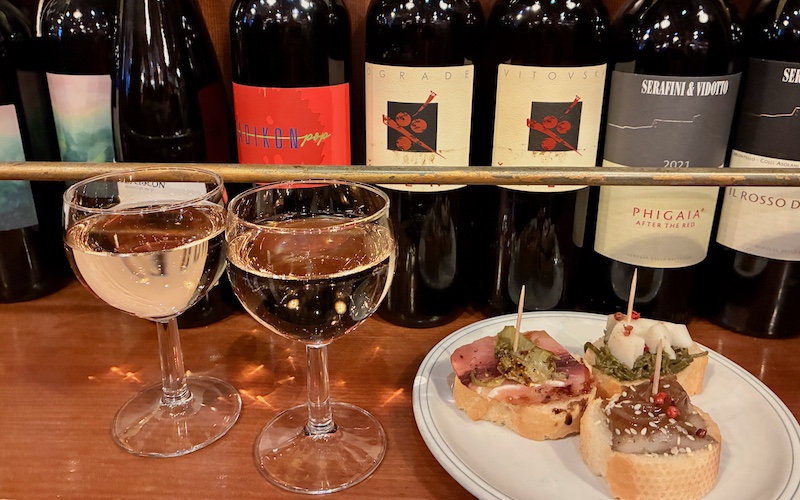
This is the term used in Venice for a snack and small glass of wine at a Venetian Bar (bàcaro). Cicchetti comes from the Latin ciccus, meaning ‘a small quantity’ and Venetian dialect turned it into cicheto, the small bites you’ll find piled on the glass counter of every bàcaro. Un’ombra literally means ‘a shadow’ (or shade) and is the word Venetians use for a small glass of wine (about 100ml). Allegedly wine vendors with carts in Piazza San Marco used to move throughout the day to stay in the shade of the Campanile to keep their wine cool. Over time, ‘let’s go get a shade’ became colloquial for ‘let’s have a glass of wine’ – then the drink itself took on the name. The Venetian ritual of cicchetti e un’ombra means having a quick glass of wine and small bite to eat, usually standing at a counter or leaning on a ledge outside a bàcaro.
The most common cicchetti in Venice are slices of soft white filoncino (baguette) with generous toppings – especially baccalà prepared various ways. Polpette (meatballs), marinated vegetables and tiny tramezzini (crustless triangular sandwiches) also often appear as cicchetti.
Literally a ‘shadow tour’, this Venetian bar crawl is a bit like a Spanish tapas crawl – the tradition of going from one bàcaro to another having a snack and small glass of wine (or other drink) at each one. It’s a great way to eat and drink inexpensively in Venice while exploring local neighbourhoods.
A bàcaro (bàcari in the plural) is a traditional Venetian bar – they’re usually small, rustic and dimly lit, serving wine by the glass alongside cicchetti at a counter, some also serve spritz. Most are walk-in only, with few or no seats – the idea is to drop in, have a bite and drink then move on to the next one.

At a bàcaro, standing is traditional. Most bàcari have little or no seating, and locals gather at the counter or out on the street with a glass in hand. A handful of the newer, more relaxed spots offer seating or take bookings – but the standing, walk-in culture is still what defines a proper bàcaro crawl.
Traditional bàcari tend to pour simple, everyday Veneto wines – often straight from a flagon – and focus on classic cicchetti that haven’t changed in generations. A newer wave of Venice natural wine bars, often run by a younger generation of owners, puts the focus on natural, small-producer wines instead, alongside a more contemporary take on cicchetti. Both are part of the same tradition – just at different points in its evolution.
They’re related but not identical. Aperitivo, common across Italy, is typically a single early-evening drink with a snack. Cicchetti e un’ombra is more of an ongoing ritual that can happen several times a day, at multiple bars, and is treated as its own style of progressive eating and drinking rather than a single pre-dinner occasion.
Head straight to the counter rather than waiting to be seated – most bàcari don’t have table service. Point to what you want on the cicchetti counter rather than asking for a menu (there often isn’t one), and order a glass of white wine (vino bianco) or red wine (vino rosso). Pay as you go, keep your visit short, and don’t be surprised if there’s nowhere to sit – standing at the counter, glass in hand, is the whole point.