Food Lovers' Guide to Switzerland

I’m blessed to know Switzerland through my Swiss husband. I love its food, wine, history and breathtaking scenery. My food lovers’ guide to Switzerland shares my insider Swiss travel tips (see FAQ below).

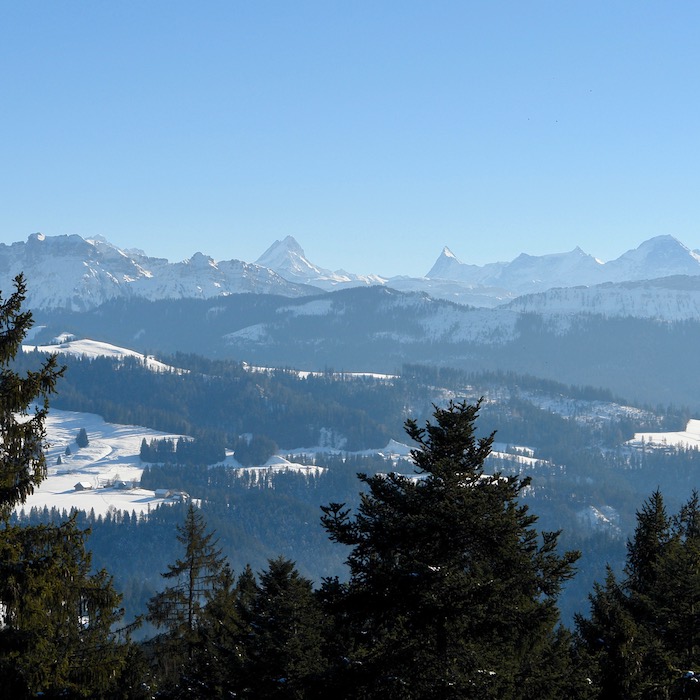
Switzerland - Bernese Alps - Swiss Travel Tips

What Other Travellers Say

Andrea (Adelaide, SA, Aus)
Switzerland with Roberta was all I hoped and expected – she takes control of all the things I no longer want to decide. Roberta plans the itinerary to such an amazing extent – the food choices and venues always showcase the region we’re in and never disappoint. The small group works extremely well, with enough downtime to do your own thing but beautifully combined with an itinerary which encompasses all the things you want to see and more. My trip to Switzerland was my second adventure with Roberta – my first was Emilia-Romagna and I’ve already booked my next one to Scotland.
Belinda (Balmain, NSW, Aus)
I had such a blast on the Swiss food and wine tour with Roberta. As a solo traveller, I loved the friendly small group vibe and the fact that all meals and transport were taken care of. I got to explore amazing villages and wineries and cheese producers that I would have missed if I'd been travelling on my own. It was so much fun that I've already booked my next tour with Roberta.
Teri (Pokolbin, NSW, Aus)
Thank you Roberta for organising such a wonderful Swiss tour! It felt like going from gem to gem – and your knowledge and passion for the places we visited and the people you introduced us to was evident throughout. Starting in the most charming village and finishing at such a grand and beautiful location, I remember thinking at our farewell lunch: “it doesn’t get much better than this!” Thank you, and I am already looking forward to my next trip with you.
Kirstina (Cremorne, NSW, Aus)
My husband and I had never travelled in Switzerland before, and we were so glad we chose Roberta to show us ‘Her Switzerland’. Roberta's knowledge, enthusiasm and passion for food and wine made every day an adventure. Every meal was a delicious, interesting experience where we learnt a lot about Swiss foods and wines, which were truly excellent. One of the many highlights was mushroom foraging in an Emmental forest then joining our local fungi expert in her home for lunch. Roberta's ability to scout unique accommodation and experiences truly made for a trip we will never forget.

Swiss Food & Wine Tour Highlights

Travel Like A Local In Switzerland

How do you eat like a local in Switzerland? What do I need to know about eating in Switzerland?

Switzerland is an expensive country by most standards and food is not cheap, even in casual restaurants.

The good news is that Swiss portions are generally quite large so you’ll rarely need 3 courses, or even 2. For small appetites, a starter may be sufficient.

If you’re travelling on a tight budget, consider sharing dishes, especially starters and desserts. Look out for landgasthofs – country inns with casual restaurants and accommodation (similar to pubs). They generally serve good-quality regional dishes in generous portions at relatively good prices.

Does Switzerland make wine?

Yes, Switzerland makes very good wine, though only around 1% of it is exported as the Swiss drink almost all of it themselves.

You’ll be able to sample Swiss wine relatively inexpensively in any Swiss restaurant. Every venue will offer some local wines by the glass or carafe.

A standard glass of wine in Switzerland is 100ml and a carafe can be ordered in any size you like in increments of 100ml.

How do you say 'Cheers' in Switzerland?

The way people say ‘Cheers’ in Switzerland varies from canton to canton. You’ll hear Cheers, Prost, Zum Wohl, Santé and Salute.

However you say it, it’s important to clink glasses with every person at the table and look them in the eyes while doing so. To say ‘Cheers’ without looking someone in the eyes is considered rude.

What do I need to know about drinking coffee in Switzerland?

Swiss coffee is served with coffee cream (Kaffeerahm or crème à café). Like half-and-half, it is richer than normal full-cream milk and less rich than single cream.

You can request regular milk if that’s your preference. In dairy-rich Switzerland, milk alternatives (soy milk, etc.) may not always be available.

When is the best time of year to visit Switzerland?

Most of Switzerland has cold winters and mild summers, so the best time to travel there depends largely on what you want to do.

It is possible to ski in Switzerland year round, but obviously winter is the best time for snow sports.

Summer, late spring and early autumn are the best times for hiking, another very popular Swiss pastime.

Switzerland has wonderful seasonal produce, like wild garlic (bärlauch) and morels in spring and other wild mushrooms and game in autumn. And Christmas in Switzerland is magical.

So plan your Swiss trip around your favourite foods and activities.

What is the best way to travel in Switzerland?

Swiss rail is legendary for its punctuality and efficiency. Trains are clean and comfortable with toilets, charging ports and often food available.

A Swiss Travel Pass can be a cost-effective way to travel if you’re in Switzerland for a week or more.

What do I need to know about driving in Switzerland?

If you want to be completely independent – and are confident driving on the right-hand side of the road – a hire car is a great way to see Switzerland. A small car is best for negotiating the narrow streets of small ancient towns and villages and for easy parking.

There are no toll stops in efficient Switzerland; instead, all cars are required to have a motorway toll sticker (called a vignette). You can buy a vignette at the border if driving in from another country. If hiring a car in Switzerland, check that it comes with a vignette.

Don’t speed in Switzerland. Unlike some countries which have signs warning you when your speed is being checked, Switzerland does not. Speeding is heavily policed, so assume your speed is always being monitored and don’t exceed the speed limit or it can be very expensive.

How should I dress in Switzerland?

The Swiss tend to dress neatly and conservatively even on casual occasions.

To avoid looking like a tourist in Switzerland, don’t wear flip-flops (thongs); wear clean, smart-casual clothes that aren’t wrinkled; and don’t carry an obvious bum bag/fanny pack.

In good restaurants, jackets are often worn by gentlemen of an evening, with or without a tie.

When visiting churches, especially in Catholic cantons, ensure your shoulders and knees are covered as a sign of respect.

Remember it can turn chilly of an evening or at altitude, so always have something warm handy.

What language do they speak in Switzerland?

Switzerland has four official languages: German, French, Italian and Romansh (which is derived from Latin and sounds a little like Italian).

Italian and Romansh are only spoken in a couple of cantons that border Italy (Ticino and Graubünden, respectively). The rest of the cantons speak German or French – and several speak both.

While German is an official language, people in most of the German-speaking cantons talk among themselves in Swiss German, which sounds quite different and varies from canton to canton.

Most Swiss are at least bilingual, and many speak English, though you shouldn’t assume they will.

What do I need to know about greetings in Switzerland?

The Swiss tend to greet everyone when they walk in and out of an establishment, or even pass each other on a walk.

In the German-speaking cantons this will be ‘grüessech’ or ‘grüezi’ on arrival and ‘wiederluege’ when leaving, often followed by ‘mitenand’ (everyone) when addressing more than one person.

‘Bonjour’ and ‘au revoir’ are typical in the French-speaking cantons.

Subscribe To My Newsletter & Get A Free Online Italian Cooking Class (RRP $39)