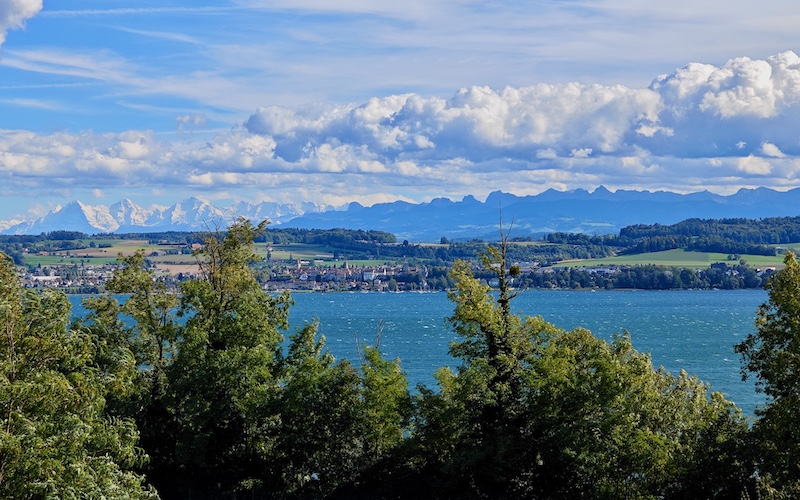
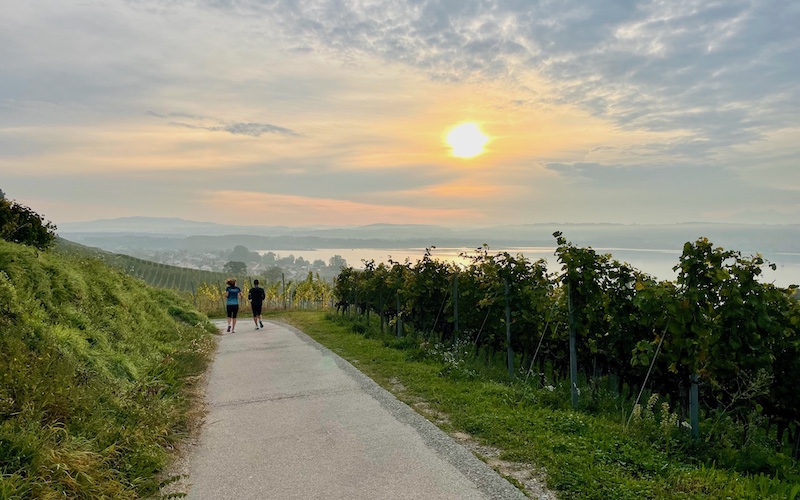
Beautiful Mont-Vully, Switzerland’s smallest wine region, runs along the northern shore of Lake Murten, straddling the cantons of Fribourg and Vaud, with vine-covered hills running down to the lake and stunning views across to the Alps.
Lake Murten is part of the Seeland (Trois Lacs) area around Lakes Murten, Neuchâtel and Biel, where much of Switzerland’s fresh produce is grown. Coupled with fish fresh from the lake, this makes it a haven for great food as well as excellent wines and stunning scenery. My Lake Murten food guide covers everything a food lover needs to know for a perfect stay in this beautiful region.
Where to Stay on Lake Murten Hotel Restaurant Le Mont-Vully
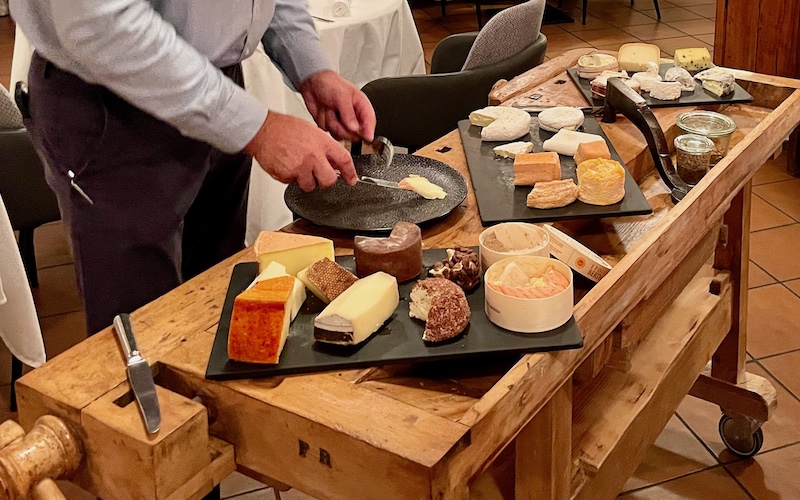
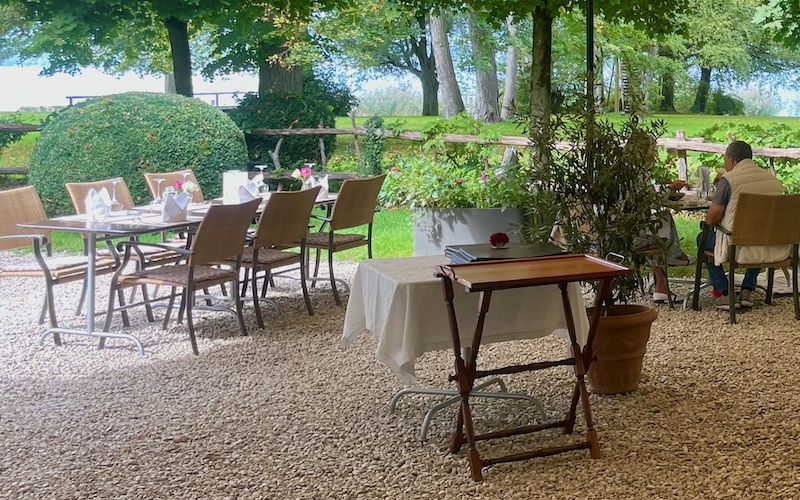
It’s easy to believe this lush property high above Lake Murten was a farm less than 100 years ago. Then it offered casual refreshments to passers-by. Today it offers accommodation with stunning views over the lake to the Alps and delicious food, including the best egli fillet (small freshwater perch, similar to Australian whiting). In summer the outside terrace is popular, and the cheese trolley is one of the best at any time of year!
Where to Eat on Lake Murten La Pinte du Vieux Manoir
Philip Hofkunst first impressed me with his cooking at Belle5, high above Lake Murten, and continues to do so at this lakefront restaurant. It’s the perfect spot for a long al fresco lunch. The food is still superb and the vibe still relaxed with wine and service to match. Great classics like steak tartare and ris de veau, beautiful house-grown herbs and flowers, and I’m so glad that fabulous plum gratin survived the relocation.
Where to Drink on Lake Murten Freiburger & Traminer
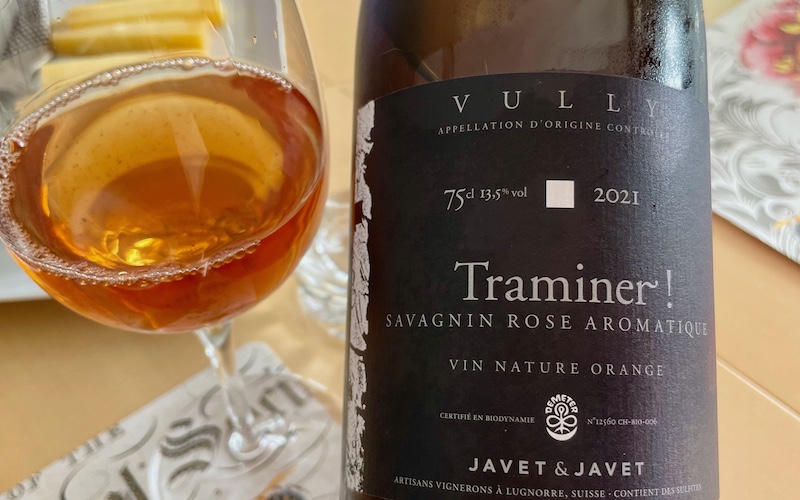
Switzerland’s smallest wine sub-region, Mont-Vully, is also one of its most innovative. The region’s best vignerons have created an accord to guarantee the quality of their two most distinctive grapes: freiburger and traminer. And it’s worked – Javet & Javet’s gloriously amber traminer is one of the best wines I’ve ever tasted. I also love Château de Praz’s freiburger by Marylène Bovard-Chervet, who ages some wines in traditional clay qvevri.
What to Do on Lake Murten ‘Chemin la Riviera’ Vineyard Trail
I love this 5km (3 mile) walking trail through the vineyards – especially early in the morning when the sunrise colours are splashed over the lake. It’s easy going, with only a few uphill sections to get to a good elevation for great views. Along the way you’ll likely meet locals walking their dogs or on their morning jog and there are boards explaining the local grape varieties and the seasonal work of the vignerons.
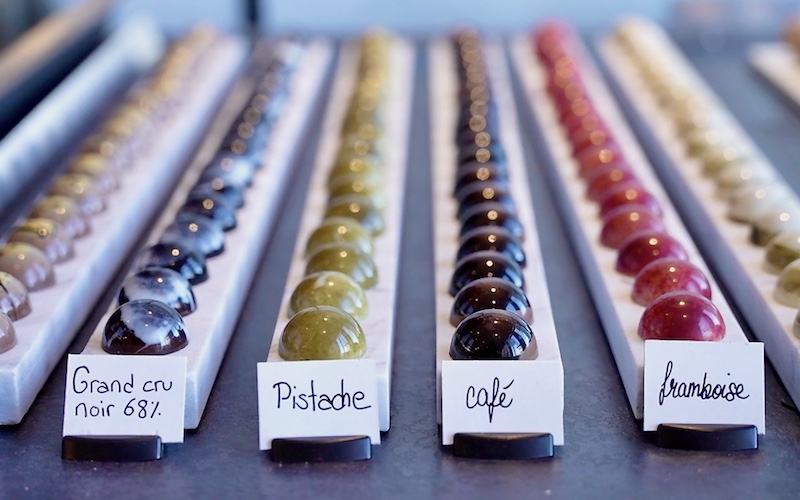
Where to Shop on Lake Murten L’ART’isan Pâtissier-Chocolatier
I happened across this little café one morning as I finished my vineyard walk (above) and I couldn’t resist popping in to check out the sweet treats. I left with a mini-ice cream – mango sorbet coated with tangy passionfruit chocolate – one of the best things I’ve ever tasted! If you’re craving something savoury after your walk, nearby Boulangerie Guillaume has slices of excellent gâteau du Vully with speck and caraway.
Gâteau du Vully (Vully tart) is a round yeasted brioche-like flat bread from the Vully region on Lake Murten. It is immediately recognisable by its dimpled top as bakers poke the dough’s surface with their fingers to make little hollows to hold the toppings.
Originally it was a savoury dish, topped with bacon and caraway seeds and enjoyed with a glass of local wine as an apéritif – which is how it’s often served at the region’s winery cellar doors.
Today the sweet version is just as popular, topped with cream, butter and sugar that glazes into a glossy crust.
While there is some debate over which came first – the sweet or the savoury gâteau du Vully – the Patrimoine Culinaire Suisse (Switzerland’s official food encyclopaedia) states that the savoury version is the original. It was a way for bakers to test the wood oven temperature with small pieces of leftover dough topped with cream and salt. Lardons and caraway were a later addition to this savoury version, and sweet gâteau du Vully – also called salée au sucre (literally ‘salted with sugar’) – became popular in the late 19th century when sugar became a common household item.
The lowlands between Lakes Murten, Neuchâtel and Biel are known as Seeland in German and Trois Lacs in French. This rare stretch of flat, fertile land in mountainous Switzerland produces about a quarter of the country’s vegetables, earning it the nickname of ‘Switzerland’s vegetable garden’.
Just 150 years ago much of the Seeland was marshland, regularly flooded by the Aare. From the late 19th to the mid-20th centuries, two huge engineering projects – the Jura water corrections – drained the Grosses Moos (Grand Marais), Switzerland’s largest wetland, lowering the lakes’ levels significantly and turning marsh into farmland.
Centuries of flooding left behind rich black soil that now produces everything from lettuces and leeks to carrots and celeriac, increasingly grown organically.