One of my favourite corners of Switzerland is the valley of the river Emme, the Emmental. Its rolling green hills are perfect for dairy farming and the holey cheese made here is synonymous with Swiss cheese (see FAQ below to learn more).
But there’s so much more, including fields of tall wheat, orchards of gnarly ancient apple and pear trees, and traditional wooden farmhouses with signs announcing their eggs, veggies, honey, and plaited züpfe bread for sale. Climbing through dark forests, you pop out on hilltops with magical views, while down the hill in the village you may discover a cattle market in full swing in the main square. Langnau im Emmental is home to some of Switzerland’s finest traditional pottery, and small distilleries throughout the region make excellent schnapps. Here’s my Emmental food guide for lovers of good cooking, beautiful scenery and warm hospitality – all an easy day trip from Bern.
Where to Stay (& Eat) in the Emmental Landgasthof Bären
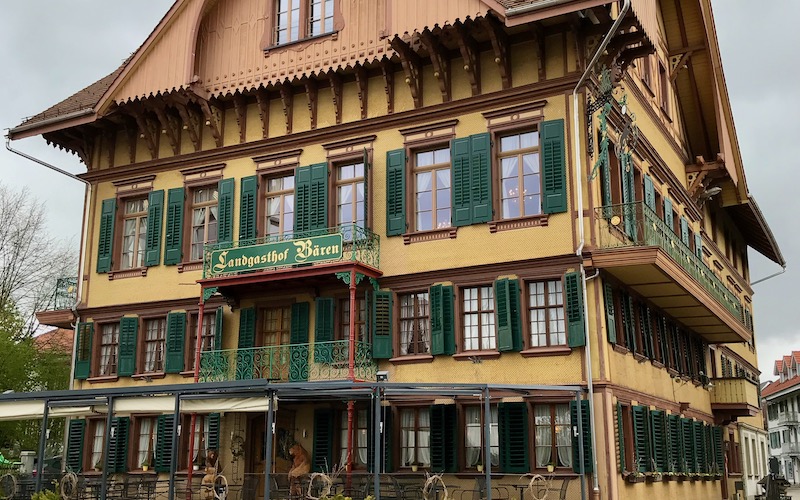
Some of my most memorable Swiss meals have been in traditional wooden Landgasthöfe, the equivalent of Aussie or British country pubs. They serve local beer, good Swiss wine and hearty traditional fare – and most are called Bären (bear), Löwen (lion) or Kreuz (cross). My favourite, for accommodation and eats, is the Bären in the village of Sumiswald, with strong ties to the work of novelist Jeremias Gotthelf (see FAQ below).
Where to Eat in the Emmental Moos Pintli
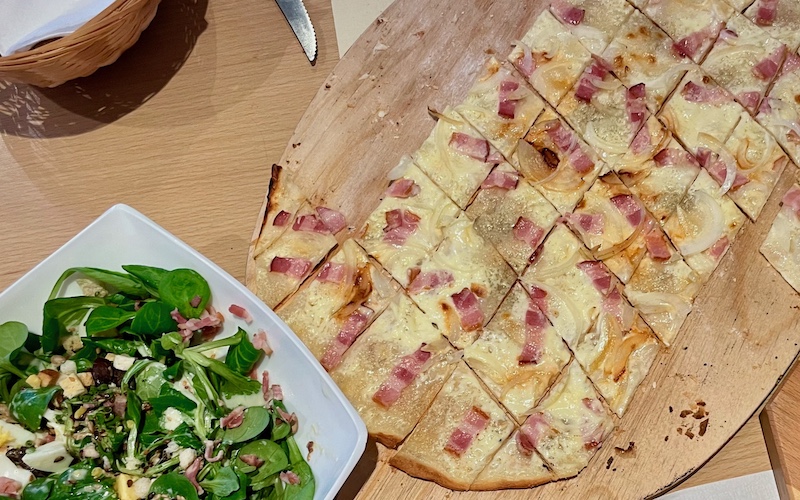
Down the hill from Röthenbach’s 15th-century church (below), in the village centre, you’ll find this rustic pub/dining room full of locals. As well as Swiss classics done well – like nüsslisalat and platters of cold cuts and cheese – they make excellent flammekueche (Alsatian flatbread). Service is friendly, wine selection good, and if you turn up on the right day you might just find the bi-annual cattle market taking place out the front!
Where to Drink (& Shop) in the Emmental Marktgasse 18
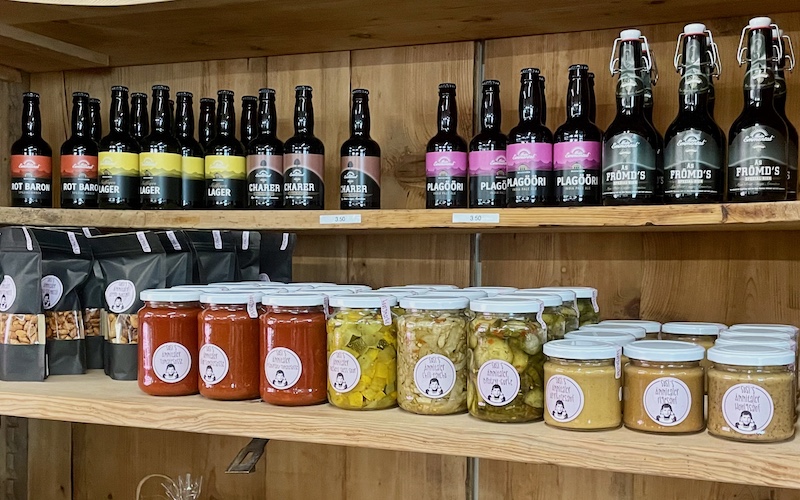
This Sumiswald bar-café cum shop (just across the road from the Bären above) features beers from local craft brewery Mein Emmental, including cloudy natural lager, single hop IPA, and seasonal specialties like a spice-rich orange-scented winter beer. Needless to say, it’s the perfect spot for a beer, but also great for a glass of wine or coffee. They have a great range of food and handicrafts by local producers too – perfect for souvenirs.
What to Drink in the Emmental Brennerei Kramer
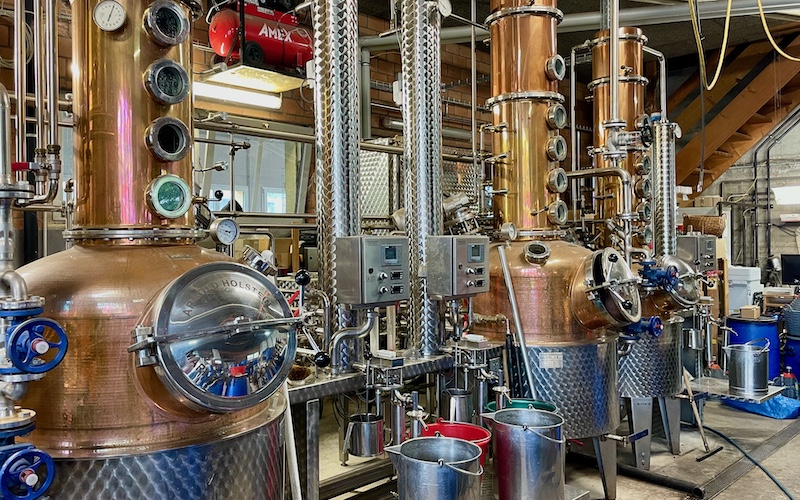
Swiss schnapps are clear, dry spirits traditionally distilled from excess fruit. In the Emmental that’s usually apples and pears made into bätzi. This small, family-run brennerei is a working distillery, with tubs of fruit everywhere waiting to become schnapps and a great aroma as you walk past the shiny copper stills. Distiller Simon Kramer makes traditional Emmentaler schnapps including bätzi, kräuter (herb) and härdöpfler (potato).
What to Do in the Emmental Waldpilze Mushroom Forage
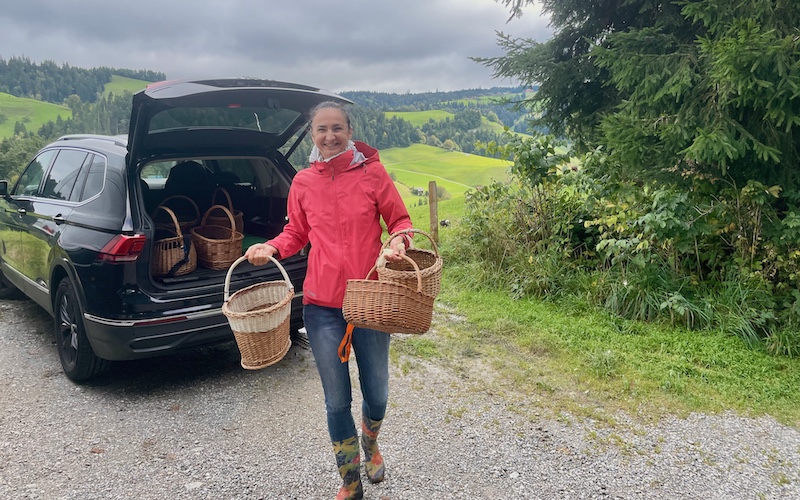
The forests of the Emmental are home to many varieties of wild mushrooms. It takes an expert eye to know which are delicious, which safe but tasteless, and which need to be avoided. Alena Langenegger is the Pilzkontrolleurin (official mushroom expert) for her village – the one locals take their foraged mushrooms to for inspection. Alena hosts guided seasonal forages which are both fun and educational.
What to See in the Emmental Würzbrunnen Church
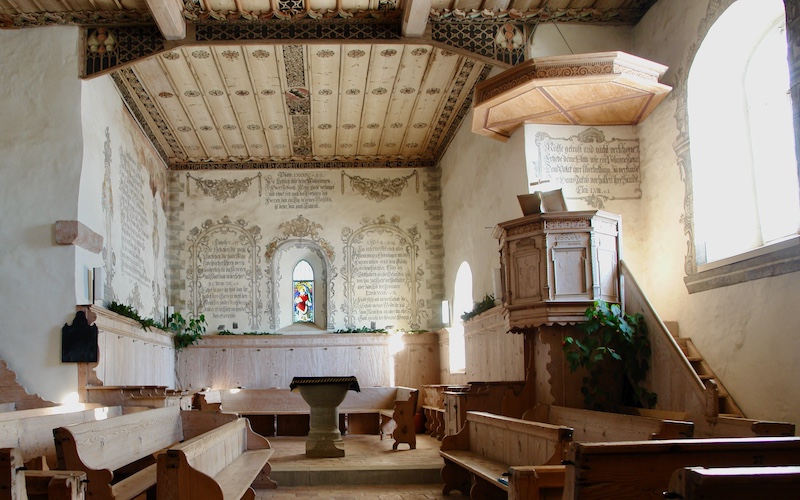
The village of Röthenbach, in the backwoods of the Emmental, grew around a priory. The church on the hill was built in the mid-1200s, though what we see today dates from the end of the 15th century after the original was destroyed by fire. While the exterior is beautiful in its simplicity, the inside is rich with images and texts narrating almost a millennium of Swiss history. The view of the Alps is spectacular on a clear day too.
Where to Shop in the Emmental Kambly Biscuit Experience
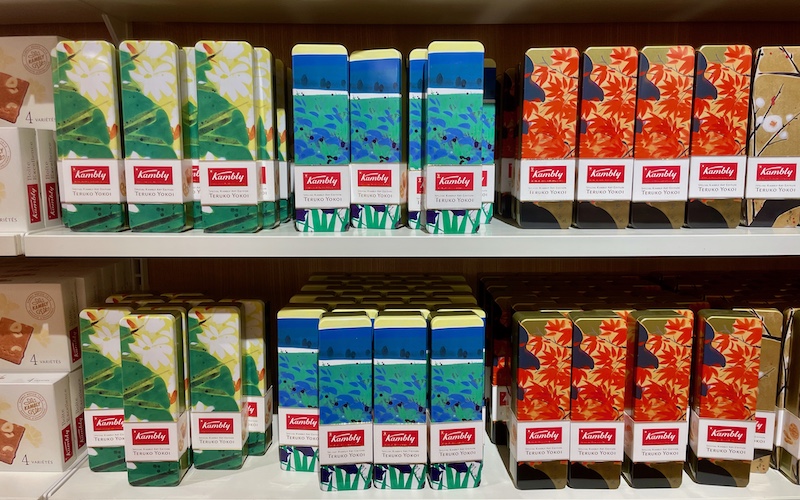
At Switzerland’s most iconic (and delicious) biscuit factory – family-owned Kambly in the Emmental village of Trubschachen – all the biscuits are available for tasting alongside the shelves and shelves of boxes, bags and tins of Kambly biscuits. Factory-seconds are sold in big bags, perfect as road trip snacks, while ornate tins of biscuits make wonderful souvenirs. There’s no way you can visit Kambly without literally becoming ‘like a kid in a candy store’!
What to Buy in the Emmental Pottery
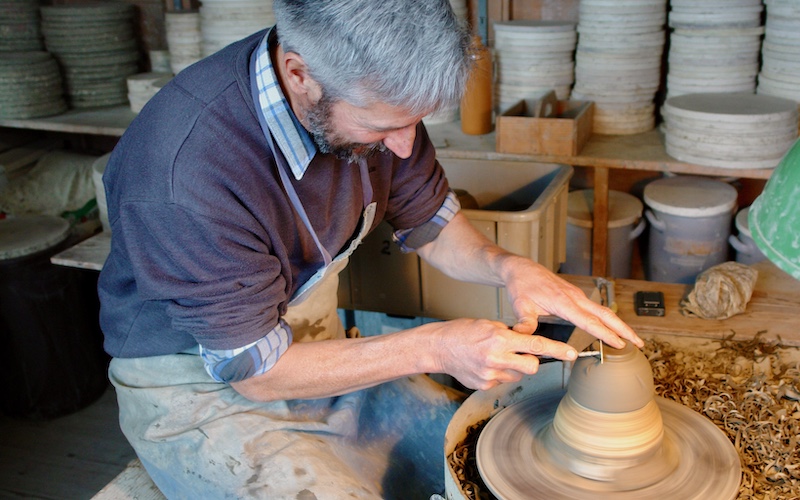
Langnau im Emmental is home to some of Switzerland’s finest traditional pottery. Ueli Kohler, my favourite classical Langnau potter, is now semi-retired but still accepts some commissions and sells a small range of pottery from his home workshop. Töpferei Aebi is the showroom/workshop of potter Martina Zurbrügg who incorporates modern decorations into a range of traditional designs.
Updated 16 Oct 2026
The Emmental – the valley of the River Emme – lies in canton Bern in central Switzerland, stretching east from the outskirts of the city of Bern towards the canton of Lucerne.
The gateway town to the Emmental is Burgdorf, with its medieval castle, while Langnau im Emmental is the valley’s main market town.
To the south, the hills (Voralpen) rise towards the Alps, whose snowy peaks form a spectacular backdrop on clear days.
The Emmental is less than an hour from Bern by train or car, making it an easy day trip from Switzerland’s ‘federal city’.
Trains run every 20 minutes from Bern to Langnau im Emmental (about a 40-minute journey), and Burgdorf is only about 20 minutes away.
By car, Langnau is around 35 minutes and 31km (19 miles) from Bern. A car makes it easier to explore the villages and farmhouses away from the train lines.
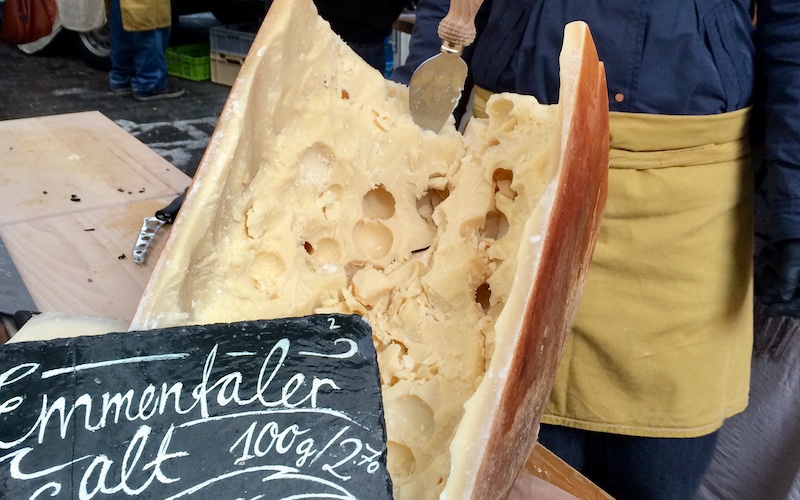
Emmental’s holes are made by bubbles of carbon dioxide, released by bacteria as the cheese matures.
Wheels of fresh Emmentaler cheese – which have been produced in the Emmental since the 1200s – are placed in warm maturing rooms.
There, heat-loving propionic bacteria that have been added to the milk begin to ferment and give off bubbles of carbon dioxide. These bubbles produce the cheese’s characteristic eyes.
In 2015 Swiss researchers found that tiny hay particles in the milk help the bubbles form, which is why modern, more hygienic milking has made Emmentaler’s holes smaller and fewer.
Emmentaler AOP is the original, made only in designated Swiss villages from the raw milk of cows fed on grass and hay. The name ‘Emmentaler’ has AOP protection within Switzerland, but not wider Europe.
Emmentaler AOP is produced in huge bulging wheels weighing 75–120kg and aged for at least 4 months, often much longer and sometimes in natural caves.
Not all cheese made in Switzerland has holes, but Emmentaler is the cheese that gave Swiss cheese its holey reputation. The name Emmentaler means ‘of the Emmental’ but cheeses made in the Emmental style are produced around the world and can still legally be called ‘Emmental’ or ‘Swiss cheese’. As of 2026, Emmentaler Switzerland (the trade body for Emmentaler AOP producers) is fighting in the EU courts to reserve the Emmentaler name for Swiss cheese.
Emmental was introduced to France by immigrant Swiss cheesemakers in the 1800s, and two versions produced in the mountains of eastern France have PGI appellations: Emmental Français Est-Central and Emmental de Savoie.
Swiss cheesemakers also immigrated in the early 19th century to southern Germany, where they found similar conditions to those of the Emmental and introduced their famous cheese, which now has its own appellation as Allgäuer Emmentaler PDO.

Jeremias Gotthelf is the pen name of Swiss novelist Albert Bitzius (1797–1854). The son of a pastor, he grew up in the Emmental, studied in Bern, worked as his father’s assistant then became pastor himself in Lützelflüh, in the Emmental between Langnau and Burgdorf.
Gotthelf wrote about rural life in the Emmental. He wrote in German scattered with Bernese dialect and is considered one of the most important novelists in the German language.
His most famous work, a short novel called Die Schwarze Spinne (The Black Spider), is about the plague and set in the village of Sumiswald. The spider is said to represent the plague and Gotthelf tells how, after the 15th-century outbreak, there were only enough men left in the village to gather around the Scheibentisch (round table) – the same table locals say is now in the corner of the Landgasthof Bären bar with the black metal spider perched above it.
Between the mid-1950s and mid-1960s six films were made of his novels. They were shot in various Emmental locations, including the Würzbrunnen Church in Röthenbach im Emmental.