Bern Food Lovers’ Guide

Bern is my favourite Swiss city. I love its old town centre, built around the River Aare in medieval times. According to legend, it was named for the first animal the founding duke encountered on his hunt: a bear.

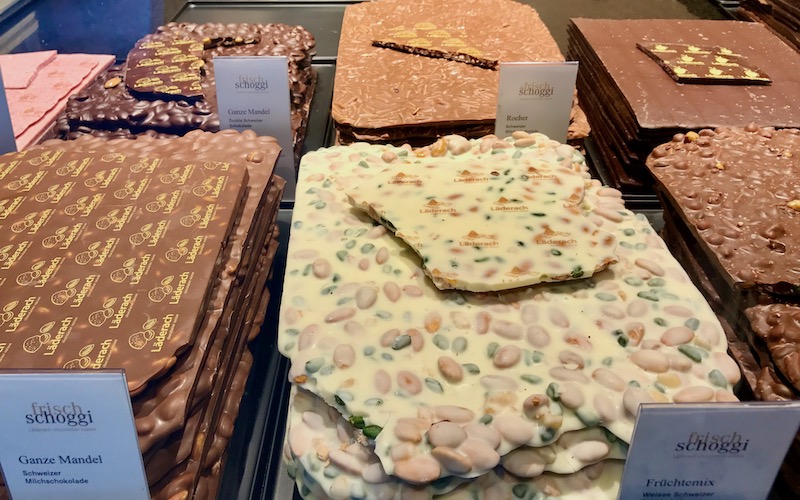
Swiss Chocolate - Bern Food Lovers' Guide

Today the UNESCO-listed Altstadt (‘old town’) retains much of its medieval charm, and a walk around it feels like a stroll through time: from the wonderfully ornate medieval clock tower (Zytglogge), past the Gothic cathedral (Münster), to the elaborate Renaissance figure fountains and beautifully restored Kornhauskeller. I’ve visited Bern many times with my Swiss husband, Franz, who grew up there. Here are the things we love most about it – the food of course, but so much more. Our Bern food guide shares the best things for food lovers to do in Switzerland’s federal city.

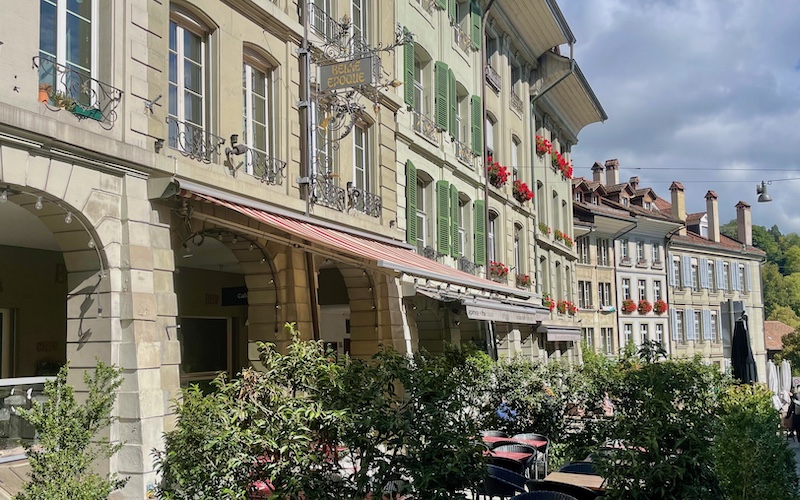
Hotel Belle Époque - Bern Food Lovers’ Guide

Where to Stay in Bern Hotel Belle Époque
Start with a base in the heart of the oldest part of the Altstadt – I love this boutique hotel near the river, in a 500-year-old building overlooking the cobbled main street. It’s a short stroll from all the sights of the historic centre and lives up to its name with Art Nouveau accents, including period furniture and fun, classic turn-of-the-century posters. Naturally, it’s where we stay on my Swiss food and wine tour.

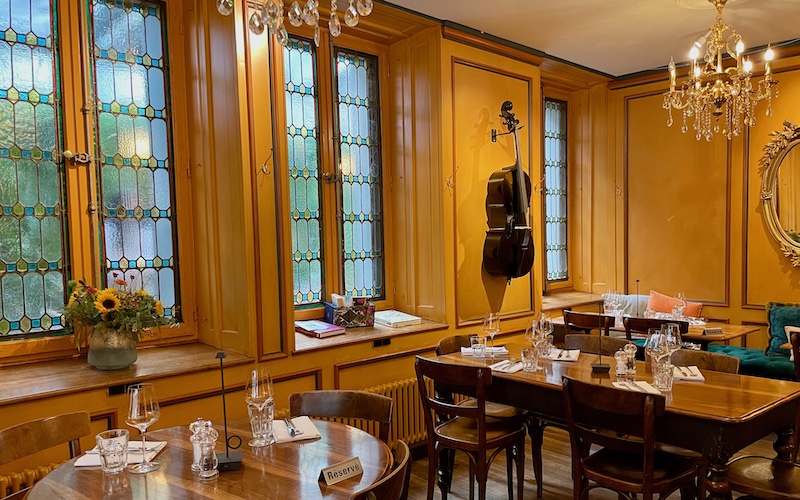
Restaurant Harmonie - Bern Food Lovers' Guide - one of the Best Restaurants in Bern

Where to Eat in Bern Harmonie
My first meal in Bern is always fondue with a mâche salad (nüsslisalat in Swiss German) and quarter carafe of Swiss white wine at this casual eatery that’s been serving the Bernese for over 100 years. It’s the perfect lunch spot, full of locals enjoying Swiss classics including excellent rösti, pastetli and some very calorie-laden desserts. The menu of the day offers great value too at one of the best restaurants in Bern.

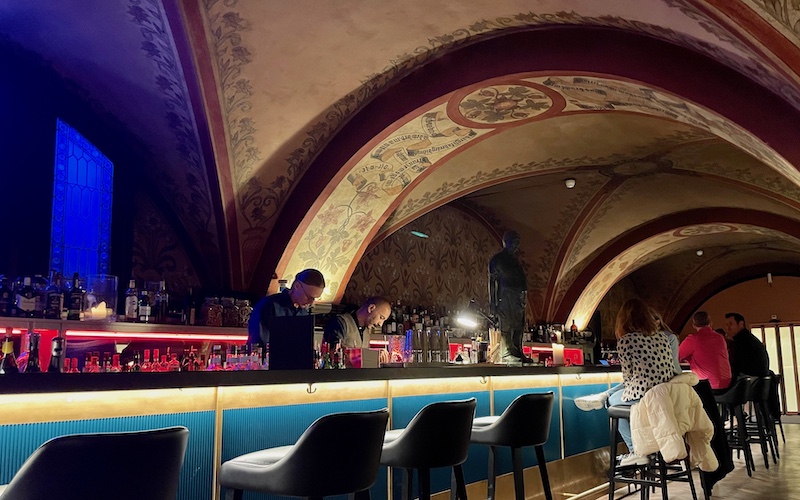
Kornhauskeller Bar - Bern Food Lovers' Guide

Where to Drink in Bern Kornhauskeller Bar
The old city of Bern is lined with underground cellars, many of which have been turned into bars. By far the most beautiful is the wonderfully restored Kornhauskeller. The 18th-century grain store (‘Kornhaus’), with its magnificent vaulted ceiling covered in frescoes, is truly breathtaking! The bar occupies a mezzanine balcony overlooking the fine dining restaurant below with beautiful parquetry floors and ornate columns.

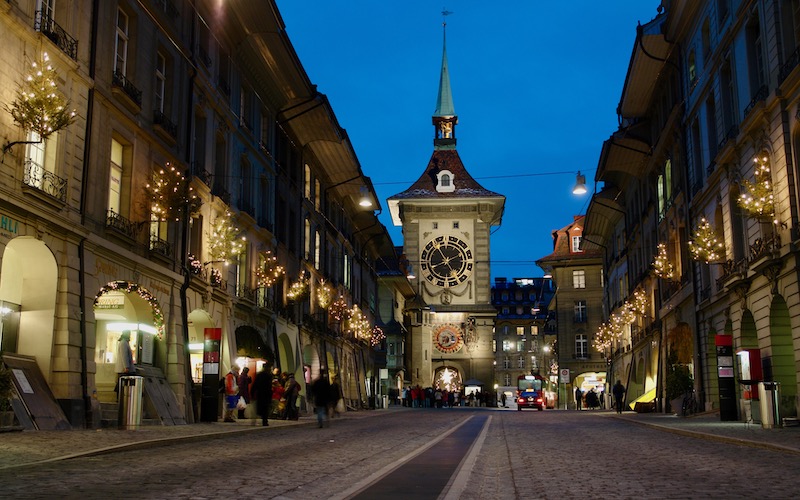
Kramgasse and Zytglogge clock tower - Bern Food Lovers' Guide

What to Do in Bern Zytglogge Tour
The 800-year-old clock tower is Bern’s most distinctive landmark. People gather to watch the elaborate moving puppets, including a golden rooster who crows three times, Chronos turning his hourglass, a tricky jester who strikes the hour a little early, and the golden man at the top striking his bell. It’s all driven by an ancient cog-wheeled mechanism, only viewable on a guided tour that also gives a bird’s-eye view of the historic centre.

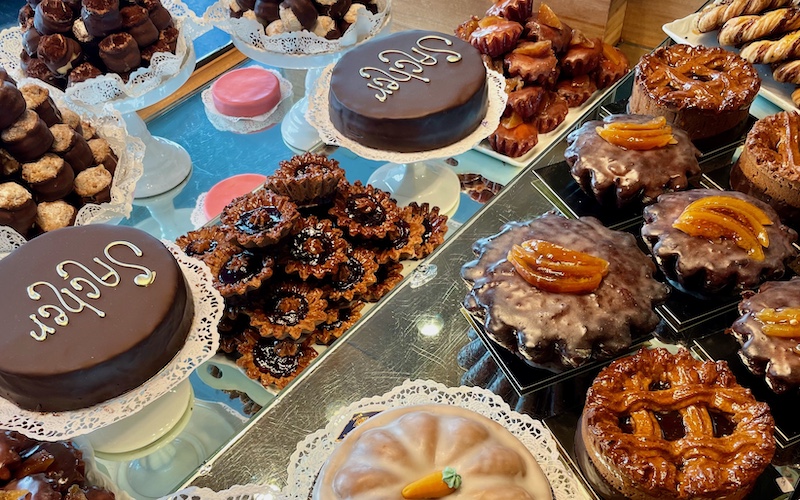
Tschirren confiserie, Kramgasse - Bern Food Lovers' Guide

Where to Shop in Bern Kramgasse
Due to its extensive covered walkways (Lauben), among the longest in Europe, Bern is a great place for shopping in any weather. Start at the Zytglogge at the top of Kramgasse (the main street) and browse your way down to the Bärengraben at the bottom of the hill. Stop for a snack along the way at the various confiseurs, including Tschirren, which is over 100 years old, and Eichenberger (home of excellent hazelnut lebkuchen).

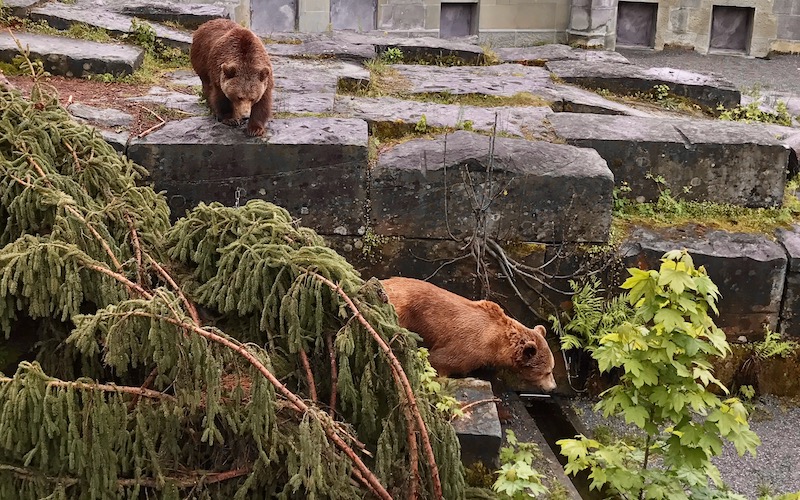
Two bears in the Bärengraben - Bern Food Lovers' Guide

Where to See Bern’s Bears BärenPark
Bears – Bern’s namesake animal and symbol – have been kept here since at least the 16th century, and in the Bärengraben (bear pit) at the bottom of the old city since the mid-19th century. In 2009, their riverside home was expanded into a large bear park which runs down the riverbank to the Aare and still includes the historic Bärengraben. After visiting them here, pop into the Altes Tramdepot for a great lunch overlooking the river.

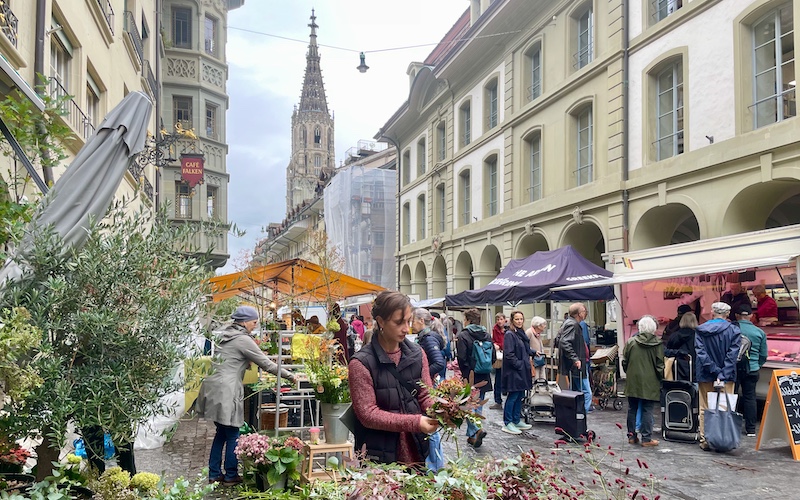
Münstergasse Market - Bern Food Lovers’ Guide

What to See in Bern Saturday Markets
A visit to Bern’s Saturday markets is a weekly tradition for my Bernese friends, and I love joining them in perusing the fresh flowers, meat, cheese and baked goods at stalls in Münstergasse beside Bern’s Gothic cathedral, before discovering the fresh produce at the stalls in Bundesplatz, in front of the copper-domed Federal Palace (home of the Swiss parliament). The markets officially start at 8am, but many are ready by 7am.

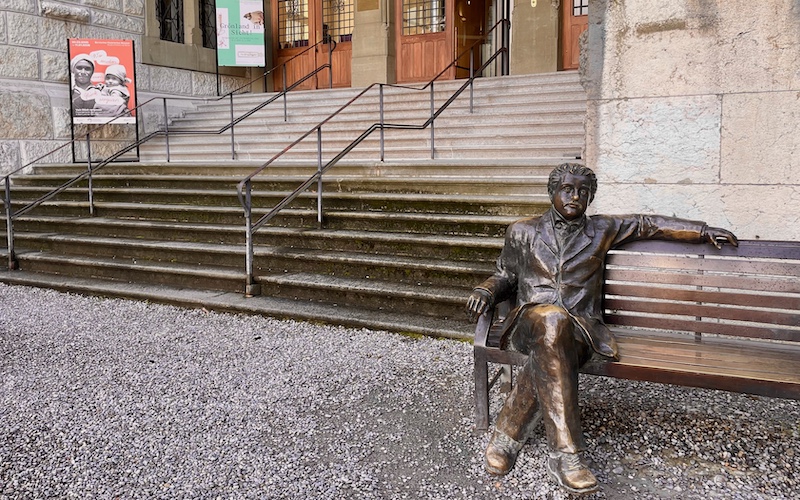
Bronze of Albert Einstein outside Bernisches Historisches Museum - Bern Food Lovers’ Guide

Where to Discover Bern’s History Bern Historical Museum
You could spend a whole day in the Bernisches Historisches Museum, so at least allow a couple of hours to see the original Münster statues – including Judas burning in hell while the devil dances on his head – and model of the city in the basement, plus the permanent Albert Einstein Museum and the view from the tower above the third floor.

Updated 08 Oct 2026

Swiss Food & Wine Tour Highlights

Bern City Guide FAQ

Why is Bern’s old town UNESCO World Heritage–listed?

Bern’s Altstadt (‘old town’) was UNESCO-listed in 1983 as one of Europe’s best-preserved medieval cities, and a rare example of one that adapted to the role of a modern capital while keeping its character.

The powerful Zähringen dukes, who also founded Fribourg and developed Murten and Burgdorf, founded Bern in 1191 on a hilly peninsula wrapped on three sides by the River Aare. They likely chose the site for its defensibility.

The city grew westwards in three distinct stages, from the tip of the peninsula near today’s Nydeggbrücke uphill to the main railway station. It still follows that remarkably clear plan: long parallel main streets linked by narrow cross lanes.

After a fire destroyed much of the wooden town in 1405, Bern was rebuilt in local greenish-grey sandstone. That cityscape, with arcades dating from the 15th century and fountains from the 16th, has been carefully preserved.

Is Bern the capital of Switzerland?

In practice yes, but not officially.

When modern Switzerland became a federal state in 1848, its constitution deliberately named no capital, so that no canton would be seen as more important than the others. Instead, in November 1848 parliament voted for Bern as the seat of the federal authorities, ahead of Zürich and Lucerne.
Bern’s central location, support from the French-speaking cantons and an offer of free land for the government buildings all helped. That’s why the Swiss call Bern the Bundesstadt (‘federal city’) rather than the Hauptstadt (‘capital’).

Today Bern is home to the parliament, the federal government and the foreign embassies.

Why are there bears in Bern?

Legend has it that Bern was named for the first animal its founder, Duke Berchtold V of Zähringen, came across on a hunt: a bear. The bear has been Bern’s emblem ever since, and it features on the coat of arms and all over the old town.

Live bears have been kept here since at least 1513, when Bernese soldiers returned from the Battle of Novara in northern Italy with a bear as war booty. The first bear pit opened in 1515 on what’s still called Bärenplatz (Bear Square).

It moved to the city gates in 1764, then in 1857 to its current site beside the Nydeggbrücke at the bottom of the old town. Since 2009, the bears have had the much larger BärenPark, which runs down the riverbank to the Aare. Here they wander, climb trees, take a dip in their own pool and are free to visit the historic Bärengraben (bear pit), which is still part of the park.

How old is Bern's Zytglogge clock tower?

The Zytglogge is around 800 years old – it was built around 1220 as the western gate of Bern’s first city wall.

As the city grew westwards, the tower lost its defensive role and became a prison, then known as the ‘kebie’ (cage).

After the great fire of 1405 gutted it, the tower was rebuilt with a great hour bell cast that year, which still rings today, and a clock was installed above the gate. Together they gave the tower its Bernese German name, Zytglogge (literally ‘time bell’).

In the late 1520s, clockmaker Kaspar Brunner built the clock mechanism that still drives the clock and the elaborate moving figures that herald each hour. The large painted clock faces were added in the early 1600s.

What happens at Bern's Zytglogge clock tower on the hour?

The Zytglogge’s figure play begins four minutes before every hour, so arrive five minutes early and stand back a little to see the golden figure at the top of the tower.

The show begins with the rooster flapping his wings and crowing for the first time. Then the tricky jester strikes his bells early and a parade of bears marches in a circle. The rooster crows again and Chronos (Greek god of time) turns an hourglass in one hand and raises the sceptre in his other hand, nodding with each strike of the hour. Meanwhile the golden man at the top of the tower (sometimes called the knight Hans von Thann) strikes the big bell with his hammer to announce the hour. Finally the rooster flaps his wings and crows for the third time to end the show.

Did Albert Einstein live in Bern?

Yes – although he was born in Ulm, Germany – Einstein lived in Bern from 1902 to 1909, and it’s where he did his most famous work. He moved here for a job as a ‘technical expert third class’ at the Swiss patent office.

In 1903 he married Mileva Marić, a former fellow physics student. From 1903 to 1905 they rented a second-floor flat at Kramgasse 49 in the heart of the old town, where they lived with their first son, Hans Albert. While working 48 hours a week at the office, Einstein wrote groundbreaking papers in his spare time, including his special theory of relativity. The year 1905 became known as his ‘annus mirabilis’ (miracle year).

The house at Kramgasse 49 is now the small Einsteinhaus museum, with a café on the ground floor. Far more impressive is the large Albert Einstein Museum inside the Bernisches Historisches Museum, which explores the person behind the genius and puts Einstein’s life into the context of world events. Once you’ve seen it, you don’t need to visit Einsteinhaus; allow at least 1½ hours to do it justice with the self-guided audio tour.

What's special about Bern's cathedral, the Münster?

Bern’s Protestant cathedral, the Münster, is Switzerland’s tallest church, its Gothic tower soaring 100.6m (330′). Construction began in 1421, but the tower was only completed in 1893.

Above the main entrance, the Last Judgement portal is one of Europe’s most complete collections of late Gothic sculpture. Its 47 large statues are replicas, with the originals in the Bernisches Historisches Museum. Inside are Switzerland’s most valuable stained-glass windows and its first Renaissance choir stalls, though the interior is less ornate, as it was largely stripped during the 16th-century Reformation.

Climb 254 steps to the tower’s lower viewing platform, or 344 to the top, for views over the city towards the Alps. Outside on Münsterplatz is the Moses Fountain (Mosesbrunnen), with Moses holding the Ten Commandments. Good to know: there are free, clean public toilets to the right of the cathedral.

What is the Matte quarter in Bern?

The Matte (Mattequartier), on the banks of the Aare directly below the Münster terrace, is one of Bern’s oldest districts.

In medieval times it was the hub of Bern’s milling and river trade. Channels dug in the mid-1300s powered three city-owned watermills, and its busy river landing (Schiffländte) handled goods shipped up and down the Aare.

Home to butchers, tanners and other craftsmen, as well as day labourers, fishermen and carters, it was considered a rough working-class area, and many of its residents lived on the edge of society. They developed their own secret language, Matteänglisch, so they could talk without outsiders (or authorities) understanding.

Flooding has been a constant threat throughout the Matte’s history. Markers on buildings show how high the water has risen – most recently in 1999 and 2005, when the Aare flowed through the streets. The quarter’s arcades are half a metre (1′8″) lower than elsewhere in the city because floods kept depositing gravel and sand on the ground floors.

When the railway arrived in Bern in the mid-19th century, river transport dwindled and the Matte lost its main livelihood, leaving it poorer still. Since the mid-20th century it has been revitalised and is now largely gentrified, home to architects’ offices, design studios and boutiques.


What Other Travellers Say

Andrea (Adelaide, SA, Aus)
Switzerland with Roberta was all I hoped and expected – she takes control of all the things I no longer want to decide. Roberta plans the itinerary to such an amazing extent – the food choices and venues always showcase the region we’re in and never disappoint. The small group works extremely well, with enough downtime to do your own thing but beautifully combined with an itinerary which encompasses all the things you want to see and more. My trip to Switzerland was my second adventure with Roberta – my first was Emilia-Romagna and I’ve already booked my next one to Scotland.
Belinda (Balmain, NSW, Aus)
I had such a blast on the Swiss food and wine tour with Roberta. As a solo traveller, I loved the friendly small group vibe and the fact that all meals and transport were taken care of. I got to explore amazing villages and wineries and cheese producers that I would have missed if I'd been travelling on my own. It was so much fun that I've already booked my next tour with Roberta.
Teri (Pokolbin, NSW, Aus)
Thank you Roberta for organising such a wonderful Swiss tour! It felt like going from gem to gem – and your knowledge and passion for the places we visited and the people you introduced us to was evident throughout. Starting in the most charming village and finishing at such a grand and beautiful location, I remember thinking at our farewell lunch: “it doesn’t get much better than this!” Thank you, and I am already looking forward to my next trip with you.
Subscribe To My Newsletter & Get A Free Online Italian Cooking Class (RRP $39)