Pasta comes in two basic forms: dried and fresh. Both are good, but suitable for different sauces. Scroll down to find classic pasta sauce recipes for fresh and dried pasta.

Fresh pasta is typical of more affluent northern Italy where it usually contains egg. It’s most often served with rich meat ragùs and creamy or buttery sauces.

Dried pasta is typical of poorer southern Italy. It’s made from just flour and water and best dressed with olive oil, tomato and bolder Mediterranean flavours.

Fresh pasta made in the south generally contains just flour and water (occasionally a little olive oil) and is egg-free.

If you’re buying dried pasta, Italian is best. Under Italian law dried pasta sold in Italy can only be made with durum wheat flour. Durum, a particularly hard variety of wheat, is what gives dried pasta its signature ‘al dente’ bite when it’s cooked. Any other variety of wheat creates a dried pasta that’s too soft when cooked.

Fresh pasta is made with softer wheat varieties, so is never al dente – when it’s perfectly cooked it is tender.

The best dried pasta is extruded through bronze dies rather than the more commercial Teflon-coated ones. Bronze leaves a rougher, more porous surface for the sauce to cling to. This pasta is also called bronze-extruded or bronze-drawn pasta.

Here’s what you’ll need to cook perfectly al dente dried pasta and tender fresh pasta:

  • large saucepan
  • salt
  • strainer or tongs
  • jug to collect some cooking water

Follow these simple rules to cook pasta perfectly every time (scroll down for a step-by-step video):

  1. Use plenty of water, ideally 1 litre (2 pints) water per 100g (3½oz) pasta.
  2. Salt the water well, 10–15g salt per litre of water (⅓–½oz salt/2 pints water) depending on how salty the sauce will be.
  3. Get the water to a rolling boil before adding the pasta then return it to the boil as quickly as possible.
  4. For dried pasta, use the packet timing as a guide but check regularly during cooking by biting a piece.
  5. Fresh pasta is ready almost as soon as it floats, again check by biting a strand.
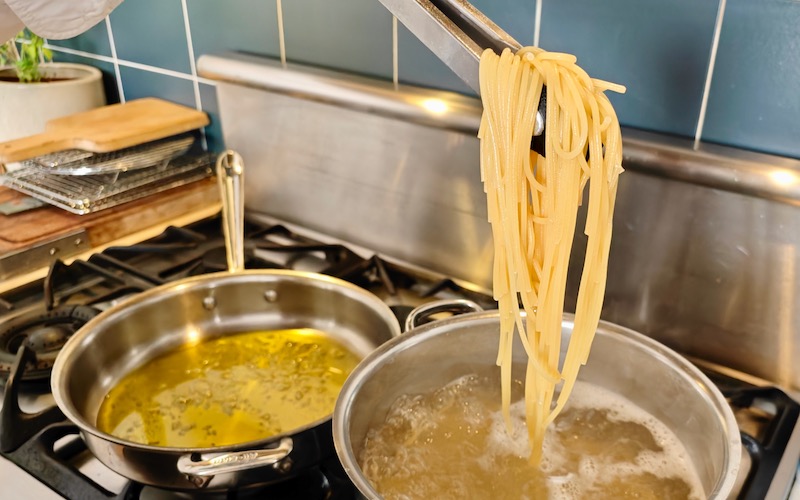
  6. Be brave and take pasta out of the water just before you think it’s ready, so it can finish cooking in the heat of the sauce.
  7. Act quickly, either draining the pasta and reserving some of the cooking water or lifting the pasta straight from the water into the sauce.
  8. Add pasta to the pan of sauce immediately and toss together over the heat (this doesn’t apply to sauces like pesto, that are served ‘a crudo’ and only heated by the warmth of the pasta).
  9. As you toss the pasta and sauce together, add a little of the cooking water – it contains starch from the pasta which makes the sauce creamy and helps bind it and the pasta together.
  10. The sauce should dress and flavour the pasta, not drown it. By tossing the hot pasta and sauce together, the pasta absorbs the sauce so every bite has flavour and you need less sauce.
  11. Serve pasta immediately into warm shallow bowls. The Italians say: “La pasta non aspetta nessuno” (pasta waits for no one).
  12. Eat pasta with a fork, or fork and spoon, never a knife as you shouldn’t cut the strands.

Share page on:

How To Cook Pasta Perfectly

How To Cook Pasta Perfectly

Is fresh pasta better than dried pasta?

Neither is better – they’re different products suited to different dishes. Dried pasta’s firm, durum-wheat bite holds up well to robust, oil-based sauces, while fresh egg pasta’s tender texture suits rich, creamy or meat-based sauces. It comes down to what you’re serving, not which is superior.

Why is Italian dried pasta best?

I buy Australian whenever I can, but when it comes to pasta, Italian is best! Dried pasta should be made from just water and durum wheat (a particularly hard variety of wheat); under Italian law no other wheat variety is allowed. Any other wheat creates a pasta that is too soft when cooked.

What is bronze cut pasta?

The best pasta is extruded through bronze dies rather than the more commercial Teflon-coated ones. This leaves a rougher, more porous texture to give the sauce a better surface to cling to; it’s also called bronze extruded pasta or bronze drawn pasta.

What is artisanal pasta?

Artisanal means that the pasta is made in relatively small quantities and in a traditional way, for example bronze extruded. Some however are quite temperamental and go from hard to soft very quickly. I find a good commercial Italian dried pasta reliable for consistent results, and a little more forgiving if it’s in the pan for a minute too long.

How do you cook dried pasta perfectly al dente?

Always add dried pasta to plenty of well-salted water that’s been brought to a rolling boil, ideally 1 litre of water and 10-15g of salt for every 100g of pasta (2 pints water and ⅓–½oz salt per 3½oz pasta), depending on how salty the sauce is. Use the packet timing as a guide, but check by biting a piece regularly during cooking, and cook it until it’s just al dente (literally ‘to the tooth’), meaning it has some resistance or bite to it. It will continue to cook in the heat of the sauce, so be brave and drain it just before you think it’s ready.


How do you cook fresh pasta perfectly tender?

Always add fresh pasta to plenty of well-salted water that’s been brought to a rolling boil, ideally 1 litre of water and 10-15g of salt for every 100g of pasta (2 pints water and ⅓–½oz salt per 3½oz pasta), depending on how salty the sauce is. Fresh pasta cooks much quicker than dried pasta, due to its higher moisture content. It’s ready almost as soon as it floats. Use recipe timing as a guideline and check by biting a piece. Cook fresh pasta just until it’s tender – although the term ‘al dente’ doesn’t apply to fresh pasta, it should still have a pleasant firmness. It will continue to cook in the heat of the sauce, so be brave and drain it just before you think it’s ready.
Why do you add pasta cooking water to pasta sauce?

The pasta cooking water contains starch from the pasta and tossing a little of this through the pasta and sauce gives a creamy consistency and helps bind the sauce and pasta together. Once pasta is cooked, act quickly. Drain it, reserving some of the cooking water, add pasta to the sauce and toss together so that every strand is coated.

How much sauce should I add to pasta?

The sauce is meant to dress the pasta and flavour it, not drown it. Non-Italians often serve pasta with a lot more sauce than would ever be served in Italy. If you sauce your pasta correctly, by tossing the freshly cooked pasta through the hot sauce, the pasta will absorb the sauce so that every bite has flavour and you’ll need less sauce.

What does pasta risottata mean?

Risottata, meaning ‘in the style of risotto’, is a traditional way of cooking pasta in the sauce rather than by boiling it first then adding it to the sauce at the end. Some recipes cook the dried pasta directly in the sauce, others par-boil it then finish it off in the sauce. Either way the pasta absorbs flavour from the sauce and is extra delicious.

What does al dente mean?

‘Al dente’ literally translates as ‘to the tooth’, meaning the pasta has some bite, or resistance to the tooth. It is how Italians describe dried pasta (or risotto) that is perfectly cooked, meaning it is tender but still firm enough to have some resistance when bitten. The term only applies to dried pasta, not fresh which is cooked until tender.

Why is fresh pasta not cooked al dente?

‘Al dente’ refers to pasta that still has a firm resistance to the tooth when bitten. Dried pasta has this because it’s made from a particularly hard wheat flour (durum). Fresh pasta is made from softer wheat flour which doesn’t give the same firm texture, so it is said to be cooked until it’s tender. It should still have a pleasant firmness though.

Share page on:

What Other Travellers Say

Janet (Tamworth, NSW, Aus.)
Just back from the most amazing trip to Emilia-Romagna with Roberta. Not only the home of Prosciutto di Parma, Parmigiano-Reggiano & Balsamic Vinegar, but scenery to die for and more quaint and exciting restaurants and cafés than you ever imagined. And Roberta is just the person to help you discover and enjoy them! Her knowledge of the history of the region and its wonderful cuisine know no bounds and all added to the excitement of the trip. It was faultless - well organized and lots of fun!
Deb (Belconnen, ACT, Aus.)
Wow, what a tour – I learned so much! Awesome fun traveling through Emilia-Romagna experiencing first hand some of the produce I've worked with over the last couple of years cooking with Roberta's recipe kits – the family are reaping the benefits now. If you're thinking of joining Roberta in future years get ready for an amazing experience.
Mark (Elizabeth Bay, NSW, Aus.)
My wife and I recently joined Roberta's Emilia-Romagna tour. We enjoyed all the temptations offered and learned a lot about that part of Italy, especially its food and wine culture. What was most impressive was Roberta's local knowledge of people and places. The planning and effort she put into making the whole experience seem effortless was remarkable.
Karen (Bowral, NSW, Aus.)
Our tour with Roberta through Emilia-Romagna was the highlight of the year. Good company, gorgeous palazzi and great food. What more could one ask for? Roberta's enthusiasm and knowledge made this a once in a lifetime experience through an extraordinary, diverse and very special region.
Shelley (Auckland, NZ)
Roberta’s passion for Italy shone throughout an unforgettable food and wine tour. She introduced us to family-owned artisanal producers, where we experienced everything from attic-aged balsamic to small-batch wines, Parma ham and Parmigiano-Reggiano. The local guides were equally passionate, and the excellent transport and accommodation made the trip effortless. This tour captured the region’s traditions, flavours and people, and thanks to Roberta’s deep knowledge we left with wonderful memories. A truly authentic culinary adventure — highly recommended.
Subscribe To My Newsletter & Get A Free Online Italian Cooking Class (RRP $39)