Every guidebook calls Venice ‘La Serenissima’ and leaves it at that, as if the name alone explains an ancient city spread over 130+ islands, threaded by 176 canals, and with no roads at all (except on Lido).
What they rarely tell you is how to actually move through it: which vaporetto stop saves you twenty minutes, which bàcaro serves you the same cicchetti they serve the gondoliers on their lunch breaks, or that the best produce at the Rialto market sells out by mid-morning on Saturday. After decades of visits, I’ve learned to move through Venice more like a local than a tourist. This Venice food guide is everything I wish I’d known on my first visit – not the postcard version, but the practical one: where to stay for a five-star view without the five-star price tag, which bàcari the locals drink at, how the fish market really works, and – because nothing here moves without water – how to get around like someone who already has it sorted. Venice rewards a bit of local knowledge. This is mine, freely shared, starting with where to lay your head.
Where to Stay in Venice Hotel Wildner
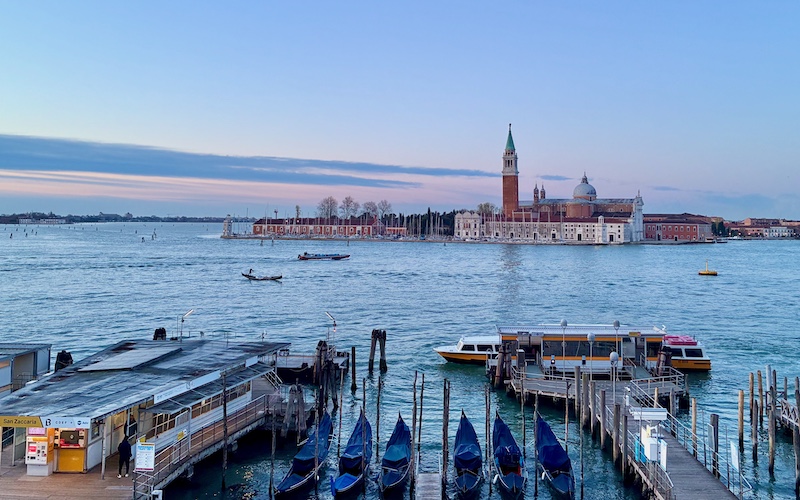
When choosing a hotel in Venice my priority is always a great view – and it doesn’t get much better than the one from this comfortable 3-star hotel overlooking the lagoon and mouth of the Grand Canal. It’s the same view that the two 5-stars right alongside it charge a lot more for. Right on Riva degli Schiavoni, Wildner is a 5-minute walk to Piazza San Marco, has a vaoretto stop just outside and a great in-house restaurant.
Where to Eat in Venice La Buona Accoglienza Association
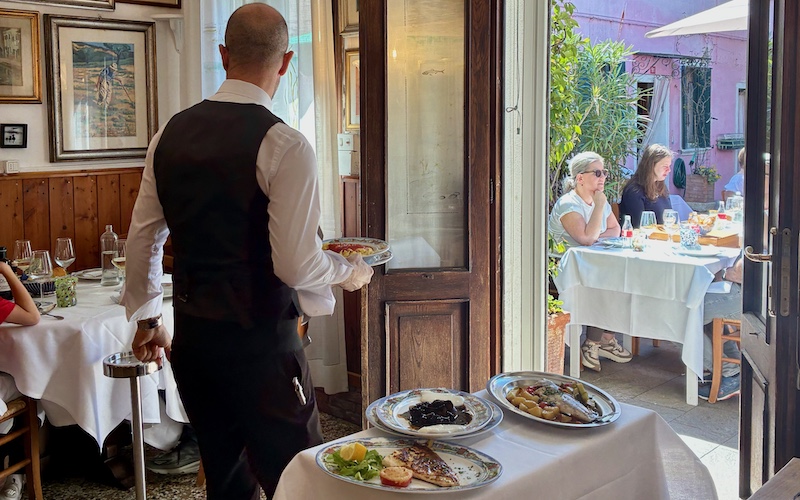
Meaning ‘warm welcome’, the Buona Accoglienza Association is a group of Venetian restaurateurs that have come together to ensure locals and visitors to their city experience warm hospitality and delicious food prepared with care from fresh local produce. Most of them use fruit and vegetables grown by the Osti in Orto project on the lagoon island of Sant’Erasmo and they are all among the best restaurants in Venice.
Where to Drink in Venice Venice’s Best Bàcari
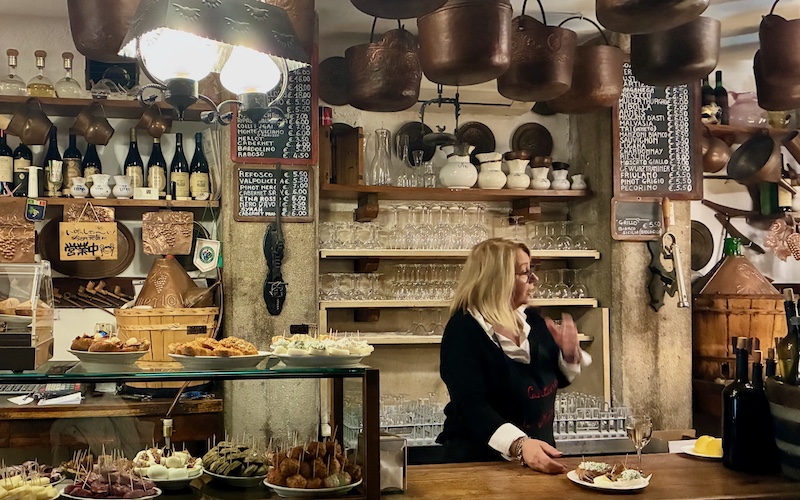
Venetian bàcari are my favourite Italian bars. Of course there are great bars in Rome, Bologna and other cities – the Italians do love a drink – but the Venice ritual of ‘cicchetti e un’ombra’ takes it to a whole different level. From traditional bàcari like Dorsoduro’s Cantine del Vino già Schiavi to natural wine bar Vizietto in San Polo, Venice is full of great places to drink and snack. See my list of favourite bàcari at the above link to learn more.
How To Explore Venice’s Waterways Deep Blue Tours
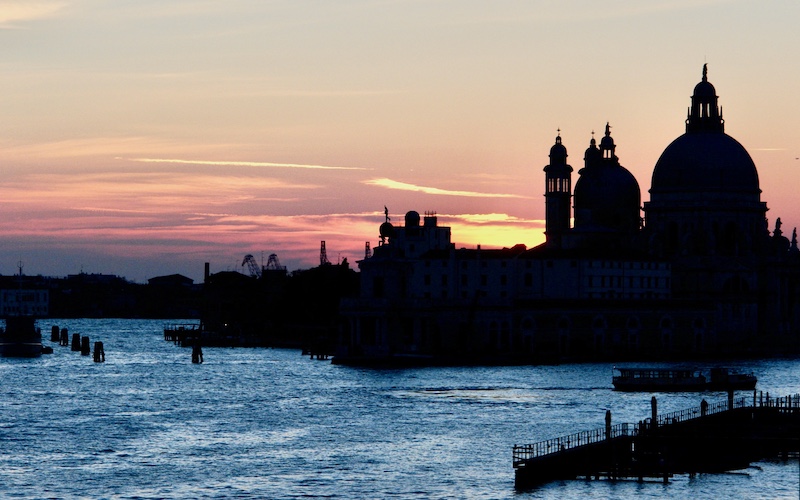
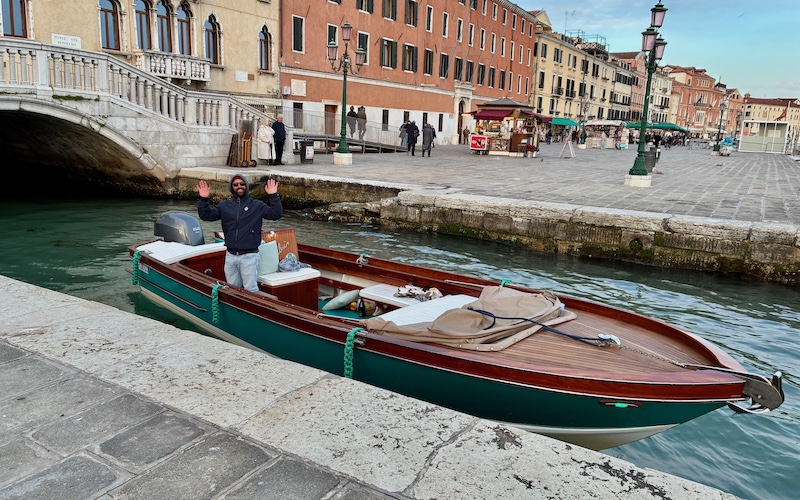
Venice consists of the historic centre’s 118 islets, plus dozens of lagoon islands. So, apart from walking over bridges, the only way to get around is by boat – and the variety of Venetian boats is astounding. To really appreciate Venice, you must take to the water – and one of the best ways to do this is on a tour with Niky and Francesco, both excellent captains and guides. I love their sunset Hidden Canals tour on a wooden day-cruiser.
Where To Shop in Venice Mercati di Rialto: Erbaria and Pescaria
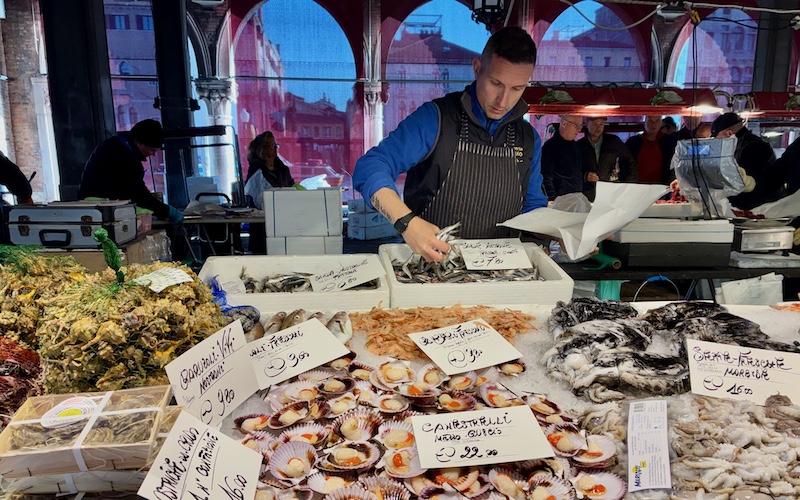
Venice’s most famous food market is really two separate markets side-by-side. The al fresco produce market has been in Campo de l’Erbaria since the 11th century, and the covered seafood market – today in a neo-Gothic hall built in 1907 – on site since at least the mid-15th century. Both front the Grand Canal beside ornate Rialto Bridge and I love visiting early in the morning when the locals are shopping and produce is arriving by barge.
Where To See Venice Without The Crowds Castello
To enjoy a peaceful Venice, set out early along Riva degli Schiavoni and over Ponte della Ca’ di Dio (5 minutes from Hotel Wildner), past the partially submerged bronze commemorating the women of the resistance, towards the Arsenale. Castello is an entirely different Venice of small cafés in parkland, children’s playgrounds, dog-walkers and joggers, where it’s hard to imagine you’re in a city with over 20 million visitors a year.
How To Travel In Venice Stefano Furlan’s Venice Taxi Boat
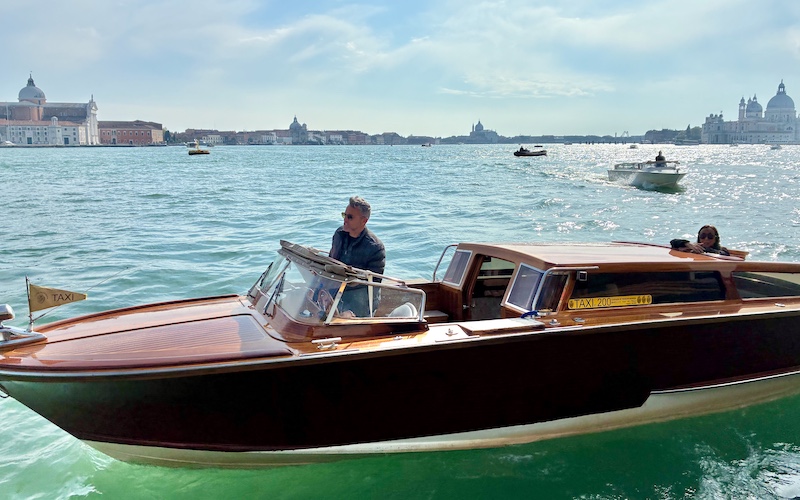
Scooting across the lagoon in a wooden speedboat is the only way you want to arrive in Venice, unless you enjoy ferries and dragging your luggage up and down bridges. While some Venice taxis feel like an ordinary city cab on the water, a ride in Stefano’s beautiful mahogany and chrome speedboat – with its gorgeous cream leather upholstery – is pure luxury (at the same price). His customer service is excellent too. Tell him I sent you.
Published 23 Jul 2026
Yes, but only in two places. Lido, Venice’s beach island, has roads, cars and buses like anywhere else. And if you’re driving to Venice yourself, Piazzale Roma – right where the road bridge from the mainland ends – is where you park, since the historic centre itself has no roads at all beyond that point.
The historic centre of Venice is made up of about 118 small islands, separated by 176 canals and linked by 435 bridges – plus there are dozens more islands scattered across the wider lagoon, some populated, some just uninhabited mudflats and marshy islets known as barene.
Venice’s main group of islands (historic centre or centro storico) is divided into six districts called ‘sestieri’ (or sixths): Santa Croce, Cannaregio, San Polo, Dorsoduro, San Marco and Castello.
Most Venetians live away from the main tourist routes, in the sestieri of Cannaregio, Dorsoduro and Castello – all still very much residential areas with everyday shops, local bars and far fewer crowds than San Marco and San Polo. Santa Croce, at the western end of the centro storico is the most industrial sestieri and home to the main transport hub, Piazzale Roma car park and bus terminal, plus the manmade island of Trochetto – Venice’s largest car park, used for overflow parking of larger vehicles like buses and camper vans.

That’s the Monumento alla Partigiana (Monument to the Partisan Woman), a bronze figure by Augusto Murer set on stone platforms in the lagoon just off the Riva dei Sette Martiri (Promenade of the Seven Martyrs) – named for seven Venetian partisan women executed there by Germans in 1944. Architect Carlo Scarpa deliberately placed the sculpture at water level so the tide regularly washes over her, a quietly powerful tribute to the women of the Italian resistance.
Walking is undoubtedly the best way to explore Venice. If you’re not very mobile – or simply tired – Venice also has an excellent public transport system, and taking a vaporetto can be a wonderfully scenic way to explore too. Line 1 (all-stops) and Line 2 (fewer stops) go along the Grand Canal, while Line 5.1 goes around the perimeter of the historic centre. Line 1 runs back and forth along the canal taking about 45 minutes each way. Line 2 takes a loop, traveling via the Giudecca Canal from San Marco to Piazzale Roma then returning via the Grand Canal from Piazzale Roma to San Marco. The CheBateo app is used by many venetian locals – it’s worth downloading it to your phone.
The Alilaguna water bus departs Venice Marco Polo Airport every 30–60 minutes throughout most of the day and evening, taking you right into the city by water. Buy tickets at the airport’s Alilaguna desk or online at Alilaguna.it, VeneziaUnica.it or MyPassVenezia.it – note that ordinary vaporetto tickets aren’t valid on Alilaguna.
If you’ll be using vaporetti for sightseeing as well as arrival, a multi-day pass is worth it. On VeneziaUnica.it, enter your name at the top right, then choose ‘Public Transport in Venice’ from the left-hand menu, select ACTV Time-Limited Tickets, assign your name, and pick a 75-minute ticket or a 1, 2 or 3-day pass.