Just an hour north of Edinburgh, Perthshire straddles Scotland’s Highland Line – the geological fault line that has divided the country for millennia.
It separates the mountainous, traditionally Gaelic-speaking north and west from the more settled, arable south and east, where Scots – the language of the Lowlands – was once most people’s mother tongue. The result is a region of extraordinary contrasts: fertile river valleys giving way to dramatic Highland glens, ancient royal history sitting alongside some of Scotland’s most exciting food and drink. Perth itself was the traditional seat of the Scottish royal court, and for over 800 years Scotland’s kings were crowned at nearby Scone – a tradition stretching from the first King of the Scots Kenneth MacAlpin (843 AD) to Charles II in 1651.
Where to Stay in Perthshire Monachyle Mhor (Balquhidder Glen)
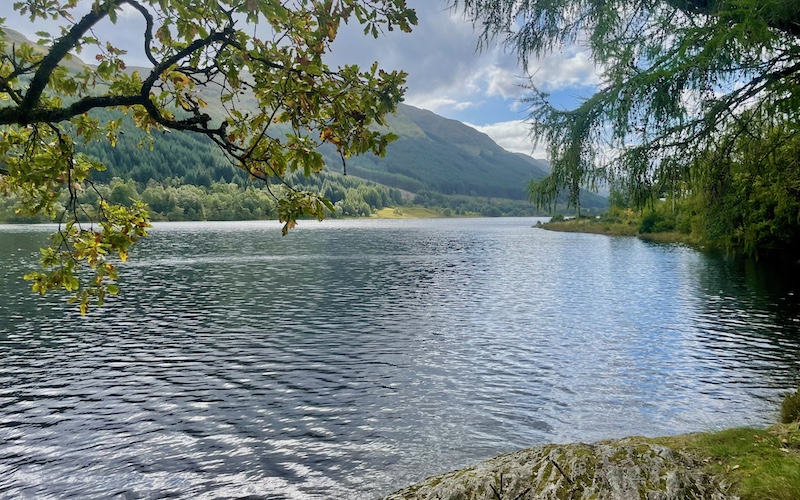
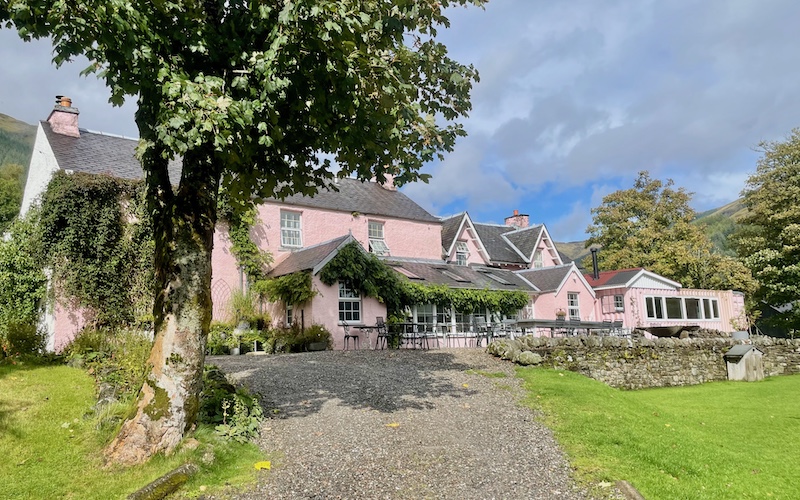
This rambling old farm sits 10km down a single-track road along Loch Voil, deep in one of the most beautiful – and historically rich – valleys in Scotland. Accommodation ranges from repurposed farm buildings to quirky newer cabins. The kitchen, bar and dining room are in the old farmhouse and meals are special. Owner chef Tom Lewis oversees the menu while also hunting and foraging for it.
Where to Eat in Perthshire Mhor84 (Balquhidder)
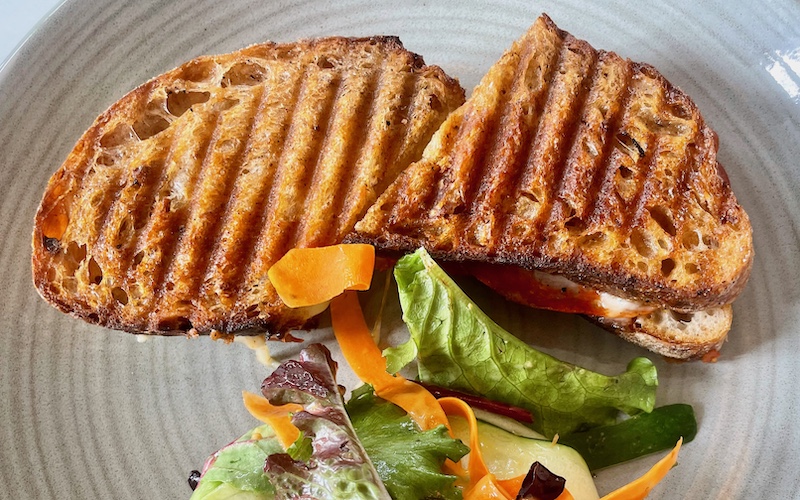
Where the A84 meets the track to Monachyle Mhor, you’ll find Tom’s quirky Mhor84 café and motel. The all-day menu features some of the best toasties I’ve eaten – try the mozzarella, chorizo and red capsicum – alongside homemade soup, delicious salads, hearty pies from his nearby Mhor Bread bakery and irresistible sweet treats. The fun homewares and gift shop next door is worth a browse too.
Where to Drink in Perthshire The Taybank (Dunkeld)
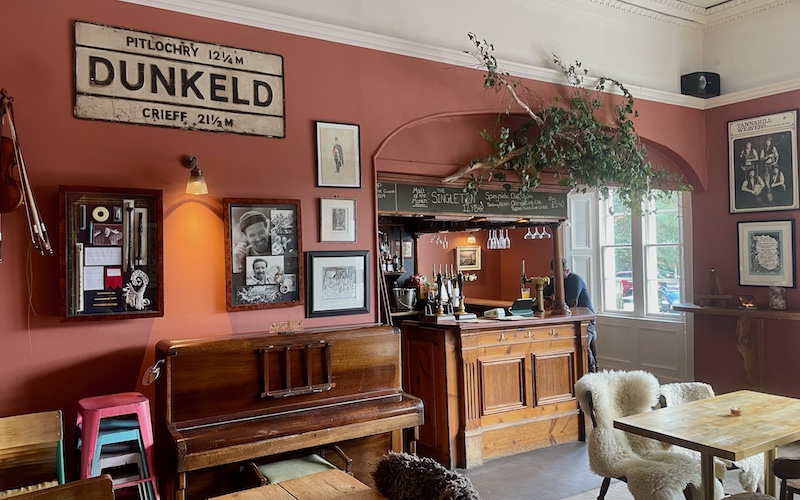
Overlooking the Tay (Scotland’s longest river), The Taybank is worth a detour not just for a pint with the locals in the cosy front bar but for outstanding food built on local produce, much of it grown in the hotel’s own walled garden. Upstairs dining rooms have great river views and the beer garden out front is right on the bank. The fregola risotto with smoked mushrooms is one of the best dishes I’ve eaten anywhere.
Distilling in Perthshire Persie Gin Distillery (Glenshee)
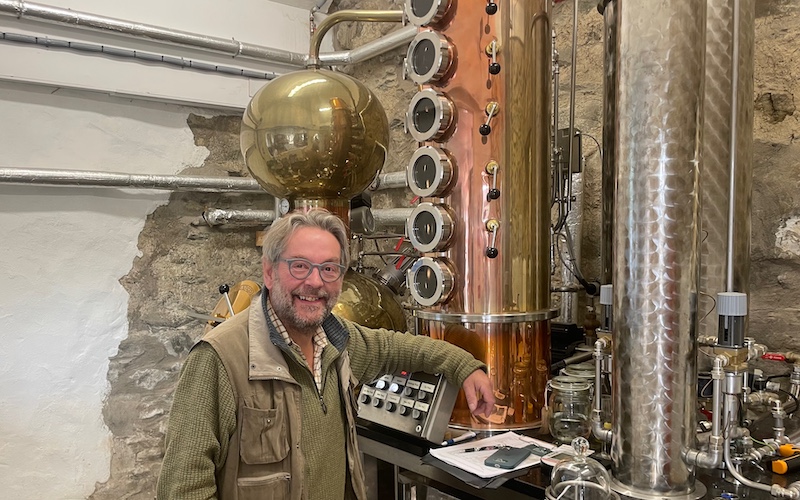
After years as a marketing consultant to some of Scotland’s biggest whisky names – including Johnnie Walker and Talisker – Simon Fairclough trained as a distiller and converted an old hotel into a distillery. His bespoke hybrid still combines pot and column distillation, producing a range of award-winning gins: one citrusy, one herbal martini-style, and a slightly sweet Old Tom, as well as several to raise money for animal welfare.
What to Taste in Perthshire Drumturk Cheese (Glenshee)
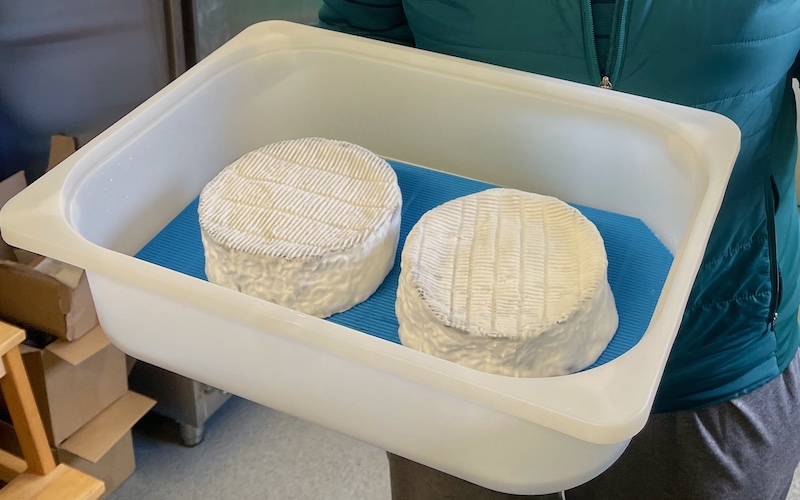
Climbing up into Glenshee from the broad, raspberry-farming lowlands of Strathmore, you cross into Highland Perthshire and reach Shieldrum Farm. Here Denise Ferguson raises Swiss Toggenburg goats with her daughter and granddaughter, using their milk to make small batches of deliciously distinctive cheese – including the award-winning ashed Ptarmigan. The farm shop is open seven days and the goats are always up for a visit.
History in Perthshire Rob Roy’s Grave (Balquhidder)
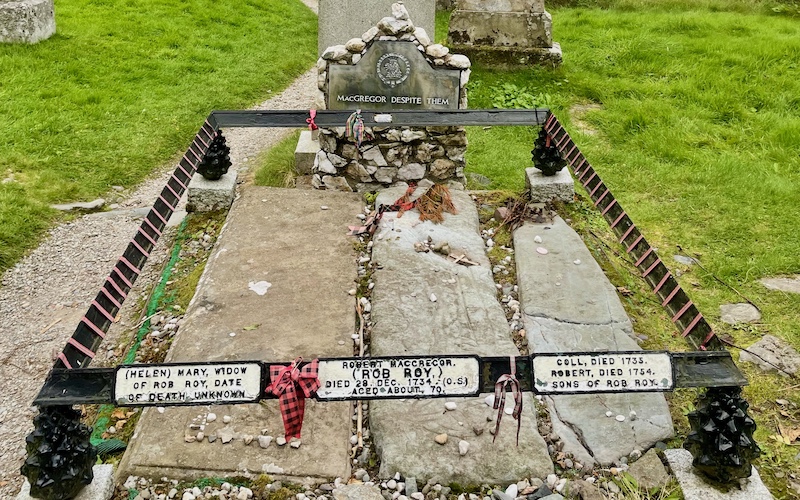
Halfway up the glen on the road to Monachyle Mhor, the ruins of the old Balquhidder Kirk sit in the kirkyard where Jacobite folk hero Rob Roy MacGregor is buried. The ruins are also the final resting place of the Chiefs of Clan MacLaren. Further up the glen, watch for the coffin stone where men rested coffins when carrying them down to the kirk as it was considered bad luck to put them on the ground.
Published 21 May 2026
Perthshire is both Lowland and Highland. It straddles the Highland Line – the geological fault that divides Highland and Lowland Scotland – making it one of Scotland’s most geographically diverse regions. Perth city and the fertile Strathmore valley are quintessentially Lowland Scotland; Balquhidder, Glenshee and the Loch Tay area are firmly Scottish Highland.
The Highland Line – more precisely the Highland Boundary Fault – is a geological fault line running diagonally across Scotland from Helensburgh in the west to Stonehaven in the east. It marks the divide between the mountainous, sparsely populated Highlands to the north and west, and the more densely settled Lowlands to the south and east. In Perthshire, the transition is particularly dramatic – you can drive from rolling farmland into a Highland glen in less than half an hour.
Yes – Perth is approximately 45 miles (72.5km) north of Edinburgh, around an hour’s drive via the M90. It makes Perthshire one of the most accessible Highland gateway destinations from Scotland’s capital.
Perthshire is known for its dramatic Highland scenery, its ancient royal history – Scone was the crowning place of Scottish kings for over 800 years – and increasingly for outstanding food and drink, from award-winning artisan producers and craft distilleries to great gastropubs and destination restaurants.
Perthshire is best known for its soft fruit, especially raspberries. The fertile valley of Strathmore around Blairgowrie – nicknamed the ‘Berry Toon’ – became Perthshire’s soft fruit capital in the early 20th century, and soft fruit is still grown there today. Long summer daylight hours and cool temperatures let the berries ripen slowly, building more sweetness and flavour – perfect for a bowl of cranachan.
For generations the harvest drew pickers from Glasgow and Dundee, along with Scottish Travellers (Scotland’s traditionally itinerant community), many housed in a ‘Tin City’ of dormitories that held around 1,000 workers. Today most of the picking is done by seasonal workers from overseas.
The River Tay is also one of Scotland’s most famous salmon rivers, and Perth hosted Scotland’s first-ever farmers’ market in 1999.
The Stone of Destiny – also known as the Stone of Scone – is a block of sandstone on which Scotland’s kings were crowned for centuries on Moot Hill in the grounds of today’s Scone Palace, just outside Perth. It is one of Scotland’s most potent national symbols, and its removal to England in 1296 was considered an act of conquest.
Seized by England’s Edward I in 1296 as a spoil of war, the Stone was built into a specially made coronation throne at Westminster Abbey and has been used in every British monarch’s coronation since Edward II in 1308 – including King Charles III in 2023. It has now been returned to Scotland and is on display at Perth Museum, a short drive from its original home at Scone.
Scone Palace is just 3km north of Perth, overlooking the River Tay. Moot Hill, in its grounds, was the crowning place of Scottish kings for over 800 years – from Kenneth MacAlpin, the first King of the Scots, in 843, to Charles II in 1651. The palace is open to visitors, and a replica of the Stone of Destiny sits on Moot Hill, the Stone’s original home.
Balquhidder is in the historic county of Perthshire, though today it’s administered by Stirling Council, and it falls within the Loch Lomond and The Trossachs National Park – one of Scotland’s two national parks. It’s a deeply Highland valley, rich in Jacobite history and home to folk hero Rob Roy MacGregor.
Rob Roy MacGregor (1671–1734) was a Highland cattle drover who became one of Scotland’s most famous outlaws and folk heroes.
When a large sum borrowed from the Duke of Montrose went missing in 1711, Montrose seized his lands and had him declared an outlaw. Rob Roy’s long feud with the duke earned him a reputation as a Scottish Robin Hood. He also fought for the Jacobites in the 1715 rising.
Sir Walter Scott’s 1817 novel Rob Roy made him a legend, and Liam Neeson played him in the 1995 film. He died at Inverlochlarig, at the head of Balquhidder Glen, and is buried in Balquhidder kirkyard alongside his wife and two sons, beneath a gravestone reading ‘MacGregor Despite Them’ – a defiant nod to the outlawing of his clan’s name.
Beside the ruins of the old kirk stands the current parish church, built in 1855.

Perthshire is unusual in containing parts of Scotland’s two national parks. Loch Lomond and The Trossachs National Park takes in the Balquhidder Glen area in the south-west, while Highland Perthshire, with Blair Atholl and upper Glenshee, has been part of the Cairngorms National Park – the UK’s largest – since 2010.