My top tip for experiencing Istanbul like a local is to hit the streets early before the crowds – by lunchtime, especially on weekends, you’ll be jostling along with a mass of humanity, but in the morning you can feel like you’re the only one around.
The Hodja’s pre-dawn call to morning prayer is one of my first and most enduring memories of Istanbul, the vibrant city that sits between Asia and Europe on the Bosphorus Strait. It’s a city where east meets west and old meets new, and it gets plenty of visitors keen to see its historic sites and enjoy its delicious food. As in any major city, there are businesses designed to take advantage of them – but Turks value hospitality above all else, and once you get away from the main tourist areas, or even within them when you know where to look, you’ll easily unearth the authentic Istanbul and experience it like a traveller, not a tourist. This Istanbul food guide will show you how.
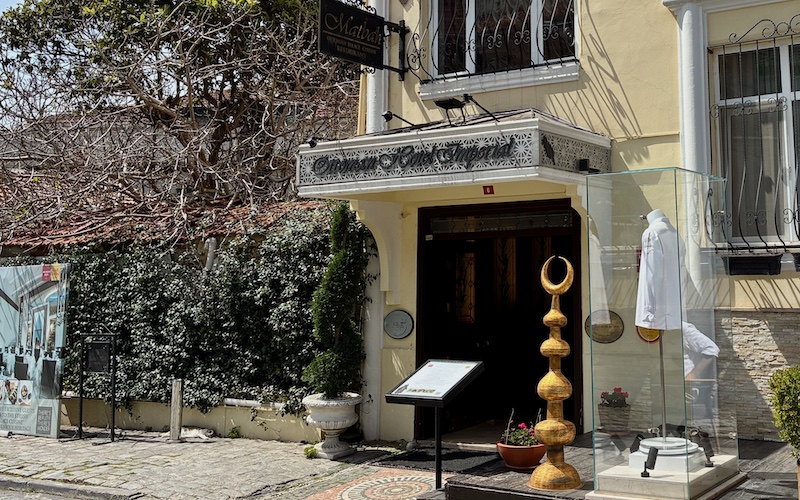
Where to Stay in Istanbul Ottoman Hotel Imperial
This historic 4-star hotel is in the pedestrian area around The Blue Mosque – walking distance to all I want to see (and almost everywhere I want to eat) in Istanbul. Service is friendly and the breakfast buffet includes classics like braided white cheese and simit – served in Matbah, which at night becomes one of Istanbul’s best restaurants. If you don’t mind the Hodja’s sunrise call to prayer, ask for a corner room overlooking Hagia Sophia.
Where to Eat in Istanbul Efendy
No trip to Istanbul is complete without experiencing what chef Somer Sivrioğlu is doing with modern Turkish food in his hometown. A little away from the touristy waterfront, Efendy attracts locals and travellers in the know. Well-spaced tables, soft lighting and a jazzy soundtrack set the mood, while Maitre d’ Kemal Aydin assures charming flawless service. Go the tasting menu and see my list of Istanbul’s best restaurants for more details.
Where To Drink in Istanbul Osmanlizadeler Hoca Paşa
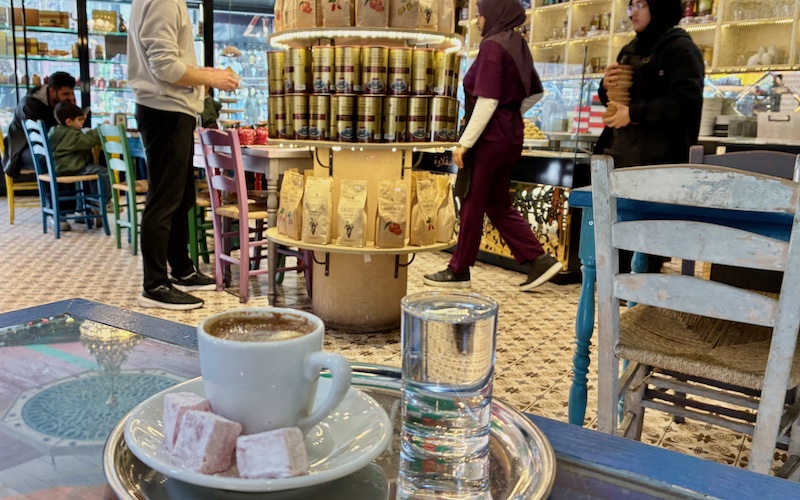
My favourite Istanbul café is this historic sweet shop on the corner of Gülhane Park, with its towering window display of baklava and colourful array of Turkish delight (traditional and wildly flavoured), made with family recipes handed down since they started in 1879. They serve Italian coffee if you need a fix, but a Turkish coffee and rose-flavoured lokum at one of the small wooden tables here suits me just fine. There’s a smaller shop in Karaköy too.
Where To Shop in Istanbul Egyptian Bazaar
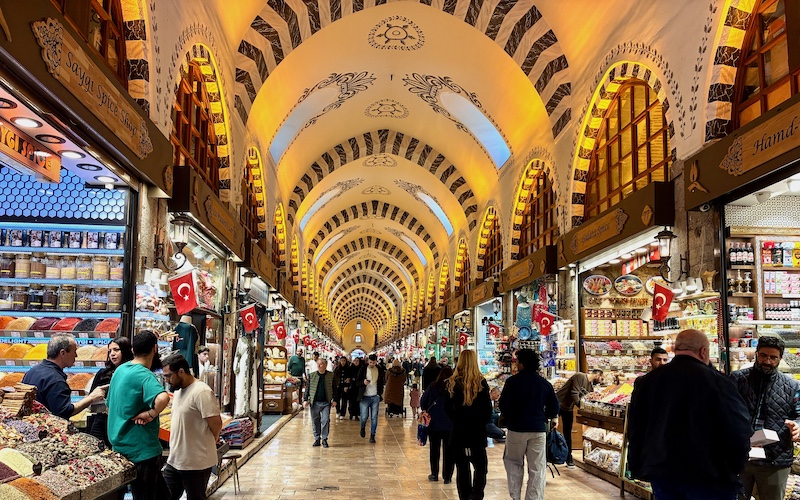
Istanbul’s Spice Bazaar is called ‘Egyptian Bazaar’ in Turkish because it was built in the 1660s with duties on imported Egyptian goods. There’s row upon row of spices, perfumes, dried fruit, nuts, and sweets alongside other traditional foods like hollowed dried vegetables for stuffing, cheeses, cured meats, coffee and tea. Some shops sell scarves, jewellery, ceramics and other souvenirs too. See my Spice Bazaar guide for details.
Where To Walk In Istanbul Galata Bridge
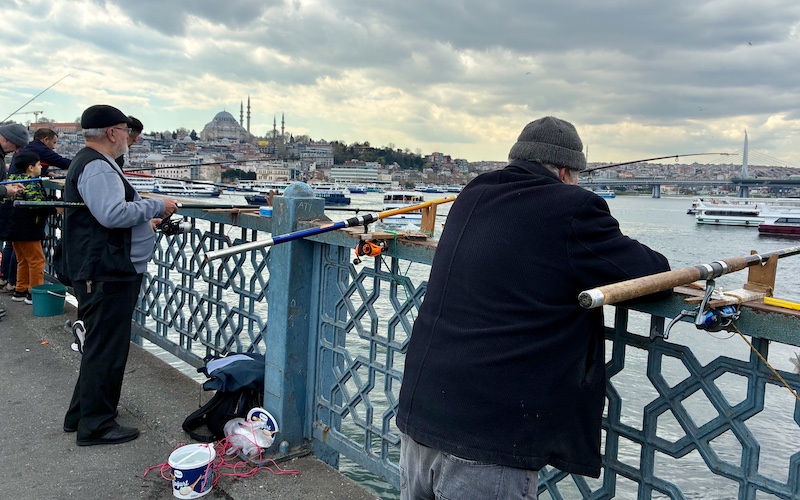
After a wander through the Spice Bazaar, walk on across the nearby Galata Bridge for great views of the Istanbul skyline. It’s a lively spot, with hundreds of people fishing from the bridge, buckets of fish – some still swimming – beside them, and plenty of patient hopeful cats nearby. Don’t be tempted by the touristy ‘balik ekmek’ restaurants in front of and under the bridge though, see my guide to Istanbul’s best street food for the real deal.
Where To Picnic in Istanbul Gülhane Park
Once part of Topkapi Palace’s private grounds, Gülhane is now a flower-filled, public oasis in bustling Istanbul. It’s significant historically too — the 1839 Edict of Gülhane proclaimed here launched equality reforms across the Ottoman Empire, and in 1928 Atatürk announced the new Turkish alphabet here, raising literacy rates from under 10% to almost 50% in just 25 years. It’s the perfect spot for a picnic with delicious Istanbul street food.
What to Visit in Istanbul Sultan Ahmet Mosque and Square
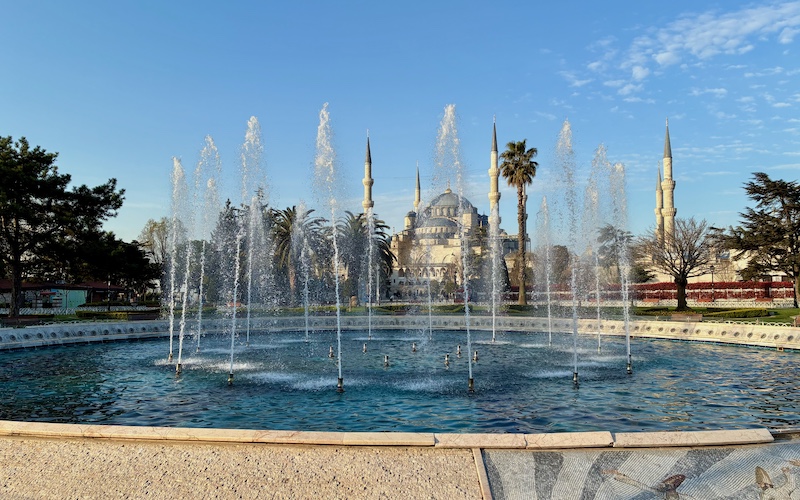
The Blue Mosque, as it’s widely known, was built in the early 1600s and is famous for its cascading domes, six slender minarets, and over 20,000 hand-painted blue Iznik tiles that give it its nickname. Anyone can visit, free of charge, outside prayer times – and the whole neighbourhood of parkland and public square with its beautiful fountain is one of my favourite places in Istanbul for an early morning walk. Check dress code before visiting.
Published 22 Aug 2026
Somer Sivrioğlu is a Turkish-Australian chef, restaurateur and television personality — best known in Australia for his Sydney restaurants Efendy, Anason, Maydanoz and Hamsi, and in Turkey as a judge on MasterChef Türkiye. Born in Istanbul, he moved to Australia in 1995 to complete an MBA, then turned his passion for Turkish food into a career, opening Efendy in Balmain in 2007 with a mission to show Australians that Turkish cuisine was far more than late-night kebabs. He returns to Istanbul regularly and Efendy — his Istanbul fine-diner — reflects his deep knowledge of both Anatolian cooking traditions and contemporary Turkish cuisine.

Gülhane means ‘rose house’ in Turkish — the park was originally the imperial rose garden of Topkapi Palace, where roses were grown to produce perfume for the Sultan’s court. Today the name lives on in the park’s colourful seasonal flowerbeds, though roses are no longer its defining feature.
Proclaimed in Gülhane Park in 1839 by Sultan Abdülmecid I, the Edict of Gülhane was a landmark reform that transformed Ottoman subjects into citizens equal before the law — regardless of religion or ethnicity. It guaranteed protections for life, property and honour, introduced fairer taxation, and reformed military conscription to include non-Muslims. It launched the Tanzimat period of modernisation, during which the Ottoman Empire reshaped itself along Western lines.
Until 1928, Turkish was written in the Arabic script of the Ottoman Empire — a system poorly suited to Turkish phonetics that was difficult to learn and contributed to very low literacy rates. Mustafa Kemal Atatürk – the first president of the Republic of Turkey – replaced it with a modified Latin alphabet specifically designed for Turkish, adding characters like ç, ş, ğ, ö and ü to represent sounds the standard Latin alphabet couldn’t capture. The new alphabet was far more intuitive to learn and, combined with a national literacy campaign — including adult education courses across the country — literacy rates rose from around 10% in 1927 to almost 50% within 25 years.
Yes — most mosques in Istanbul welcome non-Muslim visitors, and entry is generally free. The main exceptions are during the five daily prayer times and Friday morning prayers, when mosques are closed except to worshippers. The Blue Mosque (Sultan Ahmet Mosque) and Hagia Sophia are the most visited; note that Hagia Sophia, reconverted to a mosque in 2020, now charges an entry fee for non-Muslims.
Both men and women should fully cover their shoulders and legs when visiting a mosque. Women are also required to cover their hair; scarves are available to borrow at the entrance to most major mosques including the Blue Mosque. Remove your shoes before entering — you’ll carry them in a bag provided.
In 2022, the Turkish government formally requested that the international community use Türkiye — the name Turks have always used for their country — rather than the English-language ‘Turkey’. The United Nations accepted the change immediately. Türkiye better reflects Turkish pronunciation and identity, and avoids the associations the English word ‘turkey’ carries. You’ll see both spellings in use internationally, but Türkiye is now the country’s official name in all languages.