Guide to Istanbul’s Spice Bazaar

Istanbul’s Grand Bazaar is one of the oldest and largest covered markets in the world and can take days to explore. For shopping in Istanbul I prefer the smaller, food-focused ‘Egyptian Bazaar’ and this guide to Istanbul’s Spice Bazaar will explain why.

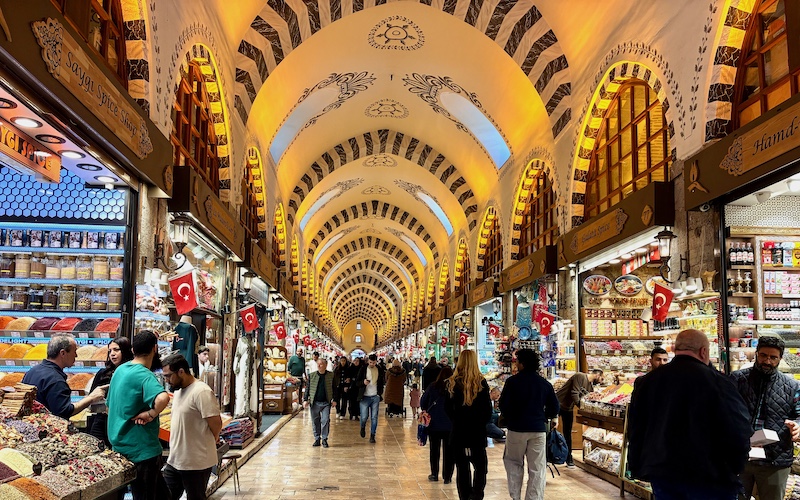
Istanbul Spice Bazaar Guide - Main Hall Egyptian Bazaar HERO

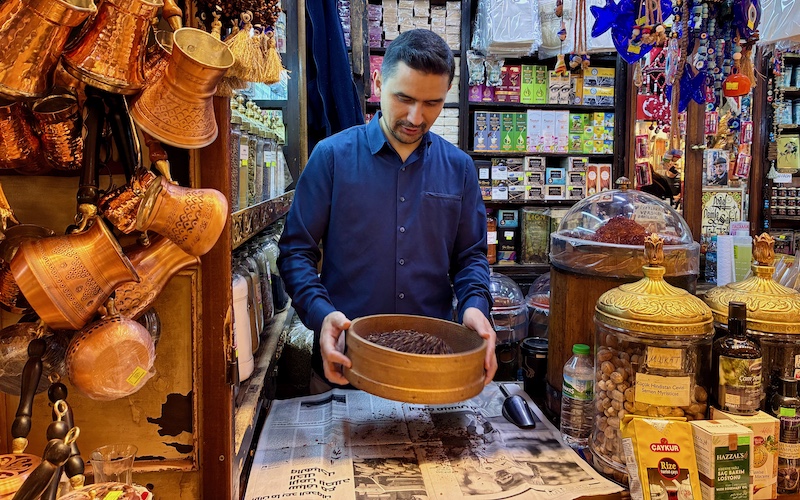
First the naming – is it the Spice Bazaar or the Egyptian Bazaar? It depends which language you’re speaking. The construction of the building, in the 1660s, was funded by duties levied on imported Egyptian goods – so its Turkish name, Mısır Çarşısı, literally means Egyptian Bazaar. Its English name, Spice Bazaar, is more descriptive however as most shops offer a heady mix of dried spices, perfumes, tea, dried fruit and nuts, as well as vivid arrays of lokum and other sweets. Some have strings of dried hollowed vegetables from Gaziantep ready to be stuffed and poached (see video below), and many also sell scarves, jewellery and ceramics with a few dedicated entirely to these as well as other souvenirs and clothes – but most sell food. With only about 85 shops, Istanbul’s Spice Bazaar – shaped like an asymmetrical T – is a very manageable size for a morning or afternoon visit. The stalls are spread over one long hall running from the main entrance – Eminönü Gate (Gate 1) off New Mosque square – to the back wall where a short arm turns right to Haseki Gate (Gate 2) and the longer arm turns left to an internal gallery of handicraft and ceramic shops. There’s touting – but it’s mostly gentle: “hello, hello, where are you from” and my favourite: “please come inside, I have everything except one thing”. This gets the passer-by to stop and ask “what”, to which they reply “customers” or “you”. Pause for even a moment and you’ll be handed a glass of Turkish tea, offered samples of wares, and engaged in conversation. They are such artful salesmen because they genuinely enjoy connecting with people. I love seeing the delivery man supplying stallholders with glasses of Turkish tea and small cups of Turkish coffee from his ornate copper tray too. Here’s a guide to my favourite shops in Istanbul’s Spice Bazaar.

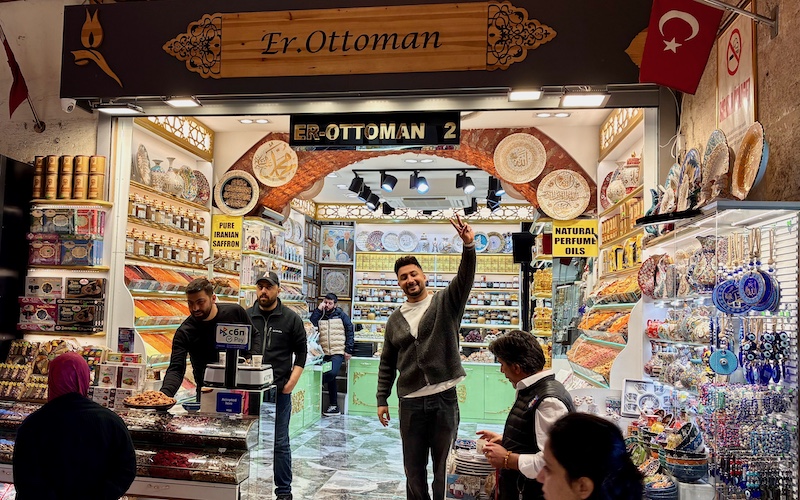
Istanbul Spice Bazaar Guide (Egyptian Bazaar) - 2.Er Ottoman

Er Ottoman (Shop 2)
It seems appropriate to stop at the first shop on your right as you walk through Eminönü Gate – I couldn’t help it as it was where I first encountered the “I have everything … except customers” line, which stopped me in my tracks, as it’s designed to do. This is a great place to start exploring the rows upon rows of spices, herbal teas, essential oils, dried fruits and other sweets (including huge logs of nut-studded and rose petal-coated Turkish delight).

Istanbul Spice Bazaar Guide (Egyptian Bazaar)

Cankurtaran Gida (Shop 33)
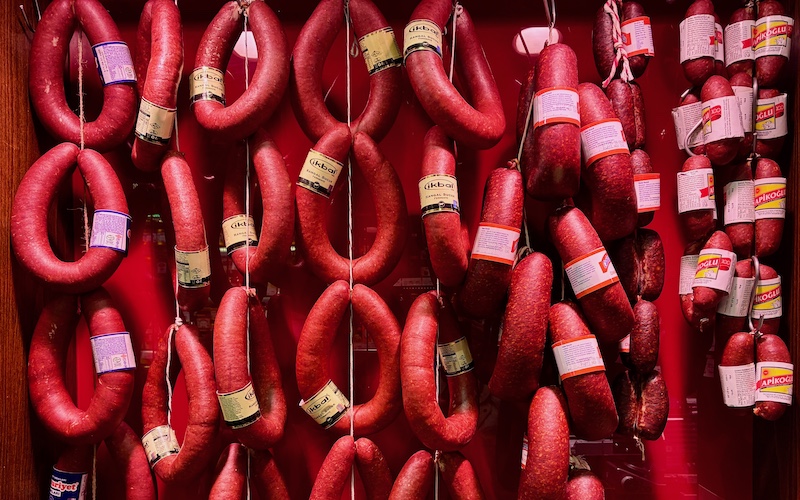
This historic delicatessen is the place for Turkish cheeses, from ubiquitous fresh white beyaz peynir and pungent deri tulum matured in goat or sheep skin, to aged regional kaşar and modern Turkish buffalo burrata. There’s a wall of bright red suçuk sausages in various shapes and sizes, as well as pastirma (dried spiced beef) from some of Türkiye’s best artisanal producers. All perfect if you’re self-catering or just fancy a picnic lunch.

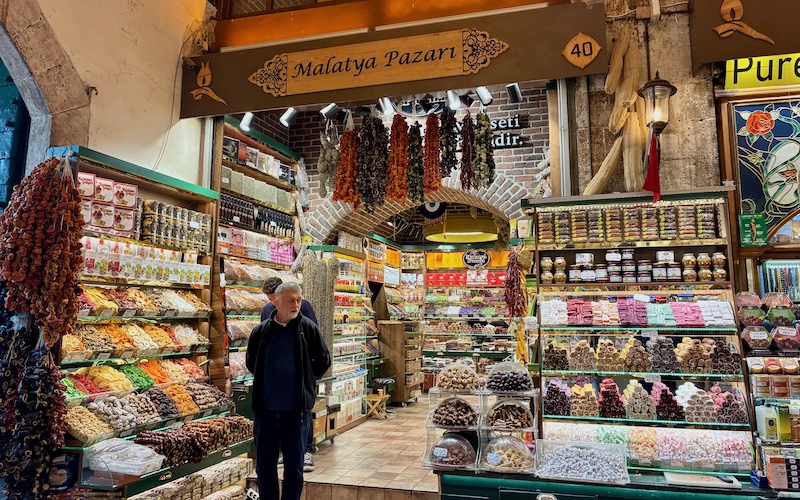
Istanbul Spice Bazaar Guide (Egyptian Bazaar) - 40. Malatya Pazari

Malatya Pazari (Shops 40, 44, 44/1)
One of the oldest names in the Spice Bazaar, founded in 1870, this family business now has three shops on the right-hand corner of the cross aisle (near Gate 2). Each has a subtly different focus: traditional (44); modern including gift boxes vac-sealed for travelling (44/1); and opposite it (40) with big tubs of dried fruits, nuts, lokum and other sweets – check out their strings of Gaziantep hollowed dried vegetables (see video below).

Istanbul Spice Bazaar Guide (Egyptian Bazaar) - 41/1. Kalmaz Baharat

Kalmaz Baharat (Shop 41/1)
I love this tiny traditional stall on the corner opposite Malatya, frozen in time since it was opened in 1962 by the current owner – Adnan Kalmaz’s – great-grandfather. To ensure maximum freshness and aroma, Adnan grinds spices onsite daily in small batches; a service appreciated by his regular Turkish customers. There’s also artisanal traditional products, like unrefined kekik suyu (oregano water) for soothing skin irritations.

Istanbul Spice Bazaar Guide (Egyptian Bazaar) - 63. Huma Handicrafts

Huma Handicrafts (Shop 63)
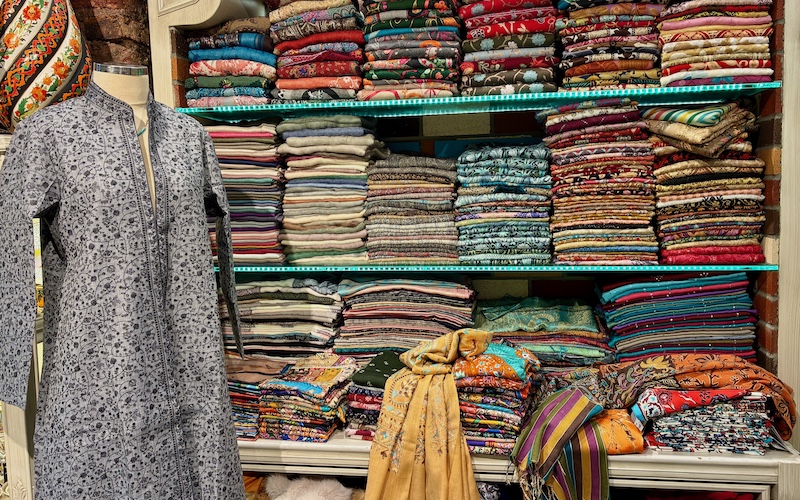
This shop has friendly service and beautiful scarves at a range of price points – and they’re open to bargaining. Be aware that descriptors such as ‘shahtoosh’ (the banned wool of an endangered Tibetan antelope – see FAQ below) are, thankfully, poetic rather than factual. Premium scarves will either be a silk and cashmere/pashmina blend or a blend of silk and modal (made from beech cellulose); ask for specifics if it matters to you.

Istanbul Spice Bazaar Guide (Egyptian Bazaar) - 73. Develi Spice

Develi Spice (Shop 73)
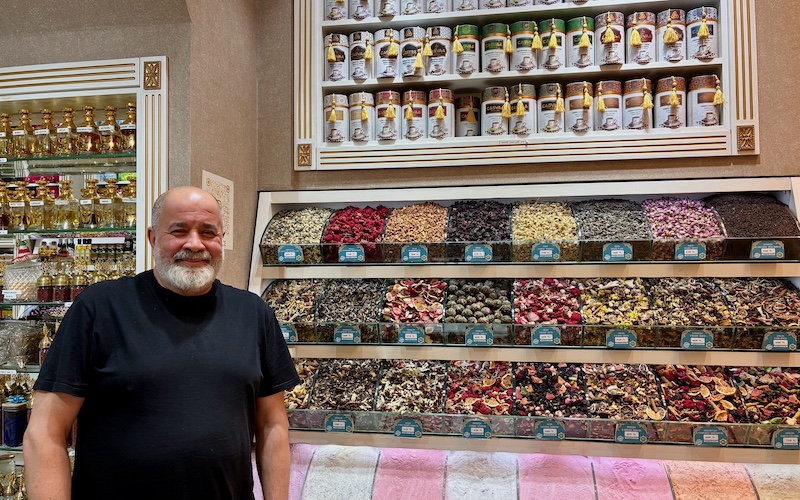
I particularly love the respectful service at Develi, friendly without being pushy. They’ve been in business for generations, selling high quality regional spices – like Turkish saffron and isot pepper – alongside an impressive range of whole dried flowers, custom teas, and essential oil perfumes. I like that they blend their own spice mixes too rather than just selling pre-made commercial ones. Stop by for an apple çay and informative chat.

Istanbul Spice Bazaar Guide (Egyptian Bazaar) - 78. Galeri Set

Galeri Set (Shop 78)
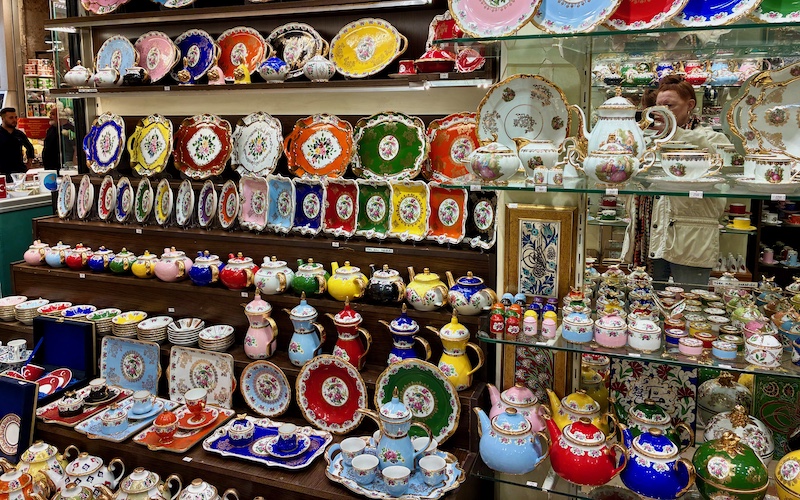
After a high-quality souvenir rather than the fun, mass-produced ceramics? A single saray fincanı (palace coffee cup) is an affordable yet luxurious memento – designed to perfectly retain heat and foam to the last sip. Even if you’re just window shopping, stop by to see the hand-crafted Ottoman imperial porcelain reproductions. The craftsmen here have made bespoke pieces for Fidel Castro, Kevin Costner and Queen Elizabeth II.

Best Restaurants in Istanbul - Panderli

Pandeli Restaurant (Upstairs)
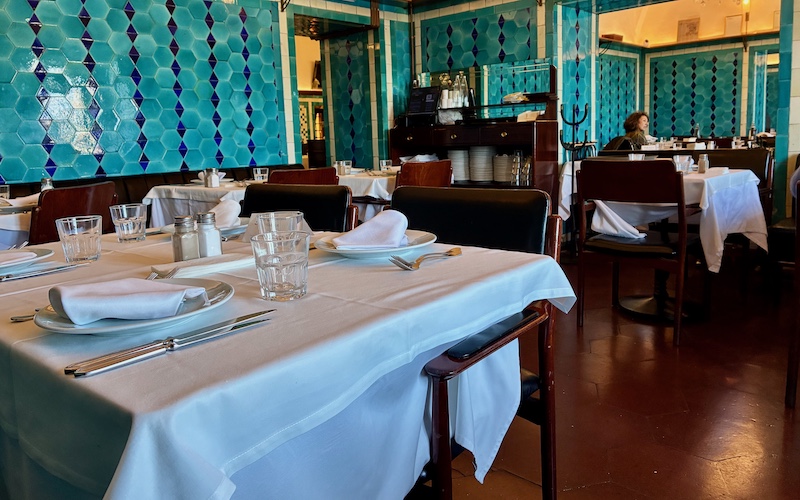
Above the bazaar is one of Istanbul’s best restaurants – historic Pandeli – perfect for a delicious lunch after a morning’s shopping. I love the vivid turquoise and cobalt tiles and glimpses of Galata Bridge and the Bosphorus from a white-clothed window table. Helpful old-school service and a delicious array of mezze dishes bring me back again and again. Climb the stairs on the left just inside the bazaar’s main gate – and be sure to try the okra.

Istanbul Spice Bazaar Guide (Egyptian Bazaar) - The Flower Market Gate (Çiçek Pazarı)

Flower Market (Outside)
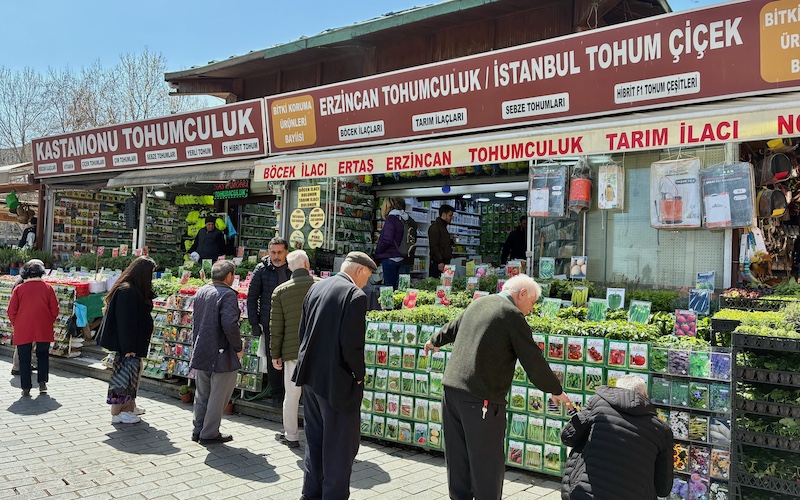
The gate at the end of the main hall leads out to the bustling open-air market where locals buy flower bulbs, vegetable seeds and fruit saplings along with gold fish and pet food. This public square is the perfect spot to sit and drink in Istanbul life among the locals. Look out for the bronze statue of the simitçi (simit seller) and his young customer – the tray between them acting as a bird feeder for the square’s many pigeons (see FAQ below).

Published 22 Aug 2026

Turkish Stuffed Dried Eggplants

Istanbul Egyptian Bazaar FAQ

Is the Spice Bazaar and the Egyptian Bazaar in Istanbul the same place?

Yes, both names refer to the 17th century covered market on Eminönü Square opposite the Galata Bridge.

Why is the Istanbul Spice Bazaar called the Egyptian Bazaar and what is its Turkish name?

It’s called the Egyptian Bazaar because the building’s construction, in the 1660s, was paid for with duties levied on imported Egyptian goods – so its Turkish name, Mısır Çarşısı, literally means Egyptian Bazaar. Its English name, Spice Bazaar, is more descriptive however as the main hall is lined with shops displaying mounds of dried spices, teas, and other edibles.


What are the long strings of dried hollowed vegetables hanging in some shops?

These long strings of dried purple, red and green vegetables are a distinctive sight in Istanbul’s Egyptian Bazaar. They are hollowed, sun-dried eggplants, peppers and zucchini from the southeastern region of Gaziantep, which specialises in growing and preparing these traditional products to be sold all over the country as well as internationally. They are eaten rehydrated, stuffed and poached – see the video above for an example.

Which is the best historic shop in the Spice Bazaar for fresh spices?

Kalmaz Baharat (Shop 41/1) is highly regarded by locals for spice freshness because they grind core spices onsite daily in small, micro-batches rather than displaying pre-ground pyramids. This traditional stall, which opened in 1962, is more about personalised service for locals than the touting techniques of some of the flashier shops. Their pricing is clearly displayed too and generally better value than many others. They also sell artisanal products like traditional herbal remedies.

What is tulum?

Tulum is a traditional Turkish cheese. The traditional pungent deri (skin) tulum is matured in goat or sheep skin, while the less-expensive bidon (cannister) tulum is a modern variation aged in plastic. Tulum is also the name for a type of droneless Turkish bagpipe from the Black Sea region, a reference to the goat or sheep skin used to make it; as ‘tulum’ literally means ‘animal hide’ or ‘animal-skin pouch’.

Are genuine ‘shahtoosh’ shawls sold at Istanbul's Spice Bazaar?

No. Genuine shahtoosh wool comes from an endangered Tibetan antelope, has been globally banned since 1979, and commands black-market prices from $5,000 to $20,000 USD. Textile vendors may describe warm lightweight scarves as ‘shahtoosh’, but this is a poetic, non-factual sales descriptor. These high-end fabrics are legally made of silk blended with pashmina/cashmere or bio-based modal cellulose (from beech wood).

What is the story of the bronze statue in the New Mosque (Yeni Cami) Square of an older man and a boy around a table used as bird feeder?

By sculptors Mustafa Burnazoğlu and Ersin Alyakut in 2016, this sculpture of a traditional simitçi (simit seller), handling a transaction with a young boy beside his circular display tray, celebrates the daily life of regular people and the street traders in Fatih, the historic heart of Istanbul. The simit tray’s use as a bird feeder is highly significant too as in Ottoman culture, kindness to animals was viewed as a moral and spiritual duty and feeding wild animals was considered sadaqah (voluntary charity). Wealthy citizens even established charitable foundations (waqfs) to feed birds during harsh winters. The Yeni Cami (New Mosque) opposite the statue is nicknamed ‘the mosque of a thousand pigeons’ as the square in front of it, where the statue stands has always been popular with these birds. See photo on my Turkish Street Foods guide.

Do you need a reservation at Pandeli Restaurant in Istanbul's Spice Bazaar?

Reservations are recommended at Pandeli as it’s busy most days due to its iconic status and location above the bustling Spice Bazaar. You can book online, usually even on the same day. If you do want to try for a table without a reservation, off-peak times are best – they will accommodate you if they can.

What Other Travellers Say

Janet (Tamworth, NSW, Aus.)
Just back from the most amazing trip to Emilia-Romagna with Roberta. Not only the home of Prosciutto di Parma, Parmigiano-Reggiano & Balsamic Vinegar, but scenery to die for and more quaint and exciting restaurants and cafés than you ever imagined. And Roberta is just the person to help you discover and enjoy them! Her knowledge of the history of the region and its wonderful cuisine know no bounds and all added to the excitement of the trip. It was faultless - well organized and lots of fun!
Deb (Belconnen, ACT, Aus.)
Wow, what a tour – I learned so much! Awesome fun traveling through Emilia-Romagna experiencing first hand some of the produce I've worked with over the last couple of years cooking with Roberta's recipe kits – the family are reaping the benefits now. If you're thinking of joining Roberta in future years get ready for an amazing experience.
Mark (Elizabeth Bay, NSW, Aus.)
My wife and I recently joined Roberta's Emilia-Romagna tour. We enjoyed all the temptations offered and learned a lot about that part of Italy, especially its food and wine culture. What was most impressive was Roberta's local knowledge of people and places. The planning and effort she put into making the whole experience seem effortless was remarkable.
Karen (Bowral, NSW, Aus.)
Our tour with Roberta through Emilia-Romagna was the highlight of the year. Good company, gorgeous palazzi and great food. What more could one ask for? Roberta's enthusiasm and knowledge made this a once in a lifetime experience through an extraordinary, diverse and very special region.
Shelley (Auckland, NZ)
Roberta’s passion for Italy shone throughout an unforgettable food and wine tour. She introduced us to family-owned artisanal producers, where we experienced everything from attic-aged balsamic to small-batch wines, Parma ham and Parmigiano-Reggiano. The local guides were equally passionate, and the excellent transport and accommodation made the trip effortless. This tour captured the region’s traditions, flavours and people, and thanks to Roberta’s deep knowledge we left with wonderful memories. A truly authentic culinary adventure — highly recommended.
Subscribe To My Newsletter & Get A Free Online Italian Cooking Class (RRP $39)