Edinburgh Food Lovers' Guide

Edinburgh, Scotland’s capital, is one of Europe’s great food cities – and one of the world’s most beautiful to explore on foot. This Edinburgh food guide shares my favourite places to eat, drink, stay and shop.

Edinburgh Food Guide - Old Town Walking Tour

Edinburgh is split between the medieval Old Town of closes and wynds and the Georgian New Town of sweeping crescents, while its foodie hubs of Leith and gentrified Stockbridge are home to some of Edinburgh’s best restaurants, bars, cafés and food shops. Edinburgh is a city that rewards the wanderer – the one who slips off the Royal Mile into a hidden courtyard garden, follows the Water of Leith through Dean Village as though the bustling city had suddenly dissolved, or stumbles into a candlelit basement bar where the whisky list reads like a map of Scotland.

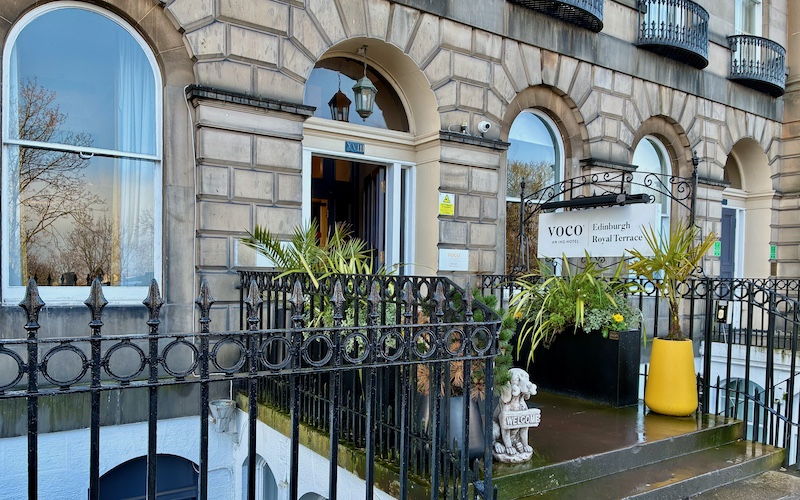
Edinburgh Food Guide - Voco Royal Terrace

Where to Stay in Edinburgh Voco Royal Terrace Hotel
This comfortable hotel sits right in the centre of the imposing heritage-listed Georgian townhouses of the Royal Terrace, the UK’s longest Georgian terrace. A quiet area – with cobbled streets, lush gardens and views to the Firth of Forth – it’s just a few minutes’ walk to the Old Town and between my two favourite Edinburgh food hubs, Stockbridge and Leith, so it’s the ideal place to stay for exploring Edinburgh’s best eats.

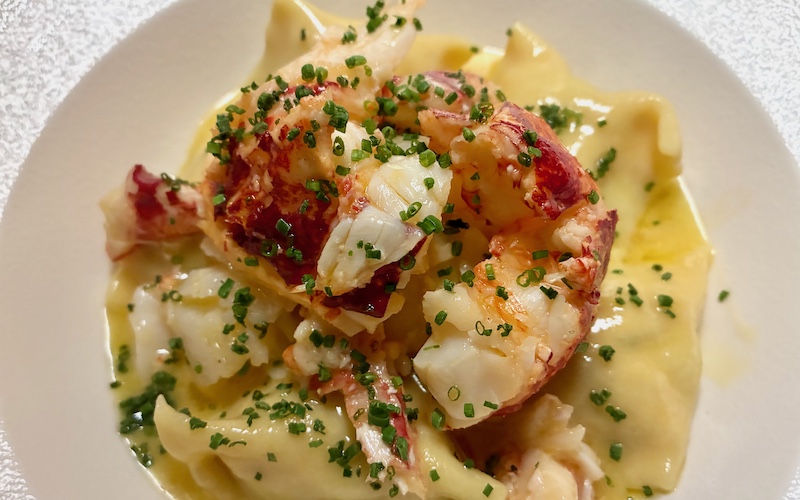
Edinburgh Food Guide - Barry Fish - Smoked Fish Agnolotti with lobster ~ Best Edinburgh Restaurants - Best Dishes From Around The World 2026

Where to Eat in Leith Barry Fish
Warm, welcoming and decidedly unpretentious, Barry Fish serves up some of the best seafood and hospitality Scotland has to offer. Chef Barry Bryson puts a lot of thought into produce, flavours and people – bringing everything together beautifully. House-cured sea trout pastrami is delicious in its simplicity, but the showstopper is smoked fish agnolotti with generous chunks of lobster in a light beurre blanc. Spot-on wine matches too.

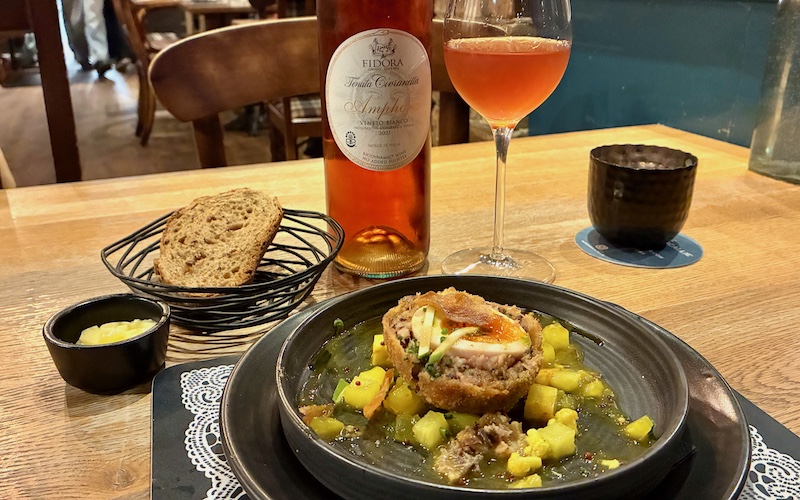
Edinburgh Food Guide - The Scran & Scallie ~ Edinburgh Pubs

Where to Eat in Stockbridge The Scran & Scallie
At Edinburgh’s best gastropub, Tom Kitchin creates Scottish classics with the same quality produce used at his Michelin-starred fine diner in Leith. I could happily devour everything on this comfort-food menu, from the cock-a-leekie (see video below) to the fish pie. Of course there’s haggis, neeps and tatties, as well as the best Scotch egg ever. The Scran & Scallie has a relaxed, casual feel with friendly service and a great wine list too.

Edinburgh Food Guide - Wine Bar - Little Capo

Where to Drink in the New Town Little Capo
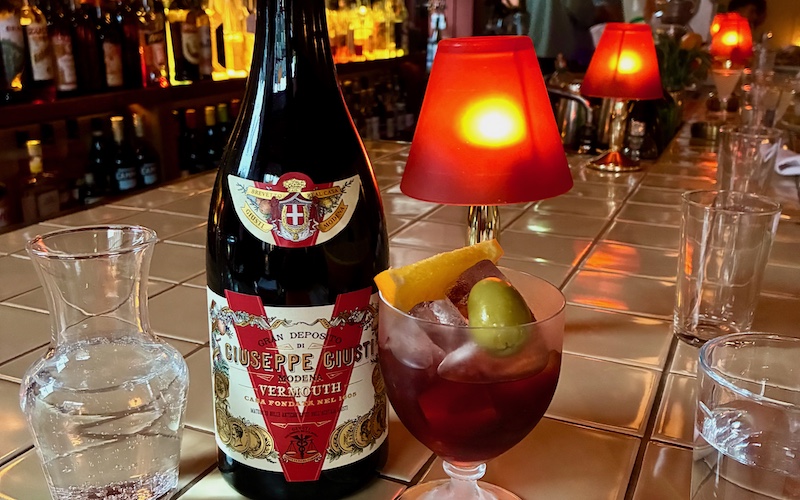
Perhaps it’s the warm terracotta paint job on this small Italian restaurant just down from Queen Street Gardens, but I liked it the instant I saw it! Inside, more of the same great vibe – buzzy without being loud, friendly staff, and a wonderful ever-changing list of vermouths. The food’s delicious too, with a great selection of dishes perfect for snacking, sharing and chatting over with a few glasses of wine at the white tile-topped bar.

Edinburgh Food Guide - St Vincent (The Vinnie)

Where to Drink in Stockbridge St Vincent Bar
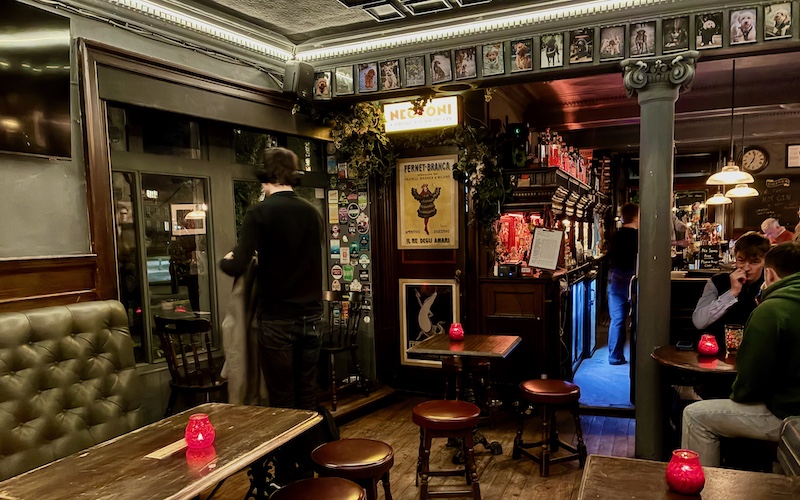
If I lived in Edinburgh I’d make ‘The Vinnie’ my local. This wood-panelled and olive-green bar – in the basement of a Georgian townhouse on the edge of Stockbridge – is full of the chatter of locals, with a lovely warm vibe and friendly staff. It features cask ale, interesting wines and hot gin (like mulled cider). With a wall of photos of its fur-customers, it may be Scotland’s most dog-friendly pub too! Here’s my guide to more of Edinburgh’s best pubs.

Edinburgh Food Guide - Valvona & Crolla ~ Edinburgh Shops

Where to Shop in Edinburgh Valvona & Crolla
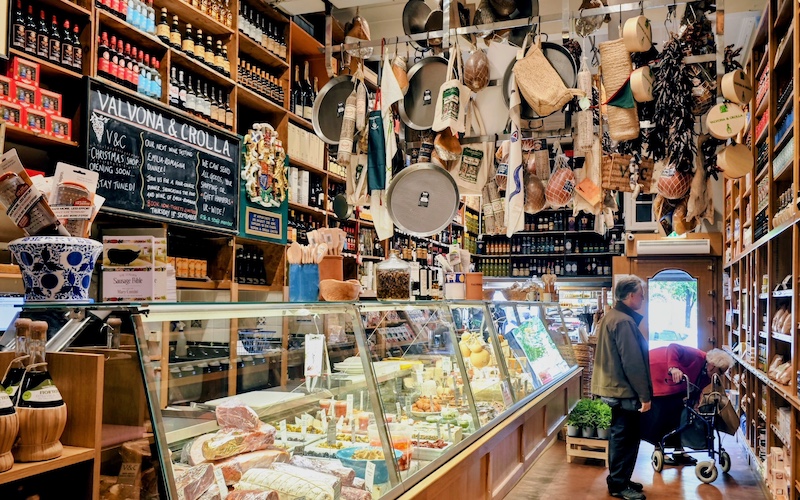
Italian immigrants arrived in Scotland from the late 1800s – bringing gelato, cafés and a culture of warmth around the table that the country embraced. Scotland’s oldest deli (and one of my favourite shops in the world), Valvona & Crolla was founded in 1934 and is still in the same family. It has a vast array of Italian goods, alongside Scottish delicacies like Chrystal’s all-butter shortbread and Brodies of Edinburgh tea (perfect for souvenirs).

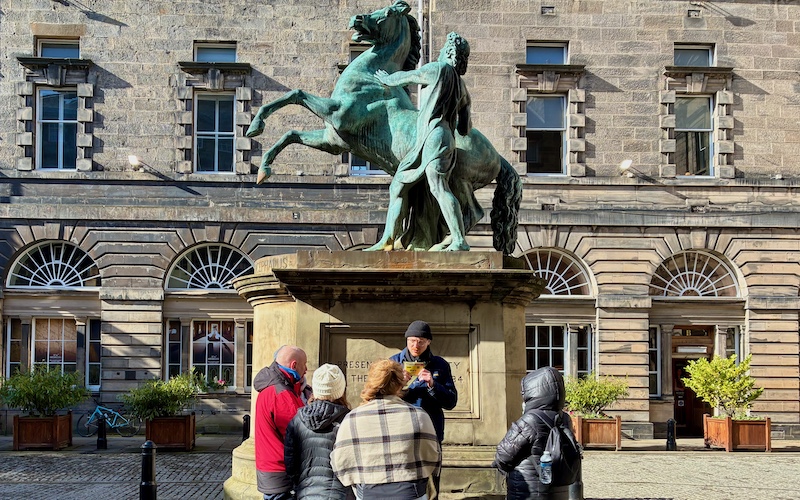
Edinburgh Food Guide - Old Town Walking Tour

What To Do in Edinburgh Old Town Walking Tour
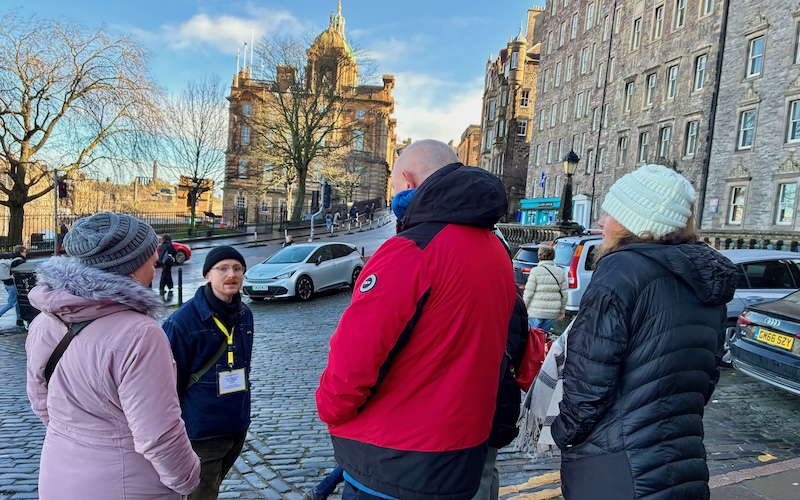
There’s no such thing as a free lunch – or a free tour – but the Old Town walking tour offered by City Explorers allows you to pay whatever you think it was worth; can’t get fairer than that. If all the guides are as good as Rory (who hosted mine), I think you’ll agree it’s worth a bit! With a PhD in Scottish history, Rory has a gift for weaving history, architecture, culture, literature and politics into an entertaining and informative 2-hour stroll.

Published 17 May 2026

Exploring Edinburgh’s History & Curiosities

What's the difference between Edinburgh's Old Town and New Town?

Edinburgh’s medieval Old Town runs down a ridge from Castle Rock to the Palace of Holyroodhouse along the Royal Mile.

Founded as a royal burgh in the 12th century, it gradually became hemmed in by the city’s defensive walls – most notably the Flodden Wall, built after Scotland’s devastating defeat by the English at the Battle of Flodden in 1513 – and grew upwards rather than outwards. Tenements rose 10 storeys or more, with rich and poor living stacked on top of one another.

By the 1760s, in the reign of King George III, it was dangerously overcrowded, so the city held a competition to design a new district across the drained Nor Loch, now Princes Street Gardens. A young, little-known architect, James Craig, won with an elegant grid of streets and squares, and the Georgian New Town rose over the following decades.

Together, Edinburgh’s two towns have been a UNESCO World Heritage Site since 1995 for the striking contrast between them: the organic, medieval Old Town and the planned, Georgian New Town – side by side. The New Town’s classical design influenced European town planning well into the 19th century.


What are Edinburgh's closes and wynds?

The Royal Mile is lined with narrow passages running steeply downhill on either side, forming a herringbone pattern that has barely changed since medieval times.

A close is a narrow alley, often through an arched entrance, leading to a courtyard or tenement. Many could once be locked with a gate, which is how they got the name. Most are named after a notable resident or a trade once carried out there – such as Advocate’s Close after a Lord Advocate who lived there, and Fleshmarket Close after the meat market it led to. Many closes still have their original names, and wandering through them is one of the best ways to discover the Old Town’s hidden courtyards, gardens and views.

A wynd – meaning ‘to turn’ – was a wider lane turning off the main street, originally broad enough for a horse and cart. Most were widened into streets in the 19th century, so St Mary’s Wynd became St Mary’s Street, and College Wynd, where Sir Walter Scott was born in 1771, has vanished altogether. Today very few wynds survive under their original names.

Can you still see any of Edinburgh's old city walls?

Yes – there are surviving fragments of all three of Edinburgh’s city walls (King’s, Flodden and Telfer).

The best section is in The Vennel, a narrow stepped alley rising from the west end of the Grassmarket (‘venelle’ is the French word for alley). There you’ll find a surviving tower of the 16th-century Flodden Wall alongside a stretch of the 17th-century Telfer Wall, with a classic view of the castle behind.

More sections line Greyfriars Kirkyard, and a well-preserved corner survives where Drummond Street meets The Pleasance. Walling found in Tweeddale Court, off the High Street, is thought to belong to the older 15th-century King’s Wall.

Why is part of the Royal Mile called the World's End?

For centuries, the walled city of Edinburgh ended at the Netherbow Port, a heavily fortified gateway across the Royal Mile where it meets St Mary’s Street today. Beyond it lay the separate burgh of Canongate.

According to local tradition, passing through the gate meant paying a toll, so many of the city’s poorer residents never left – to them, the Netherbow truly was the end of the world.

The gate was demolished in 1764, but its outline is marked in brass in the road, and the name lives on in World’s End Close and the pub on the corner.

Why is Edinburgh called 'Auld Reekie'?

Auld Reekie – Scots for ‘Old Smoky’ – dates from the days when thousands of coal and wood fires in the crowded Old Town wrapped the city in a pall of smoke, visible for miles.

The name also hinted at the smell. Before modern sanitation, residents emptied chamber pots from upper windows into the closes below with a cry of ‘gardyloo’, from the French ‘gardez l’eau’ (‘mind the water’). The smoke has long since cleared, but locals still use the nickname with affection.

Why is Edinburgh called the Athens of the North?

In the 18th century Edinburgh was one of Europe’s great centres of thought – the heart of the Scottish Enlightenment, when philosophers such as David Hume and Adam Smith made the city famous for new ideas in philosophy, economics and science.

Its classical New Town architecture and the Greek-inspired monuments on Calton Hill sealed the nickname ‘the Athens of the North’. The most striking is the National Monument, a replica of the Parthenon begun in the 1820s to honour Scots killed in the Napoleonic Wars. The money ran out after 12 columns, earning it the title ‘Scotland’s Disgrace’. Today it’s one of the city’s most loved landmarks, and Calton Hill is one of its best viewpoints. It’s an easy climb from the east end of Princes Street, and just a short stroll from the elegant Georgian townhouses of Royal Terrace, which wraps around the hill’s northern side.

Is Arthur's Seat really a volcano?

Yes. Arthur’s Seat, the 251-metre peak rising from Holyrood Park at the foot of the Royal Mile, is the remains of a volcano that erupted around 350 million years ago. The hill’s Gaelic name is Suidhe Artair (Arthur’s Seat), though no one knows where it comes from. Legend links it to King Arthur – a 7th-century poem about the Celtic warriors of Din Eidyn (Edinburgh) contains one of the earliest known references to Arthur. One theory even places Camelot here.

Castle Rock, crowned by Edinburgh Castle, is another part of that ancient volcanic landscape. Glaciers later scoured the area, carving the dramatic cliffs of Salisbury Crags. In the 18th century James Hutton studied these rocks to develop ideas that laid the foundations of modern geology.

The climb to the summit of Arthur’s Seat is steep but rewarding, with views across the city to the Firth of Forth.

Why is a gun fired from Edinburgh Castle every day?

The One O’Clock Gun has been fired from the castle every day – except Sundays and a few holidays – since 1861. It began as a time signal for ships’ captains in the Firth of Forth, who needed accurate time to set their chronometers for navigation.

At the same moment, a time ball drops on the Nelson Monument on Calton Hill – a visual signal for ships too far away to hear the gun.

Both traditions continue today, so expect a loud bang at 1pm, followed by a city full of people checking their watches.

Why is Edinburgh a UNESCO City of Literature?

In 2004 Edinburgh became the world’s first UNESCO City of Literature. Sir Walter Scott, Robert Louis Stevenson and Arthur Conan Doyle were all born here.

Scott’s influence is everywhere: the Gothic Scott Monument on Princes Street is one of the largest monuments to a writer in the world, and Waverley Station is named after his novels.

Modern writers keep the tradition alive – Ian Rankin’s Inspector Rebus novels are set in Edinburgh’s pubs and streets – and every August the city hosts one of the world’s great book festivals.

What are the Edinburgh festivals?

Every August, Edinburgh hosts a cluster of world-class festivals.

The Edinburgh International Festival was founded in 1947 to reunite Europe through the arts after World War II.

The same year, eight theatre groups turned up uninvited and performed on the fringes, and the Edinburgh Festival Fringe is now the world’s largest arts festival.

Add the Royal Edinburgh Military Tattoo on the Castle esplanade and the International Book Festival, and the whole city becomes a stage.

Accommodation books out early and prices peak, so plan well ahead to enjoy Scotland’s capital city at its most electric.

Question 2

Answer 2

What Other Travellers Say

Andrea (Adelaide, SA, Aus)
My trip to Switzerland was my second adventure with Roberta – my first was Emilia-Romagna and I’ve already booked my next one to Scotland. Roberta takes control of all the things I no longer want to decide. She plans the itinerary to such an amazing extent – the food choices and venues always showcase the region we’re in and never disappoint. The small group works extremely well, with enough downtime to do your own thing but beautifully combined with an itinerary which encompasses all the things you want to see and more.
Belinda (Balmain, NSW, Aus)
I’ve been on three of Roberta’s food and wine tours so far and each one has been an amazing well-organised experience. From historic Rome and Pompeii to the spectacular Amalfi Coast, remarkable Venice and the charming villages of Switzerland, each tour offers something special. Then there’s the food in fabulous places where you can truly eat like a local. I highly recommend Roberta’s tours to anyone who wants to discover inspired travel through great food, wine and company. I’m already looking forward to the next one!
Neville (St Ives, NSW, Aus)
What made the trip exceptional was the opportunity to meet local winemakers, farmers, chefs and families who welcomed us with genuine warmth and hospitality. Excellent accommodation, outstanding food, superb wines, and every experience felt authentic and personal rather than tourist-focused. Roberta’s local connections and enthusiasm add an extra dimension. She was an outstanding host – her attention to detail, warmth, knowledge and genuine care for every guest made the experience unforgettable. She created a friendly, relaxed atmosphere that brought the whole group together and we returned home with wonderful memories, new friendships and a deep appreciation for Southern Italy and Rome.
Di (Manly, NSW, Aus)
Absolutely recommend Roberta’s Southern Italy tour! We’ve always been independent travellers so were a little apprehensive – by day 2 we knew we’d made a great decision! Roberta knows people and places far from the tourist trail so we visited wineries where we were always invited for lunch as well as wine-tasting, a family lemon grove high on the Amalfi Coast and a 3rd generation cheesemaker. We stayed in a stunning cave hotel in Matera and a gorgeous family hotel in Scala – and book-ended the tour with the vibrancy of Rome. So many highlights, such a brilliant experience. We will do another tour with Roberta.
Fiona (Blackheath, NSW, Aus)
Roberta creates wonderful bespoke small group tours with her incredible knowledge of food and wine and adds great accommodation and points of interest. It’s like travelling with your ‘besties’ – including one who’s done all the hard work researching and discovering the best and most interesting places to go, especially to eat and drink. Also factored in is time for you to do your own exploring and discover your own gems. I thoroughly enjoyed Roberta’s trip to the Veneto and Venice.
Karen (Bowral, NSW, Aus)
Our tour with Roberta through Emilia-Romagna was the highlight of the year. Good company, gorgeous palazzi and great food. What more could one ask for? Roberta's enthusiasm and knowledge made this a once in a lifetime experience through an extraordinary, diverse and very special region.
Subscribe To My Newsletter & Get A Free Online Italian Cooking Class (RRP $39)