Like a mini-Venice, Comacchio is built on 13 islets joined by bridges in the Po Delta. Settlement dates to Etruscan times and, for a while, Comacchio flourished due to its salt pans.
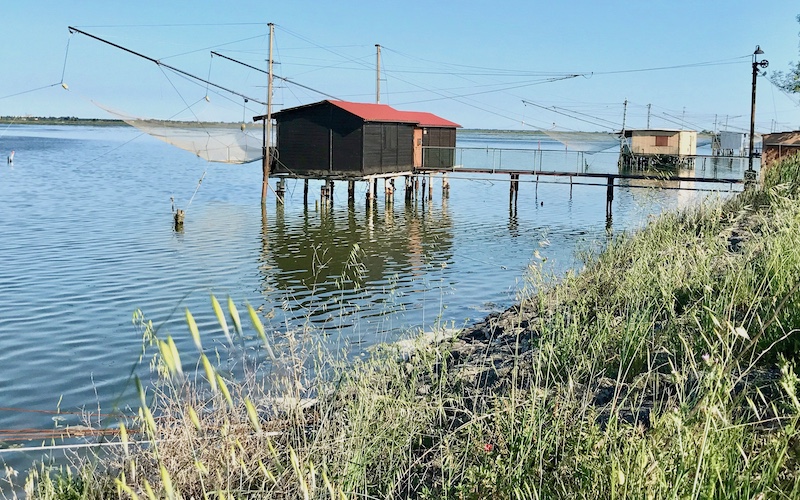
Later powerful neighbours (like Venice, Ferrara and The Holy See) controlled its fate, rarely to the benefit of its inhabitants. For a long time, Comacchio was a poor town – where people managed as best they could, often by poaching and other nefarious activities. It’s a resilient and resourceful past of which many present-day inhabitants are proud. The wetlands south of the town (Valli di Comacchio) are designated a ‘Special Protection Area’, and the shore is dotted with interesting fishermen’s huts (pictured above). Today a visit to this unique town is an essential part of any food lover’s tour of northern Italy. Here’s my Comacchio food guide to the best places to stay, eat, drink and more.
Where to Stay in Comacchio Al Ponticello
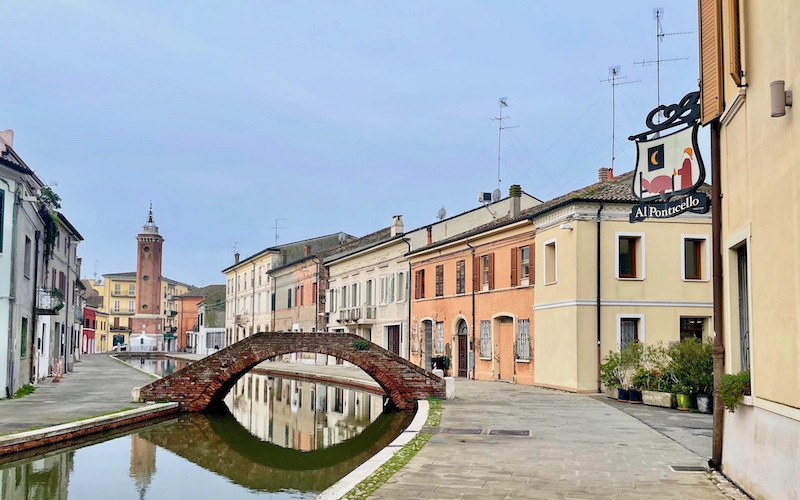
The hospitality at this B&B is the best! Riccardo and Sarah go above and beyond to look after their guests and provide an extensive breakfast buffet that’s fresh, healthy and delicious. They also run a small bar in the evening for guests wanting aperitivi. Many of the modern, comfortable rooms overlook the canal and the pretty stone bridge for which Al Ponticello is named.
Where to Eat near Comacchio La Zanzara
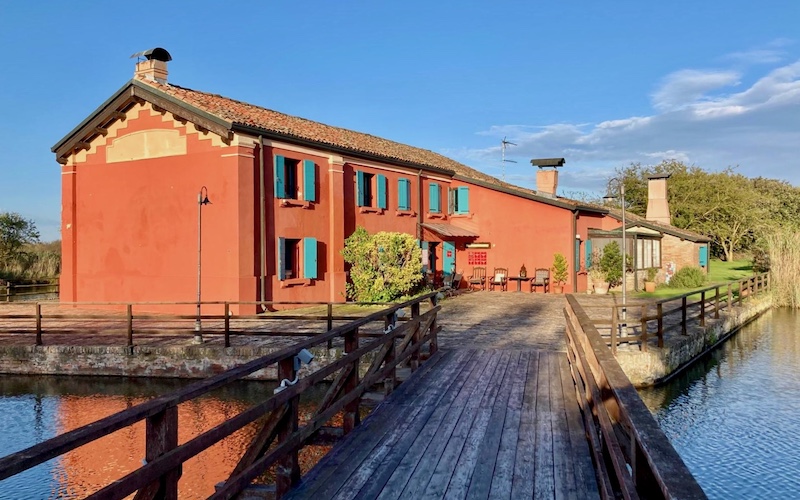
Diners are completely in the chef’s hands at this special restaurant in a former fishing station on a small Delta island a short drive from town. There is no menu. Chef Sauro Bison serves ultra-local seafood – from the Po Delta and Upper Adriatic – prepared in his own way; and he does it beautifully. His partner and brother Samuele does an equally impressive job with the wine pairing, again showcasing wines produced very close by.
Where to Drink in Comacchio Bar Ragno
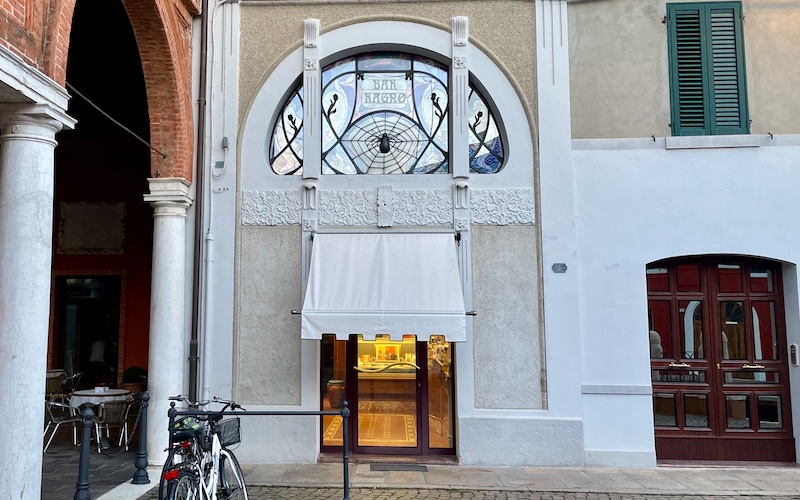
On the ground floor of Comacchio’s historic 17th-century grain store – and named for a golden spider said to be hidden inside – Bar Ragno sits on the central piazzetta opposite the clock tower and is the ideal spot for people watching. It’s a casual bar serving good panini, coffee and drinks under its lovely arched portico. The location and the friendly service make it special and my favourite spot for aperitivo in Comacchio.
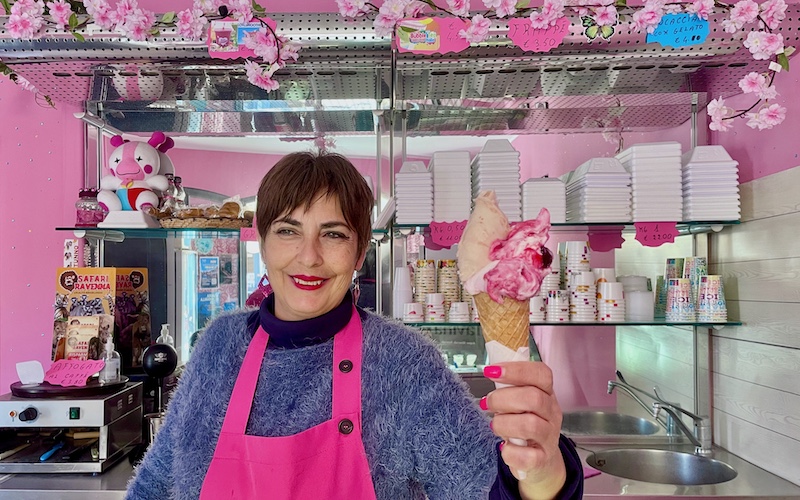
Best Gelato in Comacchio Gelateria Trepponti
You’ll find Comacchio’s best gelato beside its most famous landmark – the curiously named Ponte dei Trepponti (bridge of three bridges), which actually consists of five connected stone bridges. There are many flavours, including seasonal fruit like figs, but I can never go past the excellent amarene sour cherry to eat at the al fresco tables beside the canal.
What to Do in Comacchio Sunset Walk Among the Salt Pans
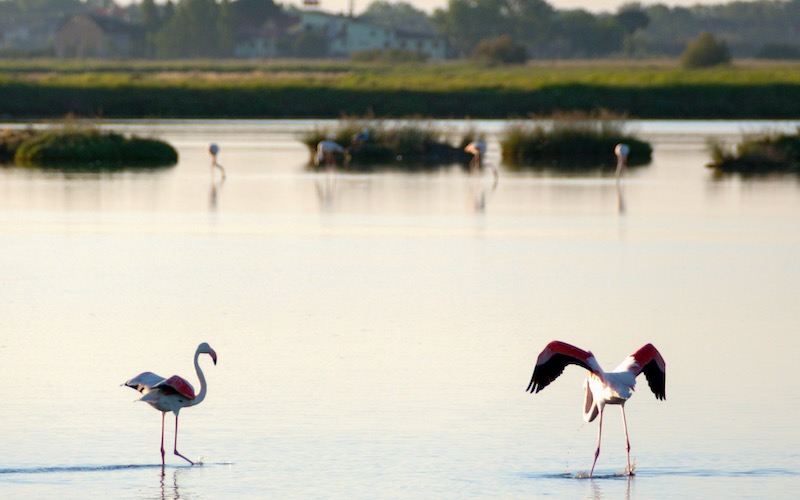
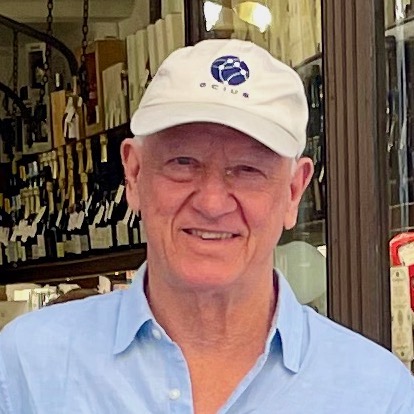
Al Ponticello’s host, Riccardo Rescazzi (above), is an accredited environmental guide – one of only a few with access to the Saline di Comacchio wetlands in the Delta’s ‘Special Protection Area’ south of Comacchio. Here he offers fun and fascinating guided sunset walks to see huge flocks of flamingos and learn more about the history of Comacchio’s ancient role in salt production.
What to See in Comacchio Museums
Comacchio’s neoclassical Ancient Delta Museum houses the cargo of a Roman ship discovered nearby in 1981, while eel fishing – once the town’s main source of income – is celebrated in the historic eel marinating plant (Manifattura dei Marinati). Eel processing, a Slow Food Presidia, is now only done occasionally, but it’s well explained and the snippets of Sophia Loren’s 1954 film ‘La Dama del Fiume’, shot in Comacchio, are fun to see.
Updated 31 Jul 2026
Why is the Loggia del Grano (Comacchio grain store) home to a bar today?
Local legend has it that an enormous golden spider – of immeasurable value – lies hidden somewhere within the grain store building but has never been found. This ‘ragno’ (Italian for spider) gives the bar under the Loggia del Grano its name.
Built in 1638, to a design by Ravenna architect Luca Danese, Comacchio’s Trepponti bridge was constructed as part of the town’s fortifications after decades of Venetian raids. Its name refers to the three-way split in the canal beneath it – though the bridge itself actually has five separate stone stairways, since two further canals from the old town moat also converge at the same point. Its distinctive guard towers were added in 1695.
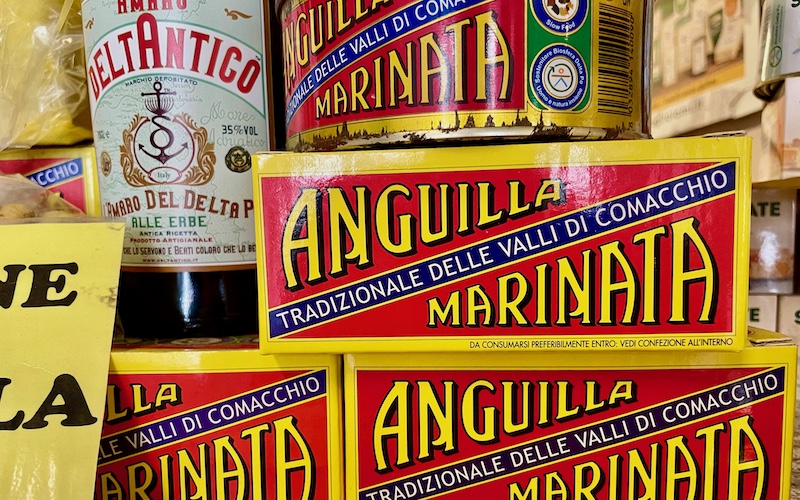
Eels arrive in Comacchio’s brackish lagoon system as tiny ‘glass eels’, after a roughly 5,000km drift from the Sargasso Sea, where they hatch. After years in the lagoon, growing into ‘yellow eels’ then ‘silver eels’, they migrate back to the Sargasso Sea to spawn. For centuries this made eel fishing the town’s main livelihood, as fishermen used weirs called lavorieri, positioned at the lagoon’s openings to the sea, to catch the adult (silver) eels as they migrated. While large-scale commercial eel fishing wound down in the second half of the 20th century, it’s still celebrated each autumn with the Sagra dell’Anguilla and eel is a popular item on virtually every menu in the town, though most of it isn’t sourced locally.

Founded in 1905, this was Comacchio’s principal eel-processing factory (‘manifattura’ in Italian), roasting eels over a dozen wood-fired hearths before preserving them (‘marinati’) in a vinegar and salt brine so the short autumn catch could be enjoyed year-round – and even exported as far as North America. The Manifattura dei Marinati was restored and reopened in 2004 as a museum with small-scale traditional production continuing today under Slow Food Presidia status.
The historic salt pans, covering around 500 hectares northeast of the Valli di Comacchio, stopped production in 1985. The saline has since become the focus of conservation efforts to restore its habitats, and it now falls within the same Special Protection Area as the surrounding Comacchio wetlands.