Romans love their pasta and have a few favourite sauces that have become the classic Roman pasta dishes.
Despite the locals never considering themselves “southern”, Rome is far enough south that Roman pasta is generally made from just hard durum wheat flour and water – not with egg as you find further north. Many of the traditional Roman pasta dishes are enriched with guanciale, pork cheek, the rendered fat adding a wonderful smoothness to the sauces. The distinctive flavour of local sheep’s milk cheese, Pecorino Romano, is a feature too. Here are seven classic Roman pasta dishes and where to eat them in Rome, see the video below for another traditional pasta dish from further south.
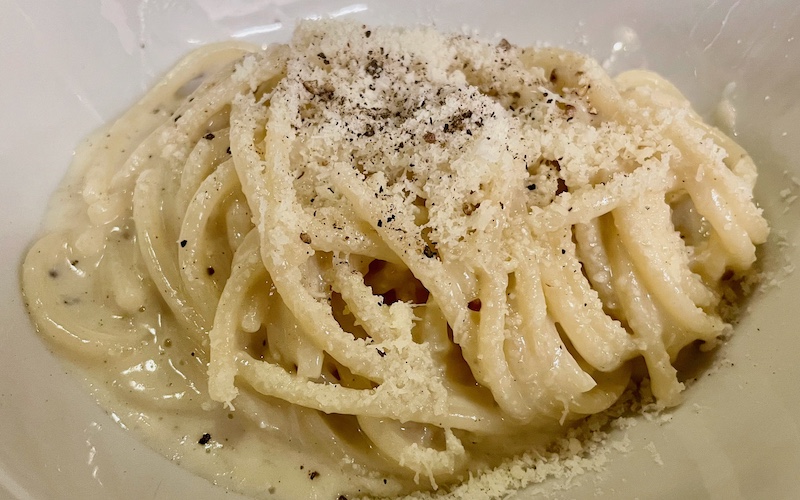
Cacio e Pepe Rimessa Roscioli
Cacio e pepe, cheese and pepper, sounds simple. But this classic Roman pasta sauce can be one of the trickiest to get right, as the cheese has to be emulsified with the hot starchy pasta cooking water to create the creamy sauce. Freshly ground black pepper and authentic Pecorino Romano are key too. One of my favourite Roman wine bars, Rimessa Roscioli, is justifiably famous for the cacio e pepe they serve with their guided wine pairing.
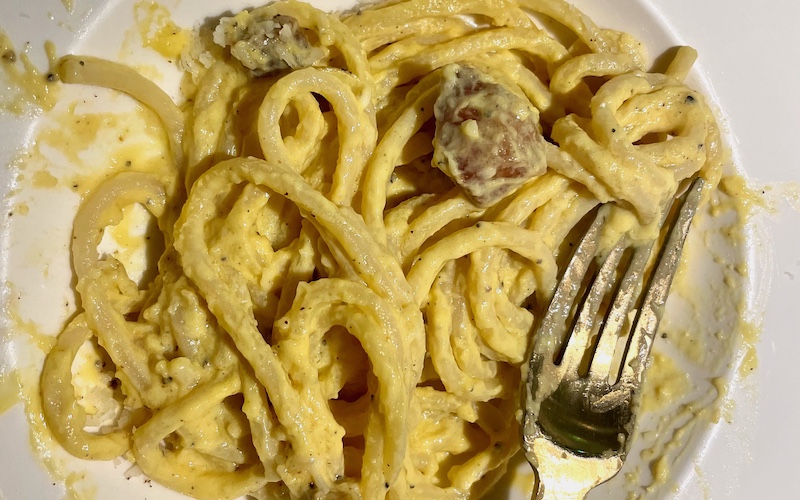
Spaghetti Carbonara Luciano Cucina Italiana
Spaghetti carbonara is a simple Roman pasta made by tossing egg yolks and cheese with hot pasta to make a deliciously creamy sauce (no cream required!). Perhaps it was named for the ‘carbone’ (charcoal) sellers or the flecks of black pepper that look like coal dust. Chef Luciano Monosilio is known in Rome as ‘The King of Carbonara’ for his creamy sauce with big fried cubes of crunchy guanciale; he makes his own extruded pasta onsite too.
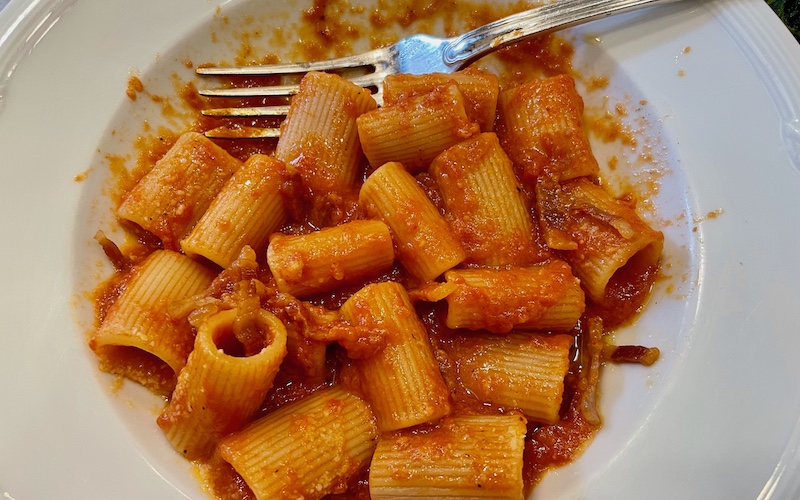
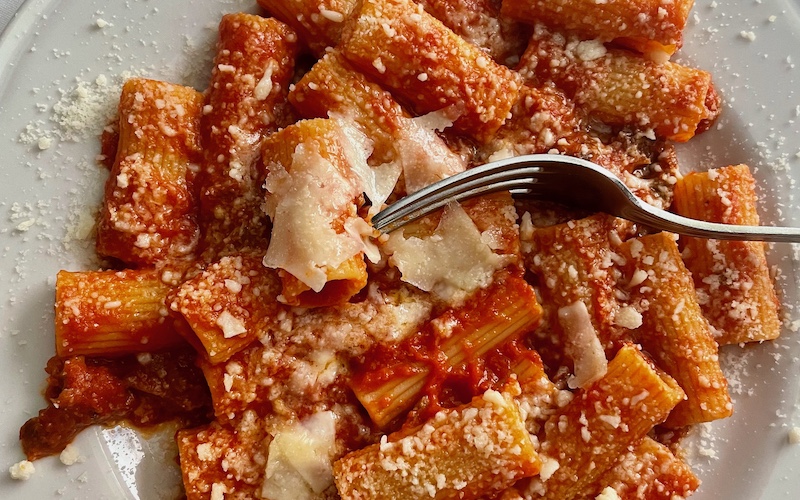
Pasta all’Amatriciana Collegio
Bucatini all’Amatriciana, now one of Rome’s classic pasta dishes, originated in Amatrice, a mountain town about 2 hours west of Rome. Good pecorino is essential, Amatrice has its own while in Rome it’s Pecorino Romano. The Santarelli family, owners of restaurant/wine bar Collegio in the heart of Rome, hail from Amatrice and serve an excellent version of this classic Roman pasta sauce with mezze maniche pasta.
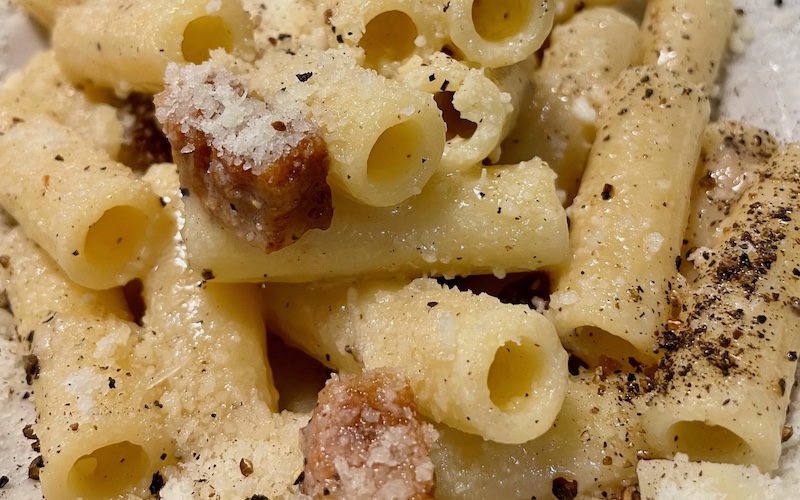
Pasta alla Gricia Salumeria Roscioli
This classic Roman pasta dish is like Amatriciana without tomato, or carbonara without egg. It’s an ancient sauce, made before tomatoes were introduced to Italy when locals simply dressed pasta with sheep’s cheese and guanciale. Pasta alla gricia is popular across central Italy and has become a Roman classic. For the best pasta alla gricia in Rome, with plenty of crunchy guanciale cubes, I grab a stool at the bar of bustling Salumeria Roscioli.
Rigatoni Coda alla Vaccinara Osteria La Gensola
People often talk about the four classic Roman pastas, but in my experience this is a fifth. Roman cuisine is known for its use of ‘quinto quarto’ or offal, which was often the only meat poor workers had to eat. Necessity led to many delicious Roman dishes using the ‘fifth quarter’, including a rich oxtail ragù often used to dress pasta. My favourite sugo coda alla vaccinara is served with rigatoni at Osteria la Gensola in Trastevere.
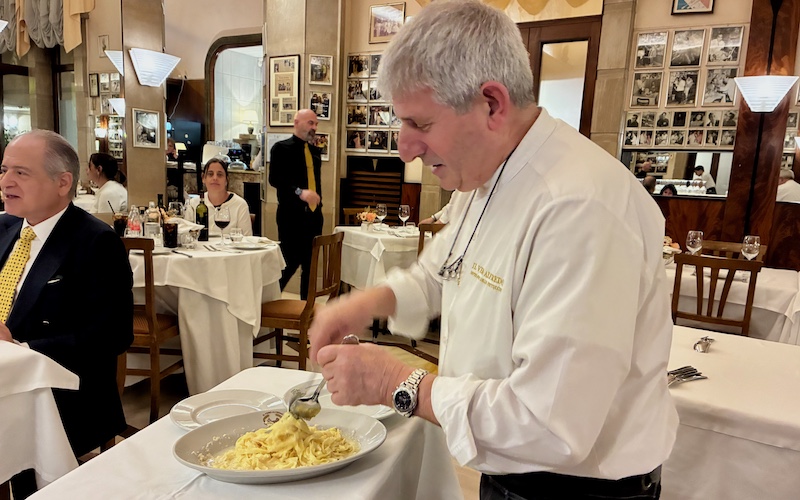
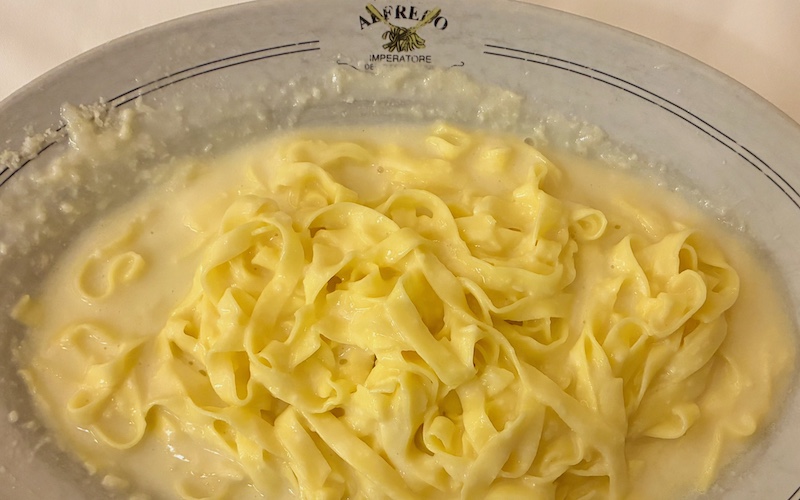
Fettuccine Alfredo Il Vero Alfredo
Fettuccine Alfredo – pasta tossed with lots of butter, Pecorino and pasta cooking water – is named for Alfredo di Lelio, a Roman restaurateur who popularised it in the 1920s. Today, at Il Vero Alfredo, his grandchildren still serve their Nonno’s famous pasta – still theatrically prepared tableside. Is it touristy? Sure, it’s an institution! Is it fun and delicious? Absolutely! Note that authentic Italian pasta Alfredo doesn’t contain cream.
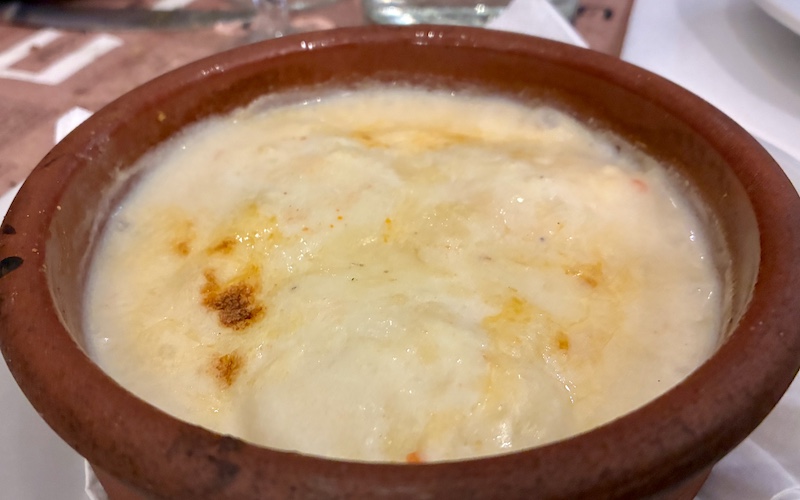
Gnocchi alla Romana Nonna Betta
Another contender for the list of classic Roman pasta dishes is gnocchi alla Romana, made from a polenta of coarse semolina enriched with milk, butter, eggs and parmesan and baked with a final sprinkling of cheese. The origins of this ancient dish are uncertain, but Rome certainly owns it today. While not part of the distinctive Roman Jewish cuisine, the best gnocchi alla Romana I’ve had in Rome is at Nonna Betta in the Jewish ghetto.
The four pasta dishes traditionally associated with Rome are carbonara, cacio e pepe, alla gricia, and all’Amatriciana. But I think there are at least seven classic Roman pasta dishes, including sugo coda alla vaccinara (oxtail sauce), fettuccine Alfredo and gnocchi alla Romana.
While pasta carbonara contains egg, alla gricia pasta sauce contains just guanciale and pecorino without any egg.
The classic Roman pasta sauce cacio e pepe contains just Pecorino Romano and black pepper, whereas pasta alla gricia also contains guanciale.
Pasta alla gricia is similar to pasta all’Amatriciana, except without tomato. Alla gricia is a more ancient pasta sauce, originating before tomatoes were introduced to Italy from the new world.
Gnocchi alla Romana is made from semolina rather than pasta dough, but it belongs firmly in the canon of classic Roman dishes. Its origins are uncertain, but Rome certainly owns it today and it remains a staple on Roman restaurant menus.
Yes, though it’s often dismissed as a tourist dish. Fettuccine Alfredo was created by Roman restaurateur Alfredo di Lelio in the early 20th century and is still served by his grandchildren at the restaurant he opened.
Pecorino Romano, a sharp sheep’s milk cheese, is the defining cheese of many Roman pastas. It features in cacio e pepe, carbonara, alla gricia and all’Amatriciana. Fettuccine Alfredo being a more recent creation, uses Parmigiano-Reggiano or Grana Padano from the north, as does Gnocchi alla Romana which – despite its name – likely has a northern origin.

Guanciale is cured pork cheek, essential to several classic Roman pasta dishes including carbonara, alla gricia and all’Amatriciana. Its high fat content renders down to give Roman pasta sauces their characteristic richness and smoothness.