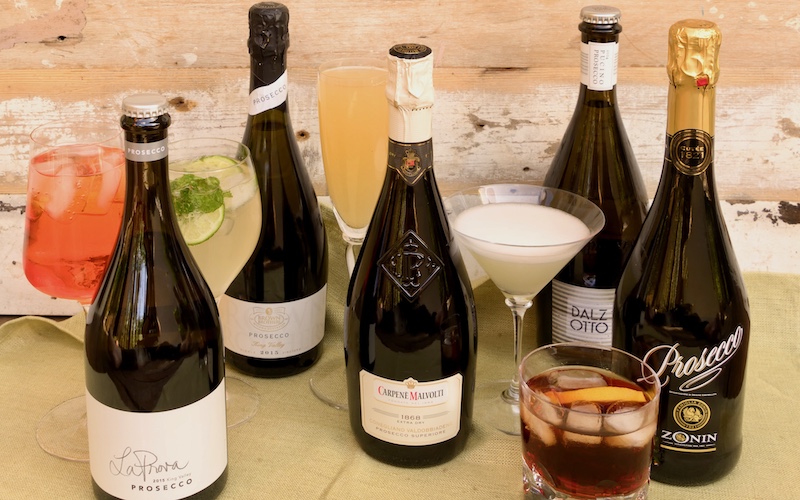
Prosecco (also known as glera) is a grape traditionally grown in Veneto and Friuli-Venezia Giulia in north-eastern Italy, where it’s made into a light, creamy sparkling white wine also called Prosecco.
The best Prosecco is produced on the terraced hills of Treviso between the small towns of Conegliano and Valdobbiadene, just 50km (30 miles) from Venice. In 2009 this area was granted DOCG status (Italy’s highest wine appellation). To avoid confusion between the appellation and the grape variety it was decided in Europe that the grape would in future be called glera and the appellation Prosecco. Meanwhile, in Australia, in Victoria’s high country, post-WWII Italian immigrant tobacco farmers realised it’d be more profitable (and likely more fun) to grow grapes, and so the King Valley wine region came into being with winery names like Pizzini and Dal Zotto. Featuring some of Australia’s highest vineyards, this region has become the home of Italian varietals in Australia, with its own wine route: the King Valley Prosecco Road. Prosecco is a good-value choice for any cocktail featuring sparkling wine, though my favourite five are all traditional Prosecco cocktails from northern Italy, made with five of my favourite Italian and Australian proseccos. Salute! Learn more about glera, Prosecco and the naming agreement between the EU and Australia in the FAQ section of my article on the top wine regions of Veneto.
Bellini Veneto
The Bellini cocktail was invented at Harry’s Bar in Venice in 1948, when the works of 15th-century Venetian painter Giovanni Bellini were being exhibited in the city. It was originally made with hand-squeezed white peach puree. These days frozen or bottled puree is acceptable. Pour 1 part white peach puree into a chilled flute and stir in 3 parts Carpenè Malvolti Prosecco.
Aperol Spritz Veneto
Aperol spritz, which chef Alessandro Pavoni introduced me to long before it became all the rage, is one of the go-to drinks when guests arrive for a party at my house. Pour 1 part Aperol and 2 parts La Prova prosecco over lots of ice in a big wine glass and add more or less soda to taste (or depending on who’s driving).
Negroni Sbagliato Lombardy
My all-time favourite cocktail was created in Milan when a barman mistakenly added Prosecco instead of gin to a Negroni (‘sbagliato’ means ‘mistaken’ in Italian). Pour 1 part red vermouth (I like Punt e Mes), 1 part Campari and 2 parts Zonin Prosecco over ice, stir and garnish with an orange slice. For a classic Negroni, replace the Prosecco with 1 part gin.
Sgroppino al Limone Veneto
Sgroppino is a traditional Venetian mid-course palate cleanser to which a nip of vodka is often added these days for a refreshing post-dinner drink. Consistency varies with the amount of sorbet – I whisk together equal parts lemon sorbet and Dal Zotto prosecco to a slushie consistency and skip the vodka – but feel free to experiment. The sgroppino at Vini da Gigio in Venice is one of my favourite desserts.
Hugo Trentino-Alto Adige
The Hugo cocktail from South Tyrol (Südtirol) is also very popular in nearby Austria and Germany as well as in Italy. You can vary the alcohol and sweetness to suit the occasion, but start by trying equal parts Brown Brothers prosecco and soda with a good dash of elderflower cordial poured over muddled mint and lime with plenty of ice.
Prosecco is a grape, a place and a wine.
It’s a village in north-eastern Italy, near Trieste.
It’s also the name of a grape grown in the surrounding area – now officially known as glera within the EU.
And it’s the sparkling wine made in that area from that grape.
Most Prosecco is sparkling – though Prosecco comes in three styles.
Choose a less expensive Prosecco DOC for cocktails and save the premium DOCG for drinking on its own.
Also use a fully sparkling (spumante) Prosecco as the lightly sparkling (frizzante) style goes flat too quickly once mixed – and the bubbles are half the fun in a Prosecco cocktail.
Check the label for sweetness too (see below) and choose a style to suit your taste.
Despite the name, Extra Dry Prosecco is sweeter than Brut Prosecco.
Prosecco labels follow EU sugar levels and under the appellation they are:
Yes, any sparkling wine can be substituted in a Prosecco cocktail recipe, including Champagne, Cava, Australian sparkling or any other dry to off-dry bubbles.
The spritz began in the 19th-century Veneto, when Austrian soldiers added a splash (‘spritzen’ in German) of soda water to the strong local wine.
Bitter aperitivi joined the mix after Aperol launched in Padua in 1919, and Prosecco later replaced the still wine.
Today a spritz can be made by adding Prosecco to Aperol, Select (a popular Venetian bitter), Campari or Cynar, or by adding a dash of soda to a glass of still white wine.