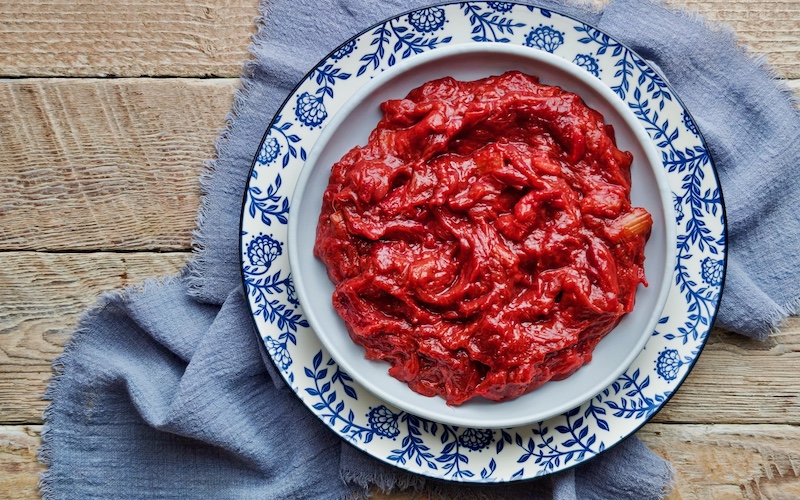
This rhubarb compote recipe is inspired by Franz’s paternal grandmother, Grandma Marthi. Franz started helping to make it at her elbow from the age of about 7. Grandma Marthi and Franz’s grandfather ran a hotel on Griesalp in the Bernese Oberland in the 1920s, and later on the Gurten outside the city of Bern. Grandma Marthi’s original recipe used brown sugar, which muddies the vibrant colour, and was saltier. Franz – a precocious child – once commented on the slightly salty taste and Marthi replied: “we’re making rhubarb compote not rhubarb jam”, adding that his Grandfather used to like it with veal jus in it served with potatoes. In summer Marthi served this rhubarb compote over ice cream – which is how I like it, especially sprinkled with some hazelnut praline. In winter she’d spread it on toast, leave it until the toast softened then serve it almost like a bread pudding – which is how Franz remembers having it for breakfast. Rhubarb only takes about 10 minutes to cook, so this rhubarb compote is a quick and easy dessert or condiment. It’s great over yoghurt or porridge for breakfast, folded through cream for dessert, alongside cheese, or served with rich meats like pork, duck or game. If you’re using older, thicker rhubarb you may need to string it more thoroughly – losing some of the colour – and may want to add all of the sugar to balance the tartness.
Makes about 2 cups (500ml)
Share page on:
Rhubarb compote is quick and easy to make — about 10 minutes total cooking time. The key is to cook it in two stages: first covered over low heat until it just starts to break down, then uncovered over high heat with the sugar to thicken it. Don’t overcook it, there should still be some texture. Season with a little salt as well as sugar; it sounds unusual but salt balances the sweetness and tartness beautifully.
Rhubarb compote will keep for at least a month, covered in the fridge.
Rhubarb doesn’t take long to break down — about 10 minutes total cooking time. The key is not to overcook it; it should still have some texture rather than becoming a completely smooth purée.
Rhubarb compote is very versatile. For dessert serve it over ice cream or folded through whipped cream. For breakfast, spread it on toast, spoon it over yoghurt or add to porridge. It’s also great for savoury dishes, such as alongside cheese or with rich meats like pork, duck or game.

Use a paring knife to lightly string rhubarb stalks by running the knife along the two back ridges. Remember that the colour is in the skin, so string as lightly as possible — older, thicker stalks may need more thorough stringing, but you’ll lose some of the vibrant pink colour in the process.
Rhubarb compote’s vibrant red colour comes from the skin of the rhubarb stalks — which is why it’s important to string rhubarb as lightly as possible. Some recipes use brown sugar, which gives a more caramel flavour but muddies the colour; using white sugar keeps the compote a vivid red.