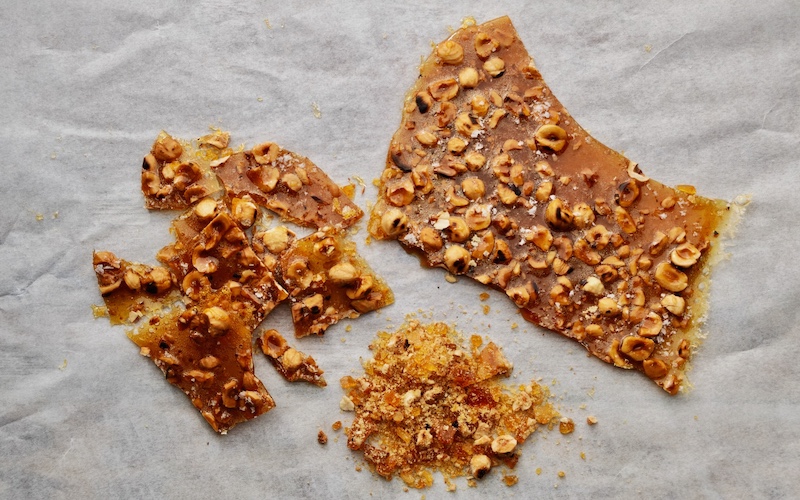
What exactly ‘praline’ means depends on where you are in the world – for more details see the FAQ below. The praline I’m talking about is French praline in the traditional sense: caramelised sugar mixed with nuts and set into a slab that can then be broken into shards or blitzed into a sprinkle as fine or coarse as you like – what we might call nut brittle in English. This French-style praline is great to have on hand for dressing up all sorts of desserts – I use it on truffled tiramisu and sometimes just sprinkle it over ice cream. I love hazelnut praline, but you can make any sort of nut praline – using almonds, pecans or even peanuts for example, or a mixture. While we’re talking terminology, once our French-style praline has been blitzed, it becomes pralin (without the ‘e’) and in Italy both sorts are called croccante. I like the sweet-savoury taste of salted caramel, so sprinkle a little salt over the setting praline, but that’s entirely optional. Chopping the nuts roughly helps spread them out evenly through the praline, even halved or quartered is fine especially if you plan on blitzing it. Soak the saucepan as soon as possible to make it easy to clean and take care not to touch the hot caramel or get any of it on your skin as sugar burns are very nasty.
Makes about 280g/10oz (1¾ cups blitzed)
Share page on:
The word praline means different things in different countries. In the USA (especially in the South), praline refers to a creamy, fudge-like candy usually made from pecans, brown sugar, butter and cream. In France – where praline originates – it’s just nuts (usually almonds or hazelnuts) coated in caramelised sugar. These can then be crushed to become pralin which is used in baking or as a chocolate filling. In Italy, the word praline is used for chocolates containing nuts (usually hazelnuts) such as Ferrero Rocher and the praline we’re talking about here is called croccante. In Belgium, a praline refers to any filled chocolate bonbon, whether it contains caramelised nut paste (praliné) or something else, such as ganache, caramel or liqueur. In Greece it’s usually a chocolate and hazelnut spread like Nutella.

Essentially yes in English usage — what’s called “praline” in French pastry (nuts set in caramelised sugar) is what English speakers usually call nut brittle and Italians call croccante. The terms describe the same ingredient.
Praline (with an ‘e’) is the whole slab or shards of caramelised sugar and nuts; pralin (no ‘e’) is what you get once that’s blitzed into a coarse or fine sprinkle, used in baking or as a filling.
Yes — almonds, pecans, macadamia’s and even peanuts work well, and you can use a mixture of nuts too. Toasting them first is key for flavour regardless of which you use.
Praline keeps indefinitely in a zip-lock bag in the freezer. stored in an airtight container at room temperature, away from humidity, it will keep for a few weeks.
When praline comes into contact with air the sugar starts to absorb moisture and it becomes sticky over time – so always add a praline garnish as close to serving time as possible.