This simple Sardinian pasta dough can be used to make several different hand-rolled rustic pasta shapes with a lovely chewy texture. It’s made from a harder wheat than the soft wheat flour used for the tender egg-rich pasta of northern Italy. I use baker’s flour, which is a hard wheat flour. It’s not as hard as the durum wheat flour (semola rimacinata di grano duro) used for my southern Italian pasta dough, though I suspect that could be substituted for baker’s flour in this dough. The harder the wheat, the firmer and chewier the pasta will be.

Lombrichi are a traditional hand-rolled pasta from Sardinia. The name means ‘earthworms’ and the pasta dough for lombrichi is often coloured with squid ink so it looks even more worm-like. Don’t confuse them with lombrichelli, a hand-rolled pasta from Lazio with a similar name that also refers to their worm-like shape, they’re much longer than lombrichi, like thick spaghetti.

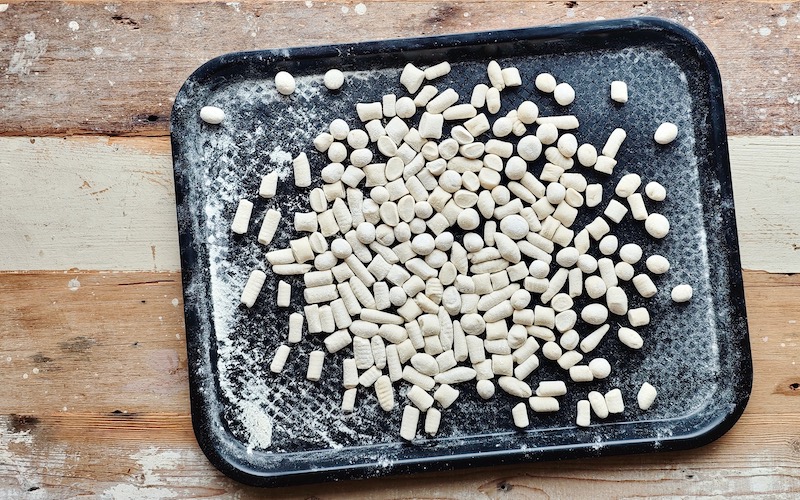
You can also use this dough to make cicciones, another hand-rolled Sardinian pasta. Cicciones means ‘little fat ones’, which is so appropriate! Cicciones can be simply cut into little fat chunks, rolled into chickpea-sized balls, or rolled down a gnocchi board to give them a grooved texture that the sauce clings to even better; the photo here shows all three. I’ve seen the grooved version referred to as ciccioneddos, but this could just be a dialect difference as Sardinia has many regional dialects.

When Sardinian chef Giovanni Pilu taught me how to make hand-rolled pasta, he showed me that if the dough starts to slip on the bench rather than roll, you put a drop of water on your hands to stop it slipping.

Whether you’re making lombrichi or cicciones, dust the pasta pieces well with coarse semolina (or flour) before putting them on the tray and spread them out so they don’t stick together.

This Sardinian pasta dough keeps wrapped in plastic in the fridge for a day or 2 and freezes well too. Any of these hand-rolled pasta shapes are perfect served with a rich pork sausage ragù (alla Campidanese), simple tomato sauce or classic pesto.

Learn more about how to make fresh pasta here – including tips on technique, equipment and ingredients – and see my page on how to cook pasta for perfect results every time.

Makes about 550g (1lb 3oz)

Ingredients
  • 360g baker’s flour, plus extra for dusting (12½oz/about 2⅓ cups)
  • Pinch salt flakes, crushed
  • 1 cup warm water, more or less (250ml)
  • Coarse semolina (or extra baker’s flour), for dusting (semola)
Method
  1. Put the flour and salt into a bowl.
  2. Add half the water and mix with your hands, adding remaining water a little at a time to form a firm dough, you may not need it all and it doesn’t take much extra water for the dough to become too soft, so add it very gradually towards the end.
  3. Knead on a lightly floured work surface for about 5 minutes, until smooth and elastic; or use an electric mixer fitted with a dough hook.
  4. Roll into a ball, wrap in plastic wrap and set aside for at least 1 hour or refrigerate overnight.
  5. When ready to shape the dough, dust a tray lightly with coarse semolina and place on a clean, dry work surface.

To Make Cicciones

  1. Divide dough into eighths and use the palms of your hands to roll each piece into a log about 1cm thick. Only if it starts to stick, dust the bench with a little flour.
  2. Cut the log into 1cm lengths.
  3. The cicciones can be left like this, rolled between the palms of your hands into little balls, or rolled down a gnocchi board.
  4. Whichever shape you decide on, place them on the tray and toss well in the semolina so they don’t stick together.
  5. Repeat with remaining dough then cover with a clean cloth and set aside until ready to cook.

To Make Lombrichi (see video below)

  1. Pinch off a walnut-sized piece of dough and use the palms of your hands to roll it into a long thin worm-shape. Only if it starts to stick, dust the bench with a little flour.
  2. Cut the strip into 5cm lengths.
  3. Roll each piece between the palms of your hands or along the bench, place them on the tray, toss them well in the semolina and spread them out so they don’t stick together.
  4. Repeat with remaining dough then cover with a clean cloth and set aside until ready to cook.

To Cook Cicciones or Lombrichi

  1. Bring a large saucepan of well-salted water to the boil (10g salt/litre water).
  2. Add pasta to the water and return to the boil.
  3. Stir well then boil for 12–15 minutes, until they’re tender and no longer taste floury; lombrichi will take a little less time than cicciones.
  4. Drain well, reserving some of the pasta cooking water, and toss with the sauce of your choice.
  5. If cooking pasta ahead of time, toss with a little olive oil, cover and set aside, then reheat in the sauce; remembering to reserve some of the cooking water to add to the sauce.

Share page on:

How To Make Hand Rolled Pasta

What Other Travellers Say

Janet (Tamworth, NSW, Aus.)
Just back from the most amazing trip to Emilia-Romagna with Roberta. Not only the home of Prosciutto di Parma, Parmigiano-Reggiano & Balsamic Vinegar, but scenery to die for and more quaint and exciting restaurants and cafés than you ever imagined. And Roberta is just the person to help you discover and enjoy them! Her knowledge of the history of the region and its wonderful cuisine know no bounds and all added to the excitement of the trip. It was faultless - well organized and lots of fun!
Deb (Belconnen, ACT, Aus.)
Wow, what a tour – I learned so much! Awesome fun traveling through Emilia-Romagna experiencing first hand some of the produce I've worked with over the last couple of years cooking with Roberta's recipe kits – the family are reaping the benefits now. If you're thinking of joining Roberta in future years get ready for an amazing experience.
Mark (Elizabeth Bay, NSW, Aus.)
My wife and I recently joined Roberta's Emilia-Romagna tour. We enjoyed all the temptations offered and learned a lot about that part of Italy, especially its food and wine culture. What was most impressive was Roberta's local knowledge of people and places. The planning and effort she put into making the whole experience seem effortless was remarkable.
Karen (Bowral, NSW, Aus.)
Our tour with Roberta through Emilia-Romagna was the highlight of the year. Good company, gorgeous palazzi and great food. What more could one ask for? Roberta's enthusiasm and knowledge made this a once in a lifetime experience through an extraordinary, diverse and very special region.
Shelley (Auckland, NZ)
Roberta’s passion for Italy shone throughout an unforgettable food and wine tour. She introduced us to family-owned artisanal producers, where we experienced everything from attic-aged balsamic to small-batch wines, Parma ham and Parmigiano-Reggiano. The local guides were equally passionate, and the excellent transport and accommodation made the trip effortless. This tour captured the region’s traditions, flavours and people, and thanks to Roberta’s deep knowledge we left with wonderful memories. A truly authentic culinary adventure — highly recommended.
Subscribe To My Newsletter & Get A Free Online Italian Cooking Class (RRP $39)