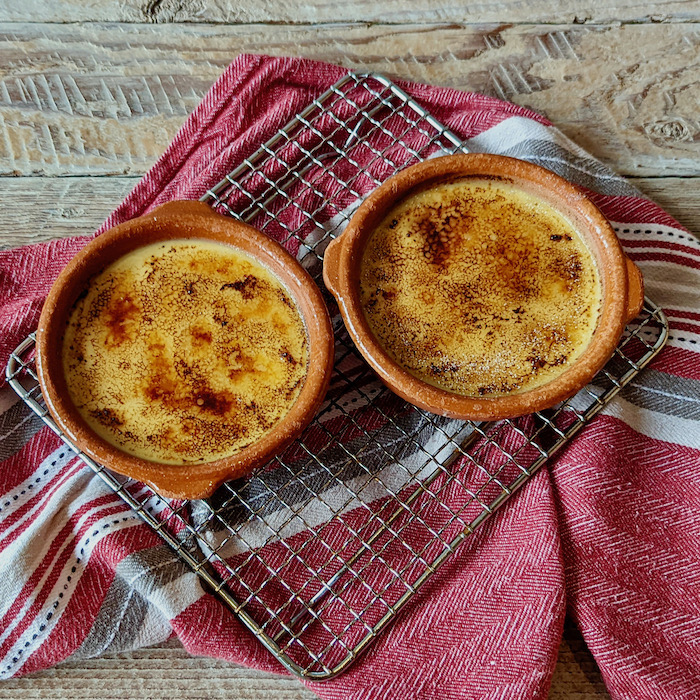
One of my favourite Sardinian sweets is bianchini, moreish little meringues studded with toasted almonds and lemon zest. Making them (or any meringue) means leftover egg yolks and a perfect excuse to make crema Catalana. This classic Spanish dessert is also very popular in Sardinia, a reminder of the Catalan influence there. The traditional recipe is a custard of egg yolks, milk, cornflour and sugar cooked on the stovetop then set in the fridge in shallow terracotta dishes. I like the typical flavourings of cinnamon and lemon zest; orange zest appears in some recipes and Sardinian chef Giovanni Pilu adds a pinch of saffron (which grows in Sardinia) and a vanilla bean to his, so feel free to experiment with different flavourings. Best of all crema Catalana is made in advance, even the crisp toffee crust, then whipped out at dessert time to make you look like a kitchen guru. I serve mine with a glass of macvin from Crittenden. As far as I know, it’s the only Aussie winery producing this unusual fortified wine originally from the Jura region in France, famous for its flor-aged vin jaune. It has a lovely Sherry-like nose from the flor and a light sweetness that works well with the smooth custard and bitter toffee crust. A small kitchen torch is ideal for creating the toffee crust on crema Catalana; they’re available from kitchenware stores. You can set this recipe in one large shallow 1-litre (4-cup) container instead of individual dishes. You can also halve it to serve 2 (see video below), but I don’t recommend doubling it as it takes so long for the larger quantity of custard to thicken that you’re better off making two batches.

Serves 4

Ingredients
  • 4 egg yolks
  • 1 tablespoon cornflour (12g/½oz)
  • ¾ cup castor sugar (165g/5¾oz)
  • 1 cinnamon stick
  • 1 lemon
  • 2 cups full-cream milk (500ml)
Method
  1. Whisk egg yolks, cornflour and ½ cup of the sugar together in a saucepan until pale golden and smooth.
  2. Break in the cinnamon stick and grate in the lemon rind.
  3. Add milk and whisk to combine well.
  4. Place over a low-medium heat and stir constantly until it thickens enough to coat the back of a wooden spoon (see FAQ below).
  5. Remove from heat and continue stirring for a minute or so to cool it slightly.
  6. Strain into 4 shallow, heat-proof 1-cup (250ml) moulds and refrigerate for a few hours until set, ideally overnight.
  7. Sprinkle remaining sugar over the custards and use a kitchen blow torch to caramelise it.
  8. Return crema Catalana to the fridge until ready to serve; the toffee topping will stay crisp for a few hours.
  9.  

Share page on:

Crema Catalana & Custard FAQ

What does it mean when a recipe says until a sauce coats the back of a wooden spoon?

Coating the back of a wooden spoon is a classic description for a properly thickened custard or sauce. It means that when you run your finger through the mixture on the back of the spoon it doesn’t flow back in to fill the space your finger has made.

How do I know when custard is thick enough?

Depending on the volume, it can take 10 minutes or much more for custard cooked on a stove top to thicken. But don’t be tempted to speed it up by increasing the temperature, nor to stop stirring, or you may end up with scrambled eggs. If you have a probe thermometer, you’ll see that the custard noticeably thickens around 80°C. That’s when it clearly passes the ‘coats the back of the wooden spoon’ test. Stir it for a further minute or so then remove from the heat as, after this point, it won’t thicken any further. See video below for an example of how thick it will become.


What happens if my custard isn't thick enough?

If the custard doesn’t thicken as much as it should, or if you set it in a container that isn’t very shallow, it may not set completely in the fridge. This really doesn’t matter as it will still taste delicious with the shards of crisp toffee crust.

What is the difference between crema Catalana and crème brûlée?

Crema Catalana is a milk-based Spanish custard made on the stove top and thickened with cornflour. Crème brûlée is a French cream-based custard baked in a bain-marie. Both have caramelised sugar toppings.

Should crema Catalana be served warm or cold?

Crema Catalana is typically served cold. It’s chilled until set, then the sugar is caramelised on top. This can be done just before serving, but can also be done a few hours ahead of time and returned to the fridge. The crust will stay crisp in the fridge for a few hours.

What Other Travellers Say

Belinda (Balmain, NSW, Aus)
I’ve been on three of Roberta’s food and wine tours and each has been an amazing well-organised experience. From remarkable Venice and the surrounding Veneto region to historic Rome and Pompeii, the spectacular Amalfi Coast, and the charming villages of Switzerland – each tour offers something special. Then there’s the food in fabulous places where you can truly eat like a local – inspired travel through great food, wine and company. I’m already looking forward to the next one!
Mark (Elizabeth Bay, NSW, Aus)
My wife and I joined Roberta's Emilia-Romagna tour. We enjoyed all the temptations offered and learned a lot about that part of Italy, especially its food and wine culture. What was most impressive was Roberta's local knowledge of people and places. The planning and effort she put into making the whole experience seem effortless was remarkable.
Shelley (Auckland, NZ)
Roberta’s passion for Italy shone throughout an unforgettable food and wine tour. She introduced us to family-owned artisanal producers, where we experienced everything from attic-aged balsamic to small-batch wines, Parma ham and Parmigiano-Reggiano. The local guides were equally passionate, and the excellent transport and accommodation made the trip effortless. This tour captured the region’s traditions, flavours and people, and thanks to Roberta’s deep knowledge we left with wonderful memories. A truly authentic culinary adventure.
Diane (Cremorne Point, NSW, Aus)
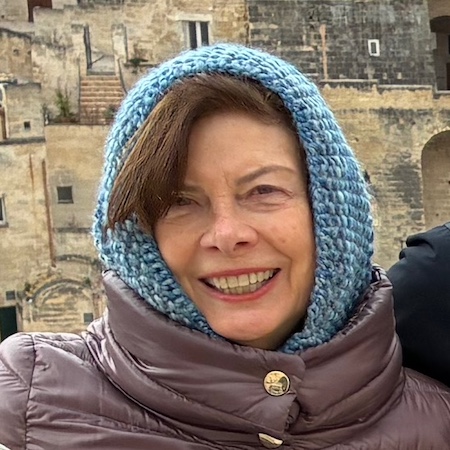
Relaxed, organised and well-paced – I enjoyed a wonderful small group tour starting in Rome, then travelling down the Amalfi Coast to stay at a family estate where we were treated like old friends. It included some hidden gems too, notably on our way to Matera, a fascinating town built into the side of a mountain. We finished with Naples and Pompeii – with plenty of wine and more new tastes. Roberta is a specialist and very personable as she hosts and explains every detail of the food and wine experience.
Fiona (Blackheath, NSW, Aus)
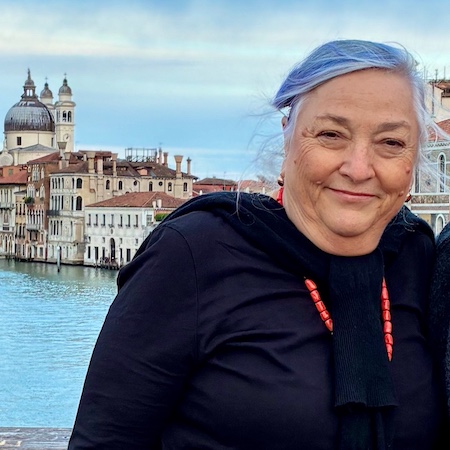
I thoroughly enjoyed the trip to the Veneto and Venice. Roberta creates wonderful bespoke small group tours with her incredible knowledge of food and wine and adds great accommodation and points of interest. It’s like travelling with your ‘besties’ – including one who’s done all the hard work researching and discovering the best and most interesting places to go, especially to eat and drink. Come with an appetite! Also factored in is time for you to do your own exploring and discover your own gems.
Di (Manly, NSW, Aus)
We had always travelled independently, so a small group tour felt like a risk, but by day 2 we knew it was the right choice. Roberta knows people and places far from the tourist trail: winery lunches, a family lemon grove high on the Amalfi Coast, a third-generation cheesemaker, an amazing cave hotel in Matera. We'll definitely travel with Roberta again.
Subscribe To My Newsletter & Get A Free Online Italian Cooking Class (RRP $39)