Argyll is home to Scotland’s best west coast seafood – from Loch Linnhe langoustines and oysters farmed in the cold water of Loch Creran, to the queen scallops and Atlantic mackerel of Loch Fyne and the crabs and monkfish caught off Oban.
Argyll has more than the freshest seafood. It also has chefs who know how to turn Scotland’s bounty into delicious dishes – at all levels, from fine dining to seafood shacks. Add great craft beer, some of the world’s most spectacular scenery, and producers who love sharing their knowledge and passion, and you have one of the best seafood destinations in Scotland (if not the world)!
Where to Stay (& Eat) in Argyll The Pierhouse (Port Appin)
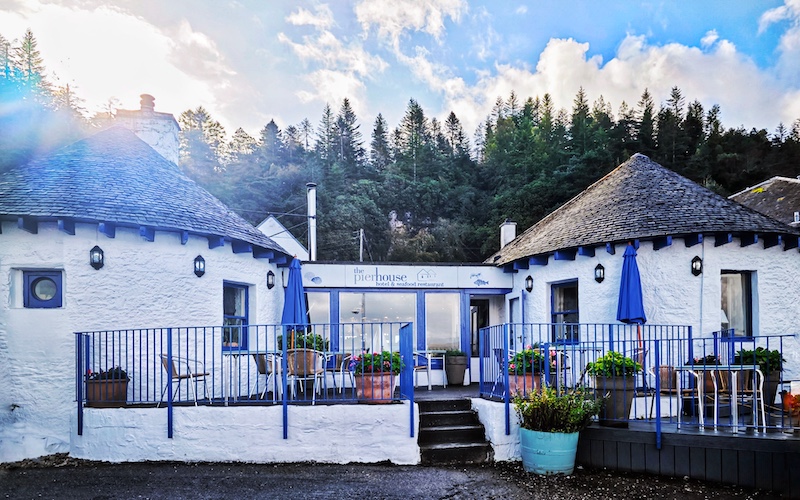
This restaurant with rooms in a lochside Highland setting is the best place to stay in West Argyll. Chef Michael Leathley’s relationships with local producers say everything: oysters shucked to order, langoustines delivered by fishing boat daily, lobsters kept in a creel at the end of the pier, venison from an island in the loch. Add warm service, mesmerising views and arguably Scotland’s best breakfast, and The Pierhouse is hard to leave.
Best Fine Dining in Argyll Inver (Strachur)
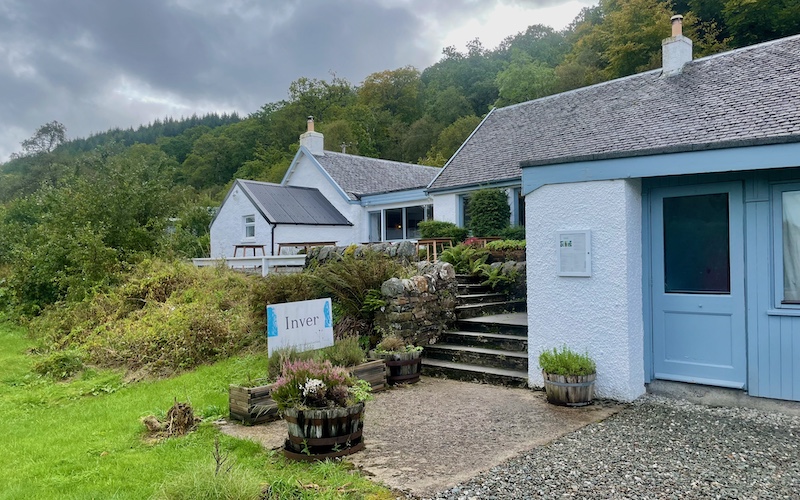
On the shore of Loch Fyne – Scotland’s longest sea loch – Inver is a very special restaurant. Everything is considered, from a vinyl playlist to drinks pairings including some innovative non-alcoholic options. The menu showcases Loch Fyne oysters and Scotland’s best west coast seafood alongside foraged and garden-grown ingredients. A rye risotto with apricot, chanterelles and crowdie is one of the best dishes I’ve eaten anywhere.
Best Casual Seafood in Argyll Inveraray Seafood Shack (Inveraray)
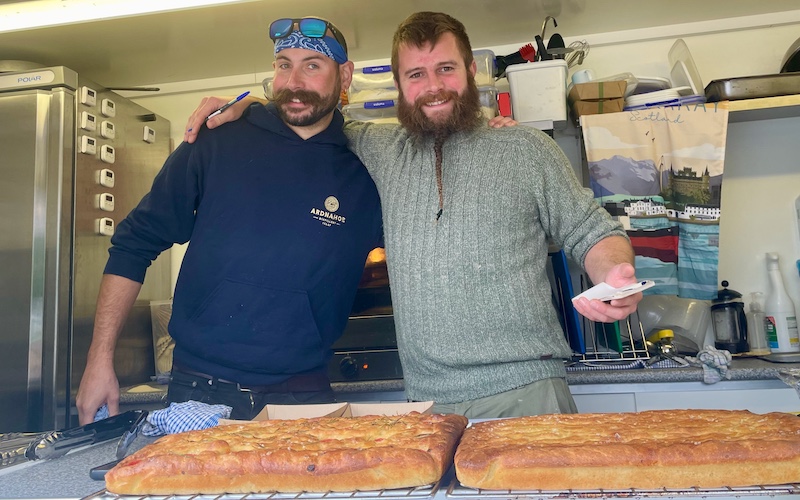
It doesn’t get more local than having the guys who caught the seafood cook it for you. Expat Italians Claudio and Ivan fish two days a week and cook the best Loch Fyne seafood the rest of the time in their trailer on Inveraray Pier. The stars are focaccia baked throughout the day and loaded with langoustines in sauce Marie Rose (see video below), plus oysters shucked to order and gratinéed huge hand-dived scallops.
Best Seafood in Oban Oban Seafood Hut (Oban)
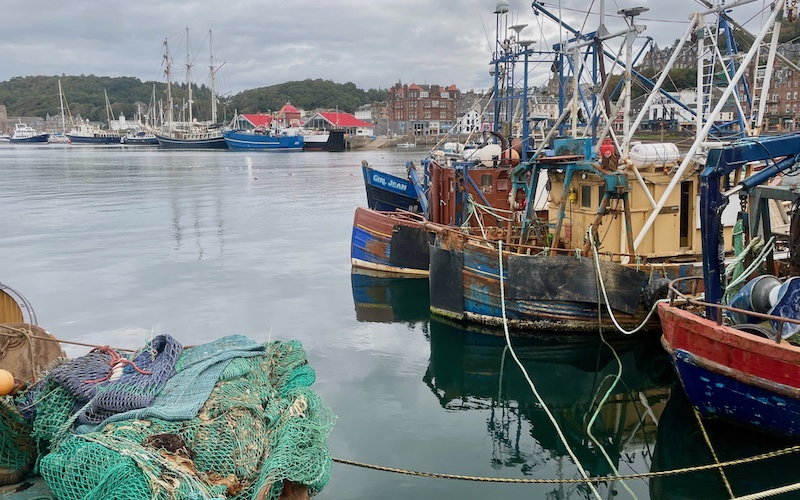
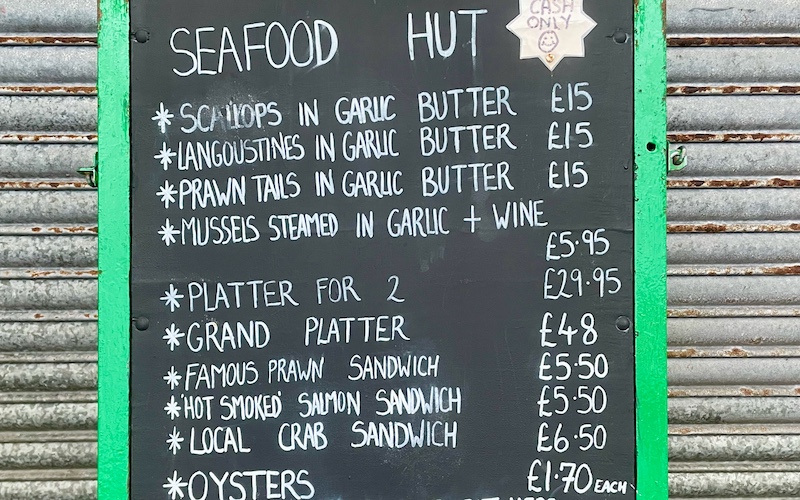
Oban calls itself the ‘Seafood Capital of Scotland’, but good restaurants are surprisingly thin on the ground. The dockside shack known locally as ‘The Green Shack’ is my pick – a takeaway kiosk with wooden benches where the seafood changes daily with whatever the boats bring in. Grab a creamy crab or prawn sandwich and eat it on the ferry or at a roadside picnic spot. Cash only.
Where to Drink in Argyll Fyne Ales (Cairndow)
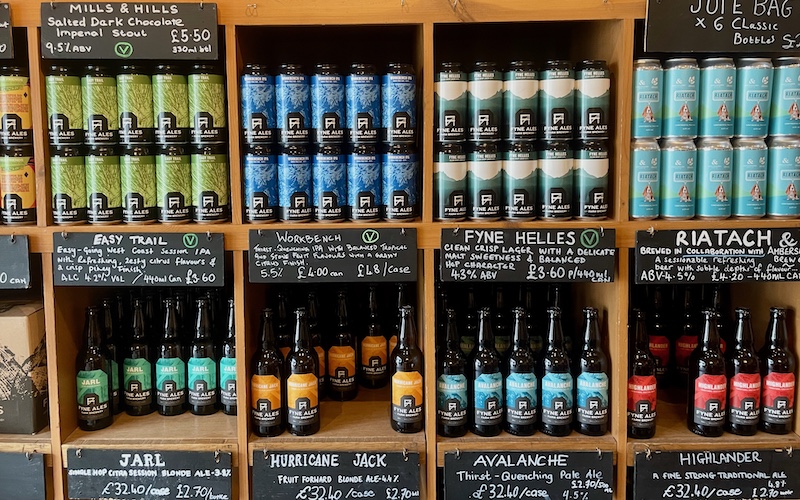
Worth the 15km drive along Loch Fyne from Inveraray, this farm brewery produces a solid core range. The real draw for me, however, is the limited-release spontaneous ferment saison beers: a 10.5% stout aged in cherry liqueur barrels, a lighter 5.3% option aged in chardonnay barrels, and plenty more in between. The farm rears sheep, deer and Highland cattle and the tasting room serves a mean venison nachos.
Best Seafood Experience in Argyll Caledonian Oyster Co. (Loch Creran)
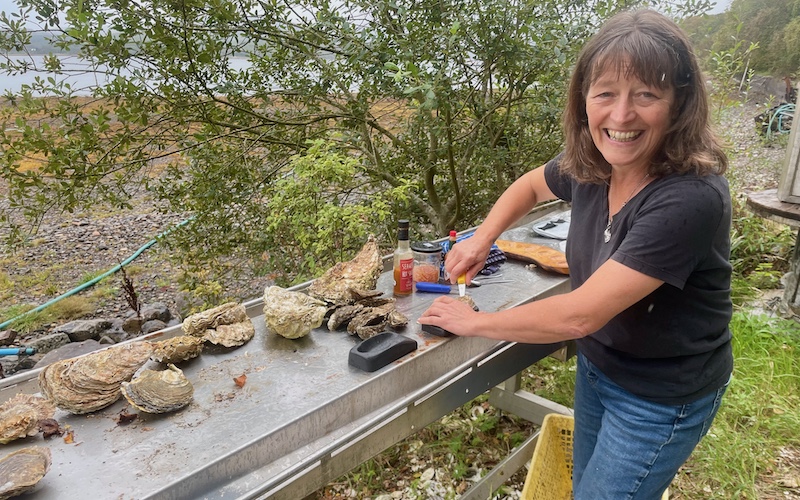
Judith Vajk and her son Angus supply oysters to most of the best seafood restaurants in West Argyll (including The Pierhouse above). Most days you’ll find them working their leases or in the rustic processing shed on the shore of Loch Creran. Stop by to learn how their oysters are farmed, try your hand at shucking, then taste the results. This is one of the best seafood experiences in Argyll thanks to Judith’s knowledge and passion.
Best Road Trip in Argyll Glencoe
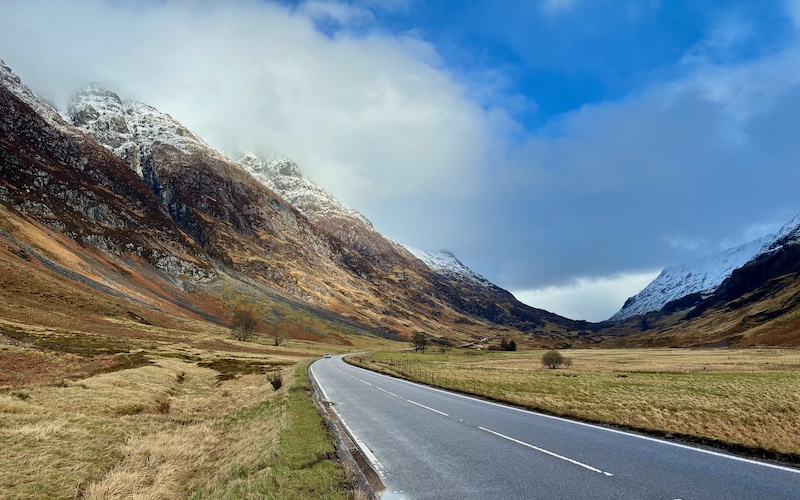
The drive through Glencoe is Scotland’s most dramatic road trip. It starts on the haunting open expanse of Rannoch Moor and drops into a steep-sided valley flanked by towering black mountains – eight of Scotland’s famous ‘Munros’ (peaks over 3,000 feet). Known as ‘the weeping glen’ for its many waterfalls, Glencoe is also the site of the tragic 17th-century massacre of Clan MacDonald, Scotland’s most infamous act of betrayal.
Published 19 May 2026
Argyll, on the Scottish west coast, is one of Scotland’s great seafood destinations – Loch Fyne oysters, langoustines, hand-dived scallops, crab and monkfish are all landed or farmed there.
Beyond seafood, the region produces excellent craft beer (Fyne Ales is a standout) and supplies some of Scotland’s best restaurants with foraged ingredients, venison and Highland beef and lamb.
Loch Fyne is famous for seafood – particularly its oysters and langoustines, which are regarded as some of the finest in Scotland.
At 65km, it’s Scotland’s longest sea loch, and in the 19th century it was one of the country’s great herring fisheries, giving its name to the famous Loch Fyne kipper.
It’s also home to Inver, one of Scotland’s most acclaimed restaurants, and Fyne Ales, one of its most interesting craft breweries.
Absolutely. Inver holds a Michelin Green Star and is widely considered one of the best restaurants in Scotland. The menu showcases Loch Fyne seafood alongside foraged and garden-grown ingredients, with exceptional drinks pairings including creative non-alcoholic options. It went on the market in September 2026, so book soon.
If you can’t get one of Inver’s rooms, The Creggans Inn on Loch Fyne is your best option.
Without question. The Glencoe road trip is one of the most dramatic drives in Europe – from the open expanse of Rannoch Moor into a steep valley flanked by towering black mountains. Allow time to stop at the visitor centre and walk the glen. It’s as historically significant as it is spectacular.
On 13 February 1692, soldiers of the Earl of Argyll’s Regiment, commanded by Robert Campbell of Glenlyon, turned on the MacDonalds of Glencoe, who had given them food and shelter for nearly two weeks. Around 30 people were killed, including the clan chief, MacIain.
The pretext was MacIain’s failure to swear allegiance to William III by the 1 January deadline – he took the oath at Inveraray six days late.
Although it’s often remembered as Campbells against MacDonalds, only a dozen or so of the soldiers were Campbells. Under Scots law, killing those who had offered hospitality was a crime – known as ‘murder under trust’ – and the massacre remains a lasting symbol of betrayal.
A 1587 act of the Scottish Parliament made murder under trust (also called ‘slaughter under trust’) a form of treason, ranking it alongside wilful fire-raising and assassination. After a royal commission investigated the killings in Glencoe, the Scottish Parliament condemned the massacre as murder under trust, though William III took no action against those responsible. Scotland’s treason laws were swept away soon after the 1707 Acts of Union, when the Treason Act 1708 replaced them with the English definition of high treason – from then on, such a killing was simply murder.