
Like most of Asia, Vietnam’s food is based on rice. The abundance of fresh herbs served at every meal sets it apart from its neighbours. Vietnamese recipes are also very tactile, with lots of wrapping, folding and dipping.

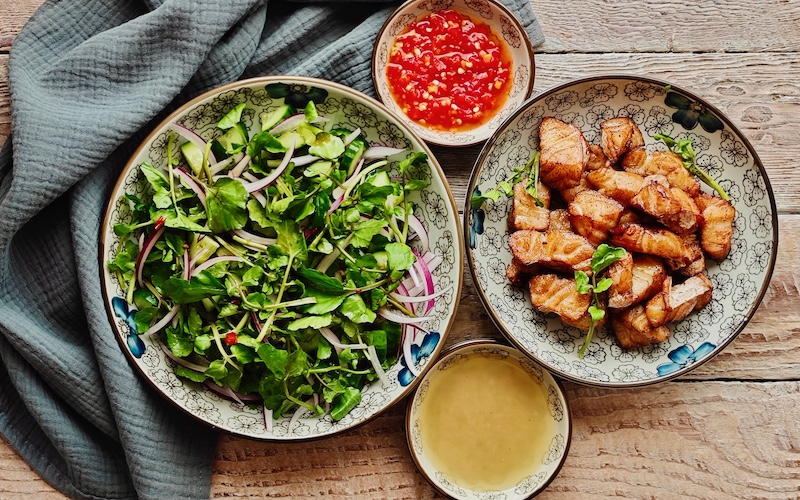
Vietnamese cuisine is centred on rice and is known for its generous use of fresh herbs, bright flavours, and balanced seasoning. Meals often include a combination of savoury, sour, sweet, and spicy elements, with dishes designed to be customised at the table. Vietnamese food is also highly tactile, with many dishes involving wrapping, folding, dipping, and assembling before eating.
What sets Vietnamese food apart from other Asian cuisines is its emphasis on freshness and contrast. Large plates of herbs, salad vegetables, and dipping sauces are served with most meals. Compared to some neighbouring cuisines, Vietnamese cooking is generally lighter and more focused on natural flavours enhanced by fish sauce, lime, and aromatics.
Yes, rice is the foundation of Vietnamese cooking. It appears in many forms, including steamed rice, rice noodles, rice paper, and rice flour. Most traditional meals are built around rice, with accompanying meat, seafood, vegetables, and sauces.
Many Vietnamese dishes are designed to be assembled and eaten by hand. Foods such as rice paper rolls, lettuce wraps, and herb bundles are wrapped, folded, and dipped before eating. This hands-on style is a key part of Vietnamese food culture and makes meals highly interactive.
Vietnamese cuisine is broadly divided into three regional styles:
Each region has its own specialties and flavour preferences.
Some key ingredients appear across most Vietnamese recipes, regardless of region. These include:
These key ingredients help create the signature balance of salty, sour, sweet, and spicy flavours.
Fish sauce, known as nuoc mam in Vietnamese, is a fermented condiment made from anchovies and salt. It is the backbone of Vietnamese seasoning and provides depth and savoury umami to both cooked dishes and dipping sauces. High-quality fish sauce is essential for authentic Vietnamese cooking. Although Thai cuisine also uses fish sauce, the Vietnamese version tends to be lighter and more elegant.
Nuoc mam cham is a popular Vietnamese dipping sauce made from fish sauce, lime juice, sugar, and often chilli and garlic. It is served with many dishes, including spring rolls, grilled meats, and noodle salads, and allows diners to adjust flavour to their taste. See video above.
A typical Vietnamese meal includes a variety of condiments and sides that diners use to season their food. These often include:
These accompaniments allow each person to customise their meal.
Fresh herbs are central to Vietnamese cooking. They add fragrance, freshness, and texture, balancing rich and savoury dishes. Fresh herbs are served at nearly every meal and commonly include mint, coriander, Vietnamese basil, and perilla.
Vietnamese food is usually moderately spicy rather than intensely hot. Heat is often added at the table using fresh chillies, chilli paste, or dipping sauces, allowing diners to control the level of spice themselves.
‘Enjoy your meal’ (or bon appetit) in Vietnamese is generally expressed as ‘hãy ăn!’. This literally means ‘please eat’ or ‘go ahead and eat’ and is a friendly way to invite others to begin the meal.
Many traditional Vietnamese recipes are naturally healthy, featuring fresh vegetables, herbs, grilled meats, soups, and light broths. Cooking methods such as steaming, grilling, and simmering are common, making Vietnamese food relatively light and balanced.