The name Glasgow comes from Celtic ‘green hollow’ – often romantically translated as ‘dear green place’. Not the first thing that comes to mind when we talk of a city famous for its locomotive and shipbuilding industries, and which still seems perversely proud of its somewhat gritty, working-class reputation.
Yet Glasgow has grown enormously in attractiveness to locals and visitors since the late 20th century. I’ve been visiting my father’s home town since 1990 – the year it was named European Capital of Culture – and I can tell you that Glasgow is home to some of the world’s friendliest and funniest people. Forget deep-fried Mars bars – this Glasgow food guide will show you a city that has become one of Scotland’s most exciting food destinations, with delicious options from great restaurants to speciality coffee. As well as its history, architecture, museums, galleries, shopping and bohemian West End, Glasgow is the perfect starting point for a tour of Scotland’s stunning scenery – you can be on the bonny banks of Loch Lomond in just 30 minutes. Scotland’s largest city lives up to its Celtic name too, with more green space per capita than any other European city. Slàinte mhath!
Where To Stay in Glasgow Kimpton Blythswood Square Hotel & Spa
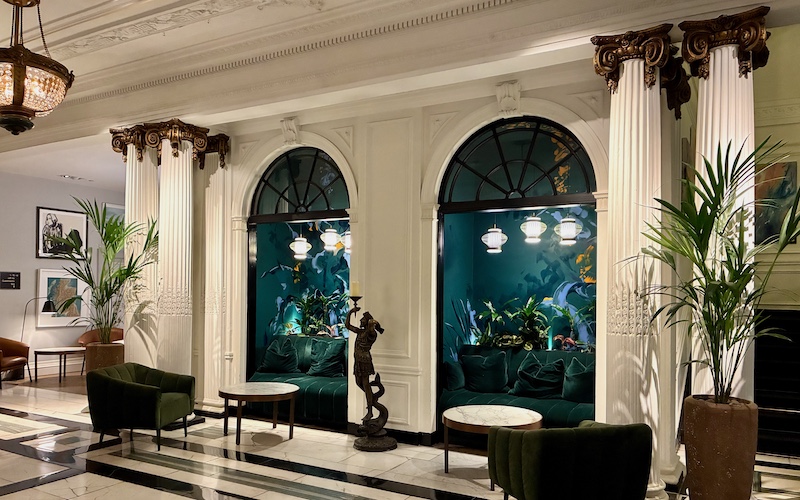
Overlooking the gardens of Blythswood Square, this luxurious hotel was once three Georgian townhouses (and later the Royal Scottish Automobile Club). Now it’s Glasgow’s best hotel, with excellent service, a great breakfast buffet, and just a few minutes’ walk to the city centre. It’s a lovely blend of contemporary (the snow shower in the spa!) and classic, with original Georgian features and beautiful Harris Tweed furnishings.
Best Fine Dining in Glasgow Eleven Fifty Five
For over 10 years, Peter McKenna and Kevin Dow ran The Gannet, my favourite Scottish restaurant. In early 2026 they changed to Eleven Fifty Five and a more relaxed direction. The degustation menu is gone but this is still one of Scotland’s finest dining experiences, combining Peter’s deft touch with the best seasonal produce and Kevin’s thoughtful wine pairings. Real candlelight, white linen and superb service – wish I lived closer!
Best Casual Eats in Glasgow Margo
This huge restaurant in Glasgow’s bustling Merchant City is all about generous serves of delicious food ideal for sharing. Expect great house-baked focaccia alongside the likes of skate in a citrusy cumquat sauce, Shetland mussels in cider with sobrasada, and beautifully rare lamb shoulder with salsa verde; everything well-seasoned, well-sauced and just plain tasty! Even when it’s heaving, service is relaxed, efficient and friendly – great wine list too!
Best Coffee & Pastries in Glasgow Singl-end
You’ll find some of Glasgow’s best coffee at the two cosy Singl-end café-bakeries – one in Merchant City and the other (Garnethill) downstairs in an inner-city back lane near the West End. Mouth-watering doesn’t begin to describe their huge array of cakes and slices, as well as breakfasts, salads and sandwiches. They bake their own bread too (no traditional baps though, so see video below to make your own).
Where To Drink in Glasgow The Pot Still
With over 1,000 whiskies on offer, this antique watering-hole has seen locals and visitors side by side at the long wooden bar since at least 1867 (when it was owned by wine & spirits merchant John Hill). The largest collection of single malts from across Scotland – plus blends and whiskies from around the globe – means even die-hard whisky-heads will find something they’ve never tried before. Great real ale too.
What To Do in Glasgow The Mackintosh Tearooms Tour
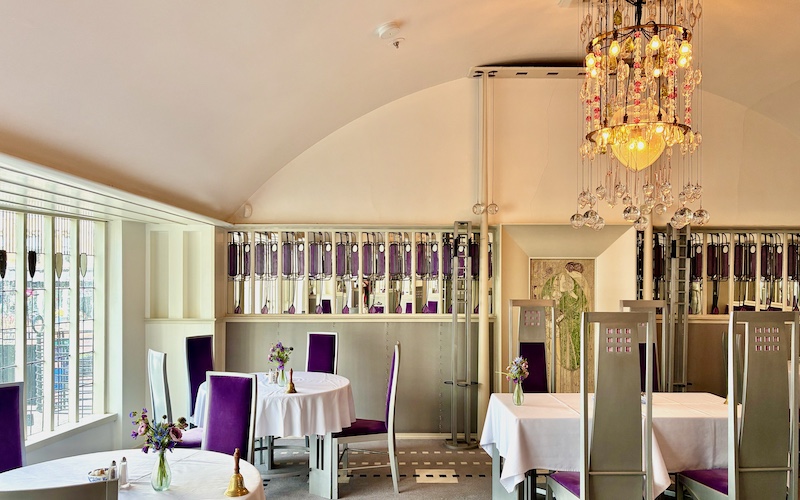
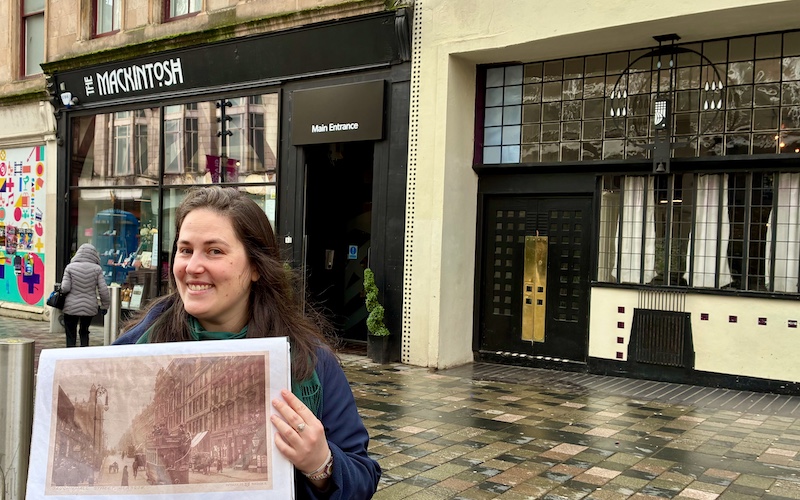
Glasgow has several properties ‘inspired by’ renowned Scottish architect Charles Rennie Mackintosh, but these are the only remaining tearooms actually designed by him in the early 1900s. A guided tour of what was once Miss Cranston’s Willow Tearooms on Sauchiehall St is a real glimpse into the past and the far-reaching influence Mackintosh, his artist wife Margaret Macdonald, and the progressive Kate Cranston had on the world around them.
Updated 17 May 2026
Glasgow’s name comes from Brittonic (specifically Cumbric), the Celtic language of the ancient Kingdom of Strathclyde and a close cousin of Old Welsh, combining glas (‘green’) and cau (‘hollow’) to mean ‘green hollow’.
It was first recorded around 1128 as Glasgu. Gaelic speakers later adapted it as Glaschu, still the city’s Gaelic name today.
The much-loved ‘dear green place’ is a romantic popular translation rather than the literal meaning, though the city’s many parks live up to it.
Glasgow’s coat of arms tells the story of its patron saint, St Mungo, through four miracles remembered in a rhyme every Glaswegian child learns:
The motto ‘Let Glasgow Flourish’ is a shortened version of words attributed to his preaching: ‘Lord, let Glasgow flourish through the preaching of thy word and praising thy name.’
The Merchant City is Glasgow’s historic heart, built largely on the fortunes of the 18th-century ‘Tobacco Lords’.
The 1707 Acts of Union (following the union of Scotland and England under one monarch a century earlier) united the Scottish and English parliaments to create Great Britain and opened England’s colonial trade to Scots. Glasgow merchants grew immensely rich importing tobacco from plantations in Britain’s North American colonies of Virginia and Maryland.
By the 1750s Glasgow imported more tobacco than all other British ports combined. The merchants built grand mansions and warehouses in what is now the Merchant City – and streets such as Glassford, Buchanan and Ingram still bear their names.
The trade collapsed with the American Revolution, and the area declined. It has been revived since the 1980s as the city’s lively quarter of restaurants, bars, boutiques and galleries.
In the 19th century Glasgow became the ‘Second City of the Empire’, a powerhouse of heavy industry. By 1870 more than half of Britain’s shipbuilding workforce was based on the River Clyde, and Glasgow’s locomotive works supplied trains around the world.
Tens of thousands of workers crowded into tenements that were among the worst housing in Europe, and the city became a stronghold of the labour movement, known as ‘Red Clydeside’ in the early 20th century.
When the shipyards and factories declined from the 1960s, that identity remained: Glaswegians are famously proud of their grit, humour and plain speaking.
By the 1970s Glasgow’s heavy industry was in steep decline and the city had a reputation for poverty and violence.
In the early 1980s it set out to change its image with the cheery ‘Glasgow’s Miles Better’ campaign, then opened the Burrell Collection in 1983 and hosted the Glasgow Garden Festival in 1988.
The 1990 title – the first time it went to a city that wasn’t a national capital – capped the transformation. Glasgow was also the first to stage a year-long programme, and the restored Victorian buildings, revived arts scene and growing confidence that followed reshaped the city into the cultural destination it is today.
They’re very different – and only about an hour apart by train, so the best answer is to visit both.
Edinburgh, the capital, is the elegant one: a medieval Old Town and Georgian New Town, a castle on a volcanic rock and world-famous festivals.
Glasgow, Scotland’s largest city, is grittier, livelier and famously friendly, with grand Victorian architecture, world-class free museums, a thriving music and art scene, and Charles Rennie Mackintosh’s legacy at every turn.
Many travellers find Edinburgh more beautiful but Glasgow more fun, and food lovers will eat brilliantly in both.

Charles Rennie Mackintosh (1868–1928) was a Glasgow-born architect, designer and artist, and a pioneer of modern design. With his wife Margaret Macdonald, her sister Frances and brother-in-law Herbert MacNair – known as ‘The Four’ – he created the ‘Glasgow Style’, blending Art Nouveau curves, Japanese simplicity and Scottish tradition, and influencing designers as far afield as Vienna.
His masterpiece, the Glasgow School of Art (1897–1909), was devastated by fires in 2014 and 2018. Largely unappreciated in his lifetime, he spent his final years painting watercolours in France. Today he’s Glasgow’s most celebrated son, and his buildings and furniture draw admirers from around the world.
Glasgow’s tearooms grew out of the 19th-century temperance movement, which sought sober alternatives to the city’s many pubs. They offered affordable comfort and a place where women could meet in their own ‘ladies’ rooms’, at a time when respectable women seldom appeared in public unescorted.
The most famous tearoom owner was Kate Cranston, an independent-minded businesswoman from a hotel-keeping family whose brother Stuart was a pioneering tea dealer. She opened her first tearoom in 1878 and gave the young Charles Rennie Mackintosh – and his artist wife, Margaret Macdonald – increasing creative freedom across her tearooms, culminating in designs that would influence Art Nouveau throughout Europe.
Opened on Sauchiehall Street in 1903, her Willow Tearooms – now the Mackintosh Tearooms, owned by the National Trust for Scotland – are the only surviving tearooms designed entirely by Mackintosh, and the only commission where he had complete creative control over both exterior and interior, right down to the staff uniforms. Fully restored to the original designs between 2014 and 2018, this A-listed building is one of Glasgow’s most important architectural treasures.
The Gannet opened in 2013 on Argyle Street in Finnieston and became one of Scotland’s most celebrated restaurants, listed in the Michelin Guide.
It closed on New Year’s Eve 2025 and, in February 2026, the same co-owners – chef Peter McKenna and front-of-house Kevin Dow – reopened the site as Eleven Fifty Five, named after its address at 1155 Argyle Street.
Eleven Fifty Five is a more relaxed venue with the same commitment to Scottish produce, superb cooking and fabulous service.
Harris Tweed is the only fabric protected by its own Act of Parliament. Under the Harris Tweed Act 1993, it must be handwoven by islanders in their own homes in the Outer Hebrides, from new wool dyed and spun there.
Every length is inspected and hand-stamped with the Orb trademark. Even the word ‘tweed’ is said to come from a London merchant misreading ‘tweel’, the Scots word for twill.