Florence Food Lovers' Guide

Everyone loves Tuscany, especially Florence. My love affair with Italy began in 1989 on my first visit to Florence – the imposing Duomo, with its green and pink marble walls and distinctive terracotta-tiled dome, won my heart at first sight.

Close up of the striped marble of Florence Duomo – Florence Food Guide

To this day I love the way you catch glimpses of it from everywhere within the old city. Considered the birthplace of the Italian Renaissance, Florence is home to Michelangelo’s David and his unfinished prigioni, as well as the medieval Ponte Vecchio packed with gorgeous shops down both sides. It’s also where you’ll find some of my favourite Italian food and wine. Here’s my Florence food guide plus a suggestion for how to enjoy more delicious Italian food and wine without the hordes of Tuscan-loving tourists.

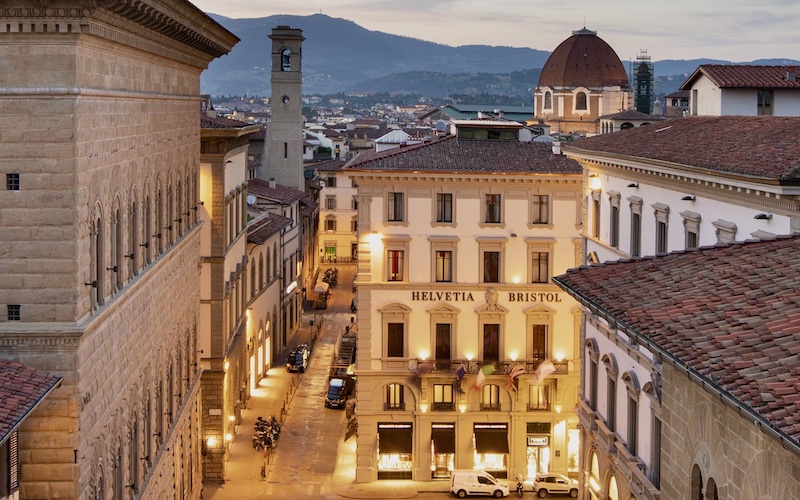
Helvetia and Bristol exterior Florence Food Guide

Where to Stay in Florence Helvetia & Bristol
Right in the heart of Florence’s centro storico, this grand hotel has been welcoming famous guests – from composer Stravinsky to Hollywood idol Gary Cooper – since 1885. It overlooks Renaissance Palazzo Strozzi, and everything from the Duomo to the Ponte Vecchio is an easy stroll away. A 2022 restoration by Florence’s master artisans has returned its silk-hung rooms to their full splendour.

Waiter carving bistecca Fiorentina at Buca Mario – Florence Food Guide

Where to Eat in Florence Buca Mario
Florence’s traditional ‘buche’ are restaurants in the cellars of grand palazzi, and Buca Mario has been serving locals and visitors beneath 16th-century Palazzo Niccolini since 1886. It’s one of the city’s oldest restaurants and on my list of the best restaurants in Italy. Under its vaulted ceilings, charming waiters carve bistecca Fiorentina tableside in a true Florentine ritual, and the memorable dessert trolley is the perfect excuse to linger a little longer.

View from Piazzale Michelangelo café – Florence Food Guide

Where to Drink in Florence Piazzale Michelangelo
Sometimes a little perspective is a good thing – it’s hard to really see the city, especially the Duomo, when you’re right on top of it. So take the 30-minute walk across the River Arno and up the hill to Piazzale Michelangelo and sip a caffè or aperitivo while looking over the panoramic postcard view. Giuseppe Poggi built the terrace in 1869, when Florence was briefly Italy’s capital, and a bronze copy of David stands at its centre.

Schiacciata (Tuscan flatbreads) at Pany da Lory Mercato Centrale Florence - Walking Tour of Italian Food Markets

Where to Shop in Florence Mercato Centrale
Florence’s historic Mercato Centrale is one of my favourite Italian food markets. Its iron and glass hall was designed by Giuseppe Mengoni, architect of Milan’s Galleria Vittorio Emanuele II. In 2014 it underwent a major refurbishment that created a huge artisanal food court on the first floor while leaving the traditional vendors on ground level. There’s lots to love here, and I can never resist Pany da Lory’s schiacciata (Tuscan flatbread).

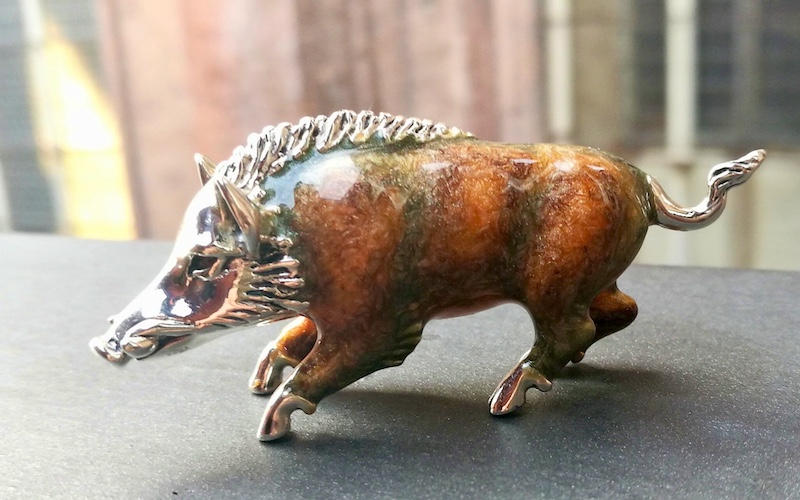
Silver and Enamel Boar from S. Vaggi & Figli on Ponte Vecchio in Florence

What to Buy in Florence Enamel & Silver Figurines
Goldsmiths have lined the Ponte Vecchio since 1593, when Grand Duke Ferdinando I evicted its butchers and tanners. I head to S. Vaggi & Figli, founded by Sergio Vaggi, twice named Italy’s best jewellery engraver. Amid the glitter, I find affordable treasures in the menagerie of silver and enamel animals – my favourite, a little cinghiale (wild boar), nods to Florence’s bronze Porcellino and Tuscany’s beloved pappardelle al cinghiale.

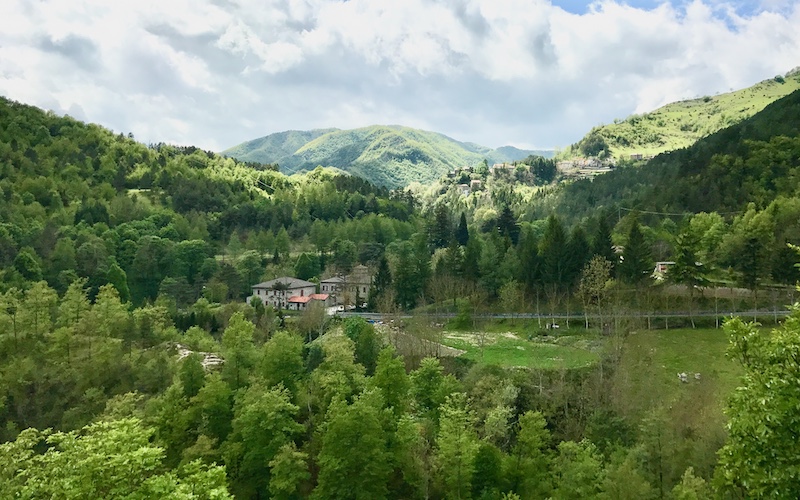
Scenic view of hills and trees from Muraglione Pass – drive from Florence to Romagna

Where to Drive from Florence Muraglione Pass
Florence is beautiful, but it can be packed with tourists. Once you’ve had a taste of its food and wine offerings, hire a car and drive across the Apennines, over the 900m (2,950′) Muraglione Pass, and into the lesser-visited, but just as delicious, region of Emilia-Romagna. The views are stunning, especially with a stop just after the summit for a plate of pasta at rustic Ristorante Il Laghetto in San Benedetto in Alpe.

Updated 26 Oct 2026

Emilia-Romagna Food & Wine Tour

Florence Travel Guide FAQ

What is bistecca alla Fiorentina?

Bistecca alla Fiorentina is Florence’s signature steak – a thick T-bone, with both the fillet and sirloin on the bone, traditionally from Tuscany’s prized Chianina cattle.

Cut at least three fingers thick, bistecca alla Fiorentina is seasoned simply with salt, pepper and olive oil then grilled over hot coals and served al sangue (rare).

It’s usually priced by the etto (100g/3½oz), and a single steak often weighs over 1kg (2lb 3oz) – so it’s made for sharing. Legend says the word bistecca comes from English visitors calling for ‘beef steak’ at the Medici’s feast of San Lorenzo.

What is schiacciata?

Schiacciata (meaning ‘squashed’) is the flatbread of Tuscany. A type of focaccia, it is leavened dough pressed flat by hand, drizzled with olive oil and sprinkled with coarse salt before baking – giving it a crisp, golden top and soft centre.

Florentines eat it plain or split and filled with salumi, cheese or porchetta. In autumn, bakers make schiacciata all’uva, studded with wine grapes from the harvest, and during Carnevale, schiacciata alla Fiorentina is a sweet, orange-scented sponge cake dusted with icing sugar, with Florence’s lily emblem stencilled in cocoa.

Why is the Ponte Vecchio the only bridge in Florence to survive World War II?

On the night of 3–4 August 1944, retreating German troops blew up every bridge across the Arno in Florence to slow the Allied advance – except the Ponte Vecchio. Instead, they demolished the medieval buildings at both ends to block access.

Why it was spared is still debated: some credit Hitler’s admiration for the bridge on his 1938 visit to Florence, while others point to German consul Gerhard Wolf, who loved the city.

Either way, it’s now Florence’s oldest bridge, rebuilt in its current form in 1345, and one of only a few remaining bridges worldwide with shops across the full span on both sides, as was once common.

Why is Florence’s Duomo green, white and pink?

Florence’s Duomo, the cathedral of Santa Maria del Fiore, is clad in three different stones: white marble from Carrara, green serpentine from Prato and pink marble from the Maremma.

Although Brunelleschi’s famous dome was completed in 1436, the original medieval façade was dismantled in 1587 when Grand Duke Francesco I had it pulled down to make way for a modern design by his architect Bernardo Buontalenti, then died that same year.

The cathedral stood with a bare front for almost 300 years and the current neo-Gothic façade, designed by Emilio De Fabris, was only finished in 1887. By then its colours had taken on new meaning, echoing the red, white and green flag of newly unified Italy.


Why do people rub the nose of the bronze boar in Florence?

The nose of Il Porcellino (‘the piglet’) in the Loggia del Mercato Nuovo is rubbed for good luck.

The original bronze wild boar fountain was cast by Baroque sculptor Pietro Tacca in the 1630s, copying an ancient marble boar now in the Uffizi. Today’s fountain is a replica, with Tacca’s original in the Museo Bardini.

Tradition says that rubbing its snout ensures good luck and a return to Florence – a custom already recorded in 1766. Thus its nose shines gold while the rest has a bronze patina. For extra luck, place a coin in its mouth: if it falls through the grate below, your wish will come true.

Shiny-nosed replicas now stand in cities from Munich and Brussels to Kansas City and Sydney – where the Porcellino’s coins have helped fund Sydney Hospital since 1968.

What Other Travellers Say

Belinda (Balmain, NSW, Aus.)
I’ve been on three of Roberta’s food and wine tours and each has been an amazing well-organised experience. From remarkable Venice and the surrounding Veneto region to historic Rome and Pompeii, the spectacular Amalfi Coast, and the charming villages of Switzerland – each tour offers something special. Then there’s the food in fabulous places where you can truly eat like a local – inspired travel through great food, wine and company. I’m already looking forward to the next one!
Beverly (Woden, ACT, Aus.)
Had a fabulous time on Roberta’s back to back tours of Southern Italy and Veneto – good to revisit some places I knew well, like Rome and Venice, and discover new ones, like Matera and Padua. Fantastic and varied food experiences, great cooking classes, met interesting wine makers, restaurateurs and other food artisans and drank some beautiful wines. Highly recommend both tours – and doing them together. I’ll definitely be doing another tour with Roberta.
Mark (Elizabeth Bay, NSW, Aus.)
My wife and I joined Roberta's Emilia-Romagna tour. We enjoyed all the temptations offered and learned a lot about that part of Italy, especially its food and wine culture. What was most impressive was Roberta's local knowledge of people and places. The planning and effort she put into making the whole experience seem effortless was remarkable.
Shelley (Auckland, NZ)
Roberta’s passion for Italy shone throughout an unforgettable food and wine tour. She introduced us to family-owned artisanal producers, where we experienced everything from attic-aged balsamic to small-batch wines, Parma ham and Parmigiano-Reggiano. The local guides were equally passionate, and the excellent transport and accommodation made the trip effortless. This tour captured the region’s traditions, flavours and people, and thanks to Roberta’s deep knowledge we left with wonderful memories. A truly authentic culinary adventure.
Diane (Cremorne Point, NSW, Aus.)
Relaxed, organised and well-paced – I enjoyed a wonderful small group tour starting in Rome, then travelling down the Amalfi Coast to stay at a family estate where we were treated like old friends. It included some hidden gems too, notably on our way to Matera, a fascinating town built into the side of a mountain. We finished with Naples and Pompeii – with plenty of wine and more new tastes. Roberta is a specialist and very personable as she hosts and explains every detail of the food and wine experience.
Fiona (Blackheath, NSW, Aus.)
I thoroughly enjoyed the trip to the Veneto and Venice. Roberta creates wonderful bespoke small group tours with her incredible knowledge of food and wine and adds great accommodation and points of interest. It’s like travelling with your ‘besties’ – including one who’s done all the hard work researching and discovering the best and most interesting places to go, especially to eat and drink. Come with an appetite! Also factored in is time for you to do your own exploring and discover your own gems.
Di (Manly, NSW, Aus.)
We had always travelled independently, so a small group tour felt like a risk, but by day 2 we knew it was the right choice. Roberta knows people and places far from the tourist trail: winery lunches, a family lemon grove high on the Amalfi Coast, a third-generation cheesemaker, an amazing cave hotel in Matera. We'll definitely travel with Roberta again.
Subscribe To My Newsletter & Get A Free Online Italian Cooking Class (RRP $39)