Glasgow is one of the UK’s best restaurant cities – and ‘People Make Glasgow’ is much more than a slogan. Glasgow is without a doubt Scotland’s friendliest city; some of my most vivid memories of my father’s home town relate to its people.
Don’t be surprised if you find yourself chatting to the person at the table next to you during a meal in this vibrant city, or if your waiter starts giving you tips on where else to eat in town. That sort of thing just happens in Glasgow’s best restaurants. Few cities have reinvented themselves as dramatically as Glasgow. Once the second city of the British Empire – known for its shipbuilding and industry – it’s now one of Europe’s most energetic cultural capitals with former warehouses and workshops humming as restaurants, galleries and music venues. Whether you’re after fine dining, casual shared plates or one of the UK’s best curry houses, here are some of the best restaurants in Glasgow to satisfy your hunger.
Modern Scottish Brett (West End)
This narrow restaurant, in a friendly-looking green corner building, has an immediately good vibe. Especially if you nab a seat at the counter to watch Colin Anderson and team turning premium Scottish produce into inspired dishes in the small open kitchen. Flavour combinations are impressive, wine matches brilliant, and service warm and engaging. Don’t miss the salty, umami-rich XO linguine with Cantabrian anchovy, crisp leek and parmesan.
Fine Dining Eleven Fifty Five (Finnieston)
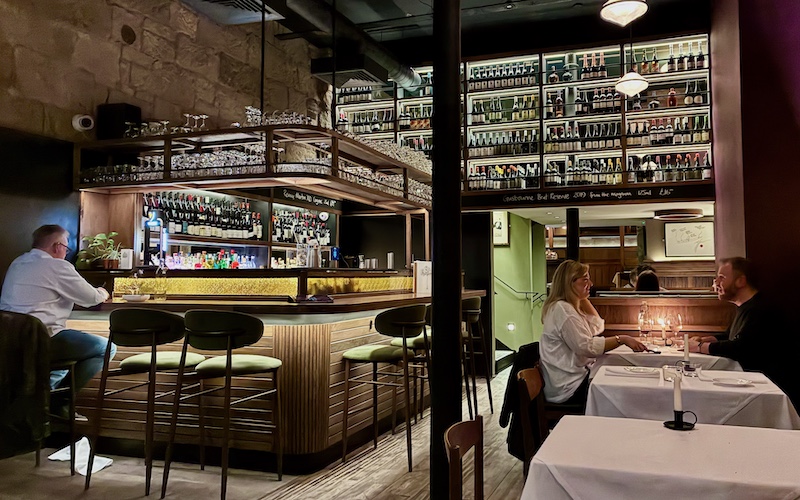
Peter McKenna and Kevin Dow call this a ‘bistro’ to differentiate it from The Gannet, their fine diner here for over 10 years, but that sells it short. Despite a more relaxed menu, this is still one of Scotland’s finest dining experiences. It’s just more accessible now. Whether it’s bubbles and a few oysters at the bar or 3 courses of Peter’s sublime food with Kevin’s brilliant wine pairings, there’s real candlelight, crisp linen and superb service.
Sharing Plates Margo (Merchant City)
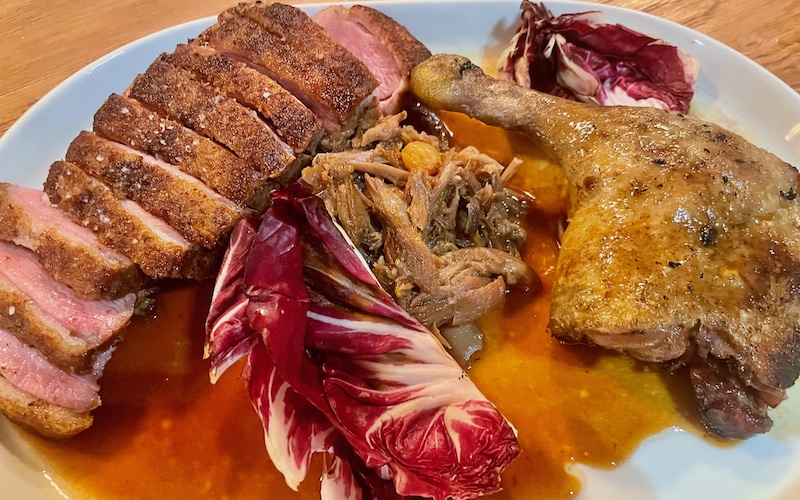
This barn-like restaurant is the spot for big plates of delicious food perfect for sharing. House-baked focaccia is a given (see my recipe below) and the rest of the menu changes seasonally, with dishes like crisp-skinned pink duck breast with fall-apart-tender maryland; pork belly with caramelised fennel; and skate in a citrusy cumquat sauce. Despite always being packed, service is relaxed, efficient and friendly. Great wine list too!
Seafood CrabShakk (Finnieston)
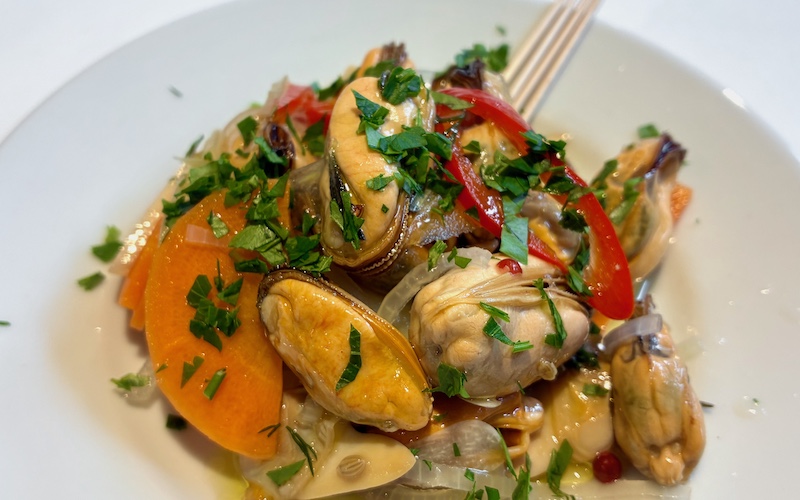
‘The Wee Shakk’ (as locals call it) sums up this casual seafood diner. A tiny space serving big flavours, like delicious mussel and clam escabeche, excellent salt cod brandade with dukkah and carrot (an odd combo that works), and fresh-out-of-the-oven focaccia. Fish is cooked on the grill in front of diners perched at the kitchen counter, waitstaff are friendly, and dishes are ideal for sharing. Good wines by the glass too. What’s not to love?
Curry House Mother India (Finnieston)
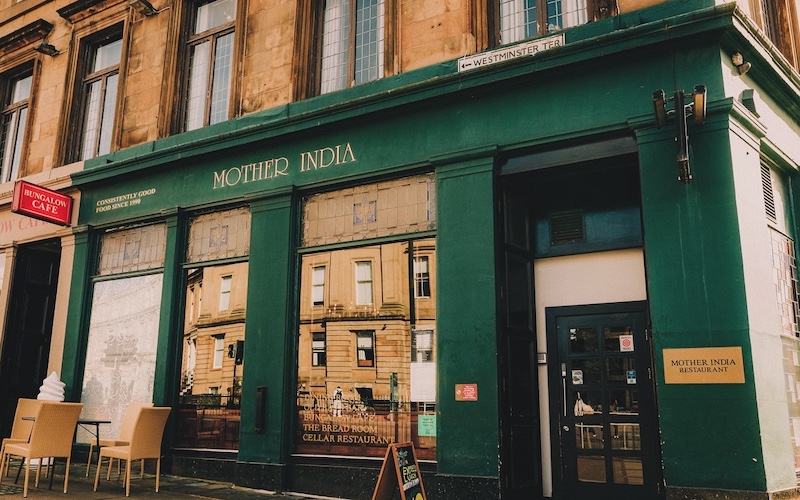
Curry is a national dish in the UK – and Glasgow has been voted ‘Curry Capital of Britain’ four times. Mother India, a cornerstone of the city’s dining scene since 1996, is a much-loved Glasgow institution. While the café serves snack-sized portions of street food, the nearby restaurant offers a fuller menu of classics and Scottish-Indian favourites from fish pakoras and chicken tikka masala to Delhi-style lamb and excellent dhal.
Tasting Menu 111 by Modou (West End)
At this casual 35-seater, Senegalese-born Modou Diagne cooks up 5- or 10-course feasts in a tiny open kitchen. The menu changes seasonally, always focused on Scottish produce and classic technique but roaming the world for flavour inspiration. It’s buzzy without being loud, copper tabletops are set with quality paper napkins, and moody lighting ensures the spotlight is on Modou. One of Glasgow’s best-value dining experiences.
Published 18 May 2026
Glasgow’s West End is the city’s culinary and cultural heart – a leafy, bohemian neighbourhood of Victorian terraces, independent shops and some of the city’s best restaurants and bars.
It’s also home to the Kelvingrove Art Gallery & Museum, one of Britain’s most visited museums with an extraordinary collection from Dalí to the Glasgow Boys; the magnificent Kibble Palace glasshouse in the Botanic Gardens; and the University of Glasgow, whose Gothic towers are said to have inspired Hogwarts.
Great Western Road was named one of the world’s coolest streets by Time Out.
Finnieston began as a village founded in 1768 by Matthew Orr, who named it after his former tutor, the Reverend John Finnie. As Glasgow industrialised, it became a district of docks, warehouses and engineering works. Its landmark Finnieston Crane – 53 metres tall and completed in 1931 – lifted Glasgow-built steam locomotives onto ships bound for every corner of the British Empire.
When the docks closed in 1969, the area fell into decline. Regeneration began with the opening of the Scottish Exhibition and Conference Centre (now the SEC Centre) in 1985, followed decades later by the Hydro arena, and gradually Argyle Street filled with bars and restaurants.
In 2016 The Times named Finnieston the hippest place to live in Britain, and the crane (now A-listed) stands as a reminder of its industrial past. Today it’s often considered part of the bordering West End.

Glasgow claims chicken tikka masala as its invention. The most famous story credits Ali Ahmed Aslam, who founded the Shish Mahal restaurant in 1964. The story goes that, in the 1970s, a customer complained that his chicken tikka was too dry, so Aslam created a creamy, spiced tomato sauce to go with it, and a classic was born.
Chicken tikka masala became so popular that in 2001 Foreign Secretary Robin Cook called it ‘a true British national dish’. Others have claimed it too, and a 2009 bid to win it protected status as a Glasgow dish failed, but the city remains its most widely accepted birthplace.
Despite popular legend, the deep-fried Mars bar did not originate in Glasgow. It’s usually traced to a chip shop in Stonehaven, near Aberdeen, which claimed to have invented it in 1992, though others say they were frying them earlier. Newspaper stories in 1995 made it famous as a symbol of Scotland’s diet.
Though people often say Glaswegians will batter and deep-fry anything (including pizza), a 2004 survey published in medical journal The Lancet found that only around one in five Scottish chip shops sold deep-fried Mars bars.