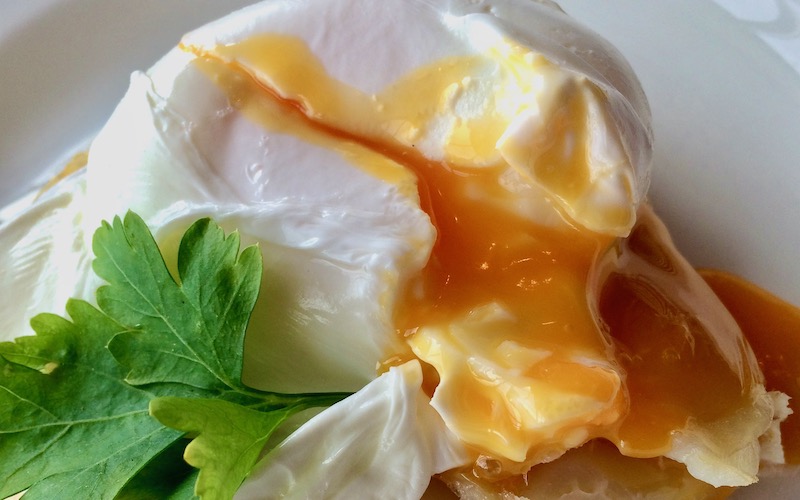
Poached eggs are delicious for breakfast, in soups, and on top of a classic salade Lyonnaise.
Knowing how to poach an egg perfectly is something many home cooks aspire to. And with a few simple tips, it’s really easy to achieve.
A tablespoon or so of white spirit vinegar (or inexpensive white wine vinegar) helps set the white quickly, creating a whirlpool in the saucepan gives a lovely neat shape, and sliding the egg in from a saucer helps it stay together.
Here’s how to poach an egg perfectly (scroll down for a step-by-step video):
Share page on:
Yes — a tablespoon of white spirit vinegar or inexpensive white wine vinegar added to the simmering water helps set the egg white quickly, so it wraps neatly around the yolk rather than spreading through the water.
A whirlpool isn’t strictly necessary, but stirring the water before sliding in the egg creates a gentle centrifugal motion that wraps the white around the yolk, giving you a neater, rounder result. It’s one of the simplest tricks for a perfectly poached egg.

The fresher the better. Fresh egg whites are thicker and cling to the yolk more readily, whereas older eggs have thinner, more watery whites that tend to spread. If your eggs aren’t super fresh, the vinegar and whirlpool technique become even more important.
Yes — poach the eggs until the whites are just set, then transfer them to a bowl of cold water. They’ll keep in the fridge for up to 24 hours. To reheat, slide them into hot (not boiling) water for about 30 seconds.
About 2 minutes in gently simmering water gives a set white with a runny yolk – perfect for eggs Benedict or a salade Lyonnaise. If you prefer a firmer yolk, give it another minute.
Poached eggs are endlessly versatile – serve them on toast for a classic breakfast, on top of a salade Lyonnaise, in a bowl of broth or soup, or as the crowning touch on eggs Benedict.