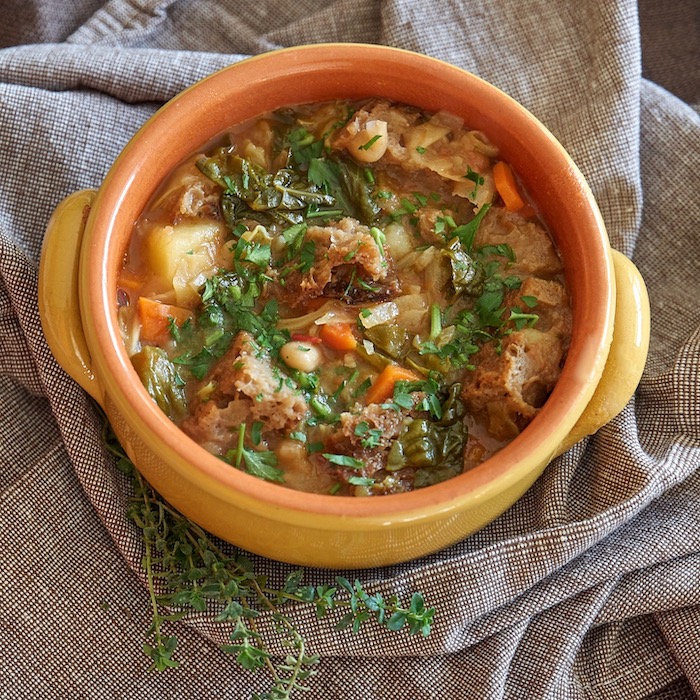
The famous Tuscan soup, La Ribollita, is a classic example of delicious cucina povera (peasant cooking). The name literally means ‘the reboiled’ as it was created to use up leftover beans and vegetables cooked for Friday, the fast day when no meat was eaten. On Saturday, they were turned into a hearty soup with stale bread added to make it more filling. The three essential ingredients for la ribollita are cavolo nero (Tuscan cabbage), beans (usually cannellini though borlotti are sometimes used) and stale bread. Apart from that, recipes vary widely – Savoy cabbage is common and other seasonal vegetables are often included; sometimes it’s finished in the oven, sometimes just in the soup pot, and it’s always topped with a good drizzle of olive oil. Complete your virtual trip to Italy by enjoying a Tuscan varietal, such as sangiovese, with your ribollita; the one from Farnese Fantini works a treat and is great value.
Serves 6 as a starter
Ingredients
⅓ cup extra virgin olive oil, plus extra for drizzling (80ml)
1 red onion, diced
1 stalk celery, diced
1 carrot, diced
Salt flakes and freshly ground black pepper, to taste
800g canned cannellini beans, rinsed (1lb 12oz)
1 bunch cavolo nero
2 sprigs thyme, leaves picked
400g potato, cut into bite-sized chunks (14oz)
400g canned Italian tomatoes, crushed (14oz)
3 cups finely sliced Savoy cabbage leaves
2 litres water (8 cups/4 pints)
6–8 slices stale rustic bread (about 250g/9oz)
¼ cup roughly chopped flat-leaf parsley
Method
Place oil in a large saucepan with onion, celery, carrot and a good pinch of salt.
Cover and cook over a medium heat for about 10 minutes, stirring often, until the onion has softened.
Meanwhile, roughly crush about three-quarters of the beans (I do this just by squeezing them in my hands), set aside with remaining whole beans.
Strip the cavolo nero leaves off the central woody stems, discarding stems or reserving them for this delicious gratin.
Stir thyme, beans, potato and tomato into the saucepan.
Add cavolo nero, cabbage and water, cover and bring to the boil, stirring occasionally to mix in the cabbage and cavolo nero as it wilts.
Reduce heat and simmer, covered, for about an hour, until everything is tender and well combined.
Set aside for a few hours to cool, ideally overnight.
Lightly toast the bread and roughly chop it.
Stir bread and parsley through the soup and return to the boil.
Reduce heat, taste and add salt and pepper, simmer for 5–10 minutes until bread is saturated with soup.
I’ve been on three of Roberta’s food and wine tours and each has been an amazing well-organised experience. From remarkable Venice and the surrounding Veneto region to historic Rome and Pompeii, the spectacular Amalfi Coast, and the charming villages of Switzerland – each tour offers something special. Then there’s the food in fabulous places where you can truly eat like a local – inspired travel through great food, wine and company. I’m already looking forward to the next one!
Mark (Elizabeth Bay, NSW, Aus)
My wife and I joined Roberta's Emilia-Romagna tour. We enjoyed all the temptations offered and learned a lot about that part of Italy, especially its food and wine culture. What was most impressive was Roberta's local knowledge of people and places. The planning and effort she put into making the whole experience seem effortless was remarkable.
Shelley (Auckland, NZ)
Roberta’s passion for Italy shone throughout an unforgettable food and wine tour. She introduced us to family-owned artisanal producers, where we experienced everything from attic-aged balsamic to small-batch wines, Parma ham and Parmigiano-Reggiano. The local guides were equally passionate, and the excellent transport and accommodation made the trip effortless. This tour captured the region’s traditions, flavours and people, and thanks to Roberta’s deep knowledge we left with wonderful memories. A truly authentic culinary adventure.
Diane (Cremorne Point, NSW, Aus)
Relaxed, organised and well-paced – I enjoyed a wonderful small group tour starting in Rome, then travelling down the Amalfi Coast to stay at a family estate where we were treated like old friends. It included some hidden gems too, notably on our way to Matera, a fascinating town built into the side of a mountain. We finished with Naples and Pompeii – with plenty of wine and more new tastes. Roberta is a specialist and very personable as she hosts and explains every detail of the food and wine experience.
Fiona (Blackheath, NSW, Aus)
I thoroughly enjoyed the trip to the Veneto and Venice. Roberta creates wonderful bespoke small group tours with her incredible knowledge of food and wine and adds great accommodation and points of interest. It’s like travelling with your ‘besties’ – including one who’s done all the hard work researching and discovering the best and most interesting places to go, especially to eat and drink. Come with an appetite! Also factored in is time for you to do your own exploring and discover your own gems.
Di (Manly, NSW, Aus)
We had always travelled independently, so a small group tour felt like a risk, but by day 2 we knew it was the right choice. Roberta knows people and places far from the tourist trail: winery lunches, a family lemon grove high on the Amalfi Coast, a third-generation cheesemaker, an amazing cave hotel in Matera. We'll definitely travel with Roberta again.
Subscribe To My Newsletter & Get A Free Online Italian Cooking Class (RRP $39)