14 Classic Roman Dishes You Must Eat In Rome

Roman cuisine – cucina romana – is one of Italy’s most distinctive, and it seems there’s always another classic Roman dish to discover.

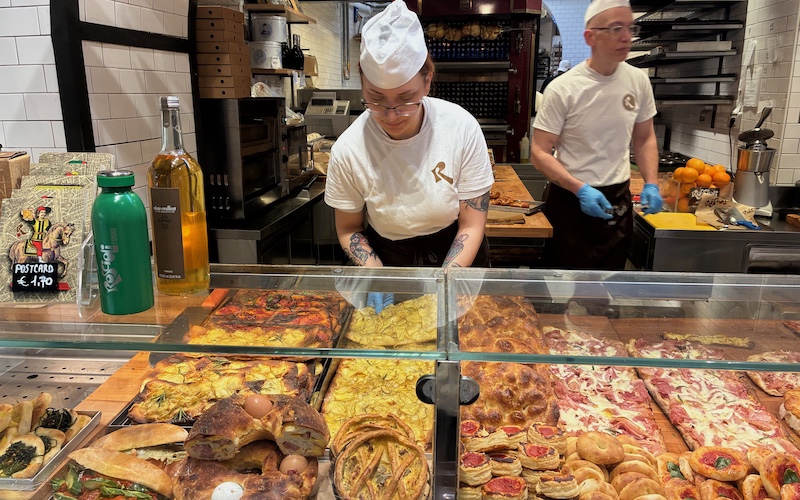
pizza al taglio counter at Antico Forno Roscioli - a Classic Roman Dish

All Italian food is regional, but Roman cooking belongs to the city itself rather than the wider region of Lazio. The surrounding hills provide sheep’s milk for Pecorino Romano and tender lamb, pork gives guanciale (cured cheek), and the countryside supplies leafy greens, zucchini and artichokes – the darling of the Roman kitchen. What makes Roman food truly different is its cucina povera. Elsewhere in Italy, ‘poor cooking’ grew from peasants making the most of what they grew on their own small plots. In Rome, it was created by city labourers, who lived on the leftovers of a wealthy elite of aristocrats and clergy, and whatever they could buy for very little. While the rich ate the prime cuts, workers turned the quinto quarto (‘fifth quarter’, or offal) into some of the city’s best-loved dishes. Rome is also home to Europe’s oldest Jewish community, and Roman Jewish cuisine has given the city some of its most celebrated dishes. My favourite Roman saying captures the rhythm of the working week: ‘Giovedì gnocchi, venerdì pesce, sabato trippa’ – filling gnocchi on Thursday before Friday’s meat-free fish day, then tripe on Saturday, after the butchers had prepared the best cuts for the nobility and clergy’s Sunday feasts. Here’s what to eat in Rome – the classic Roman dishes I love and where to get the best versions of each.

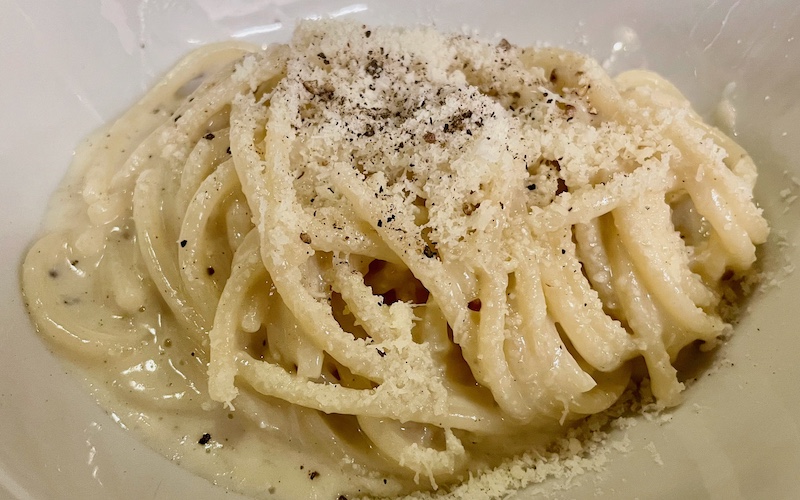
Classic Roman Pasta - Cacio e Pepe (Rimessa Roscioli)

Roman Pasta
The first thing that comes to mind when you talk of traditional Roman dishes is the quartet of classic Roman pastas: cacio e pepe, alla gricia, amatriciana and carbonara. All simple variations on pasta and cheese with guanciale, black pepper and/or tomato. See my article on classic Roman pasta dishes for the lowdown on where to eat these and other less common classics like pasta with oxtail ragù, fettuccine Alfredo and gnocchi alla romana. 

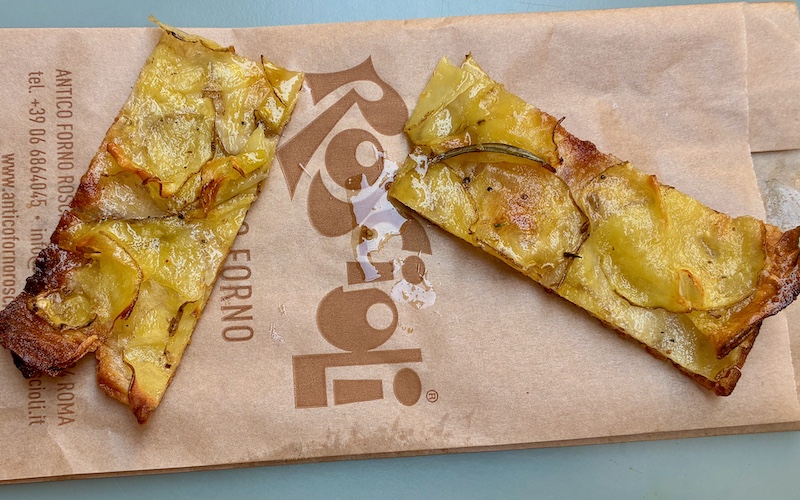
Potato pizza al taglio from Antico Forno Roscioli - one of the Classic Roman Dishes

Pizza al Taglio
While Campania is ‘the home of pizza’, pizza al taglio (or alla pala) is distinctly Roman. Post WWII, Roman bakers started selling leftover bread dough stretched onto a pala (wooden paddle) topped and slid onto the hot oven floor. The result is an irresistibly crunchy, blistered ribbon of pizza that’s sold in slices (taglio) by weight – the perfect snack or meal-on-the-run. My favourite is the potato pizza bianca from Antico Forno Roscioli.

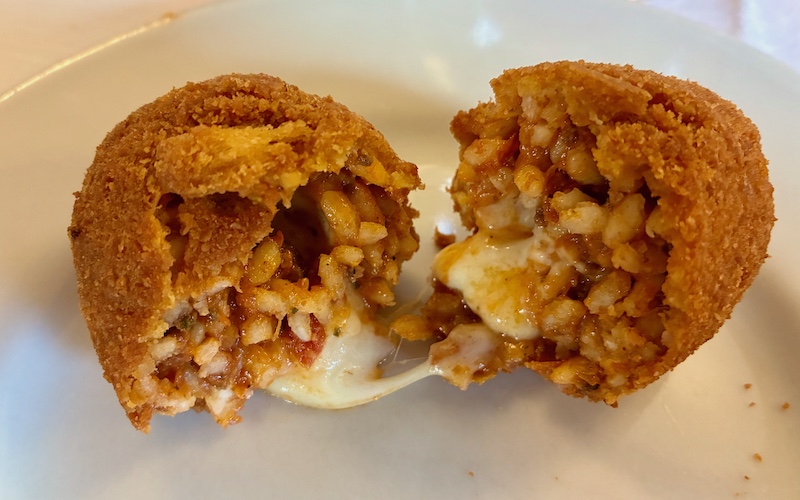
Supplì at Trattoria Sora Lella one of the Classic Roman Dishes

Supplì al Telefono
The mozzarella filling in these deep-fried rice balls gives them their name – when broken in half and pulled apart, the mozzarella stretches to resemble a telephone wire. Supplì are classic cucina povera, rice cooked in a sauce made from meat and poultry offcuts for flavour, shaped around a little mozzarella, rolled in crumbs from stale bread and deep-fried. For Sora Lella’s perfect supplì the rice is cooked in traditional chicken giblet ragù.

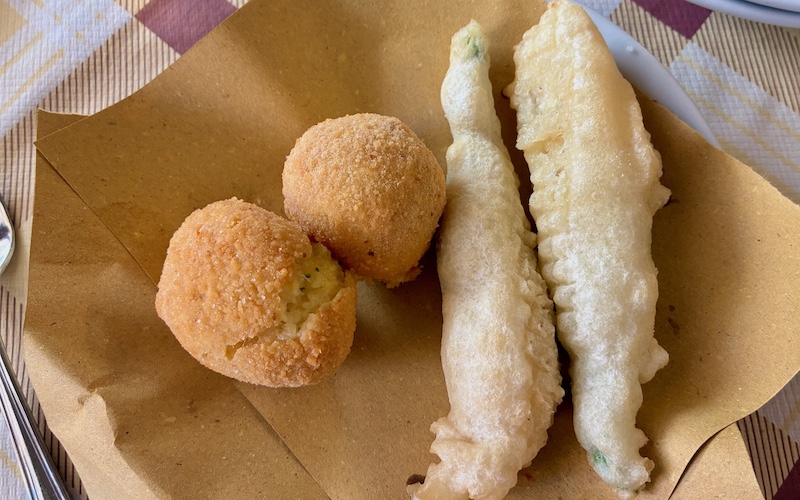
Fritti of zucchini flower with mozzarella and anchovy and salt cod and potato crocchette at da Enzo al 29 - two of the Classic Roman Dishes

Fritti – especially Fiori di Zucca
Romans love fried snacks so much that entire stalls – friggitorie – are dedicated to them. Beyond supplì, mozzarella and anchovy-filled zucchini flowers are classics along with mozzarella in carrozza (fried mozzarella sandwich) and potato crocchette. Fritti are perfect with aperitivo or as antipasti before a meal – and essential before pizza. I can’t go past the fiori di zucca and mozzarella-filled potato and salt cod croquettes at da Enzo al 29.

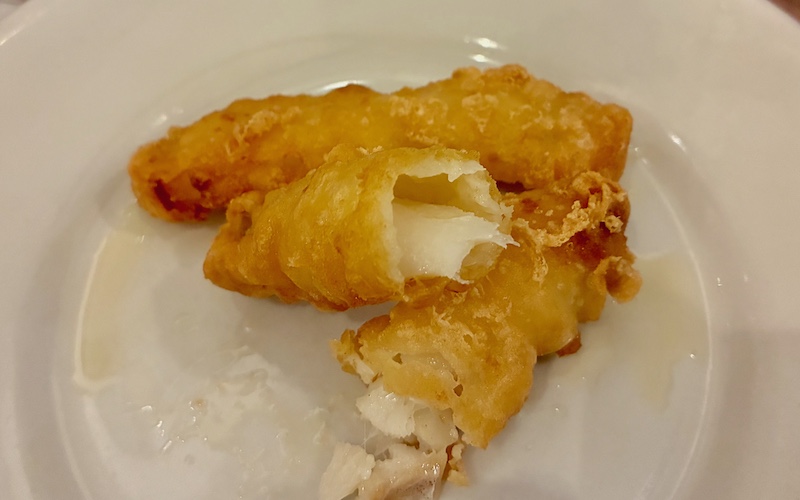
Filetti di Baccalà at Nonna Betta - one of the Classic Roman Dishes

Filetti di Baccalà
Battered deep-fried salt cod is a fritto with a backstory. In the 16th century, Roman Jews were prohibited from buying premium seafood so developed ingenious ways to make salt cod delicious, including frying it. Meanwhile, their Catholic neighbours had extra meat-free days added to their calendar and, without refrigeration for fresh fish, followed suit. Today both communities claim baccalà fritto – the best I’ve had is at Nonna Betta in the Ghetto.

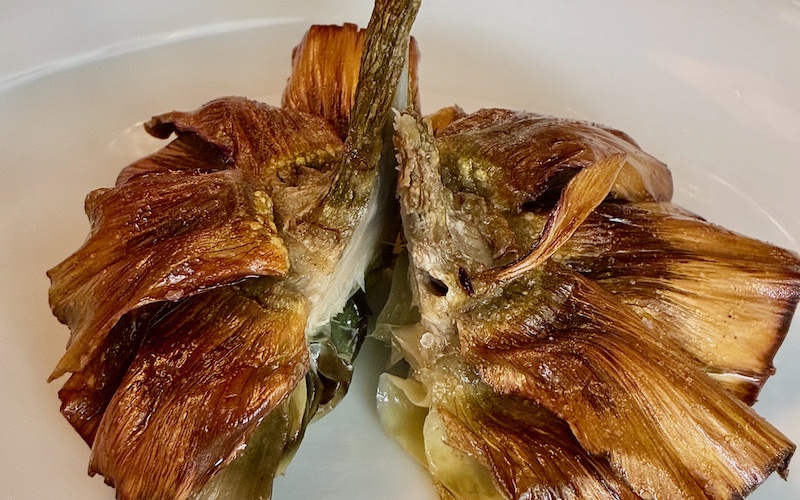
Cut Carciofi alla Giudia at Osteria la Gensola - one of the Classic Roman Dishes

Carciofi alla Giudia
If Rome has a signature ingredient, it’s artichokes! Sicilian Jewish immigrants popularised this overlooked thistle in the late 15th century, and a double-frying technique made almost all of it edible. Rather than discard the fibrous outer leaves, Jewish-style artichokes are poached in olive oil then flash-fried, creating a meltingly tender heart and crunchy petals. Though a Jewish invention, I always head to Osteria la Gensola in Trastevere for mine.

Best Dishes From Around The World 2026 - da Enzo - Carciofi alla Romana

Carciofi alla Romana
It took Catholic Romans another couple of centuries to catch on, but eventually they embraced the thornless, choke-free Romanesco artichokes from the Lazio countryside. Rome’s other classic artichoke dish is made by braising trimmed artichokes in water, oil and wine until they’re tender. Carciofi alla romana are seasoned with garlic and mentuccia (like a cross between mint and oregano). Rome’s best carciofi alla romana are at da Enzo al 29.

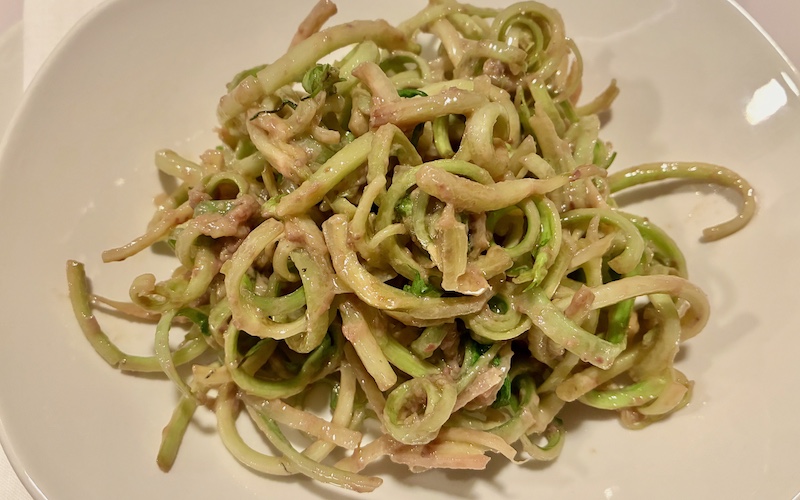
Puntarelle with Anchovy dressing at Cesare al Pellegrino - one of the Classic Roman Dishes

Puntarelle alla Romana
During the cooler months, puntarelle appears all over Rome. In markets Nonnas shred it into tubs of water to curl, while restaurants serve it in anchovy dressing. Chicory has grown in the Roman countryside for millennia – its bitter inner shoots, dressed with garum and vinegar in ancient times, are now transformed by a sauce of salty umami-rich anchovies, raw garlic, red wine vinegar and olive oil. The one at Cesare al Pellegrino is my benchmark.

Cicoria Ripassata alla Romana at Collegio Roma - one of the Classic Roman Dishes

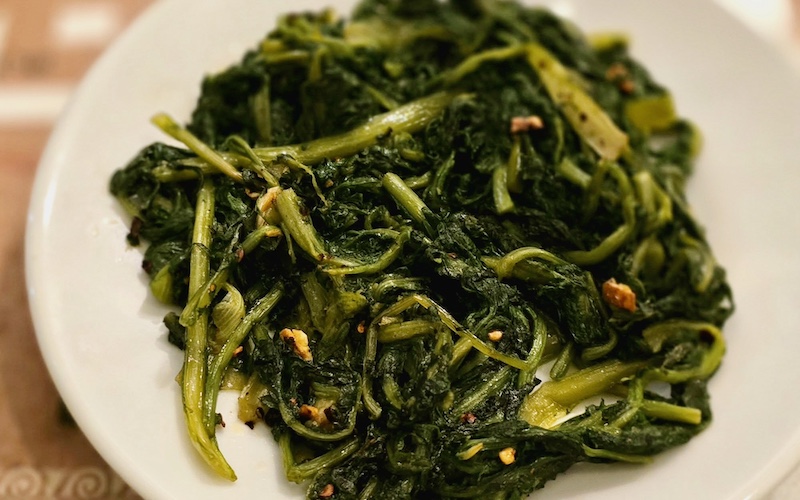
Cicoria Ripassata
Cucina povera thriftiness dictates that when the heart of the chicory is used for puntarelle, the remaining dark green leaves must also be used. They’re too tough for a salad, so they’re boiled to leach out the bitterness and soften them, then ripassata (‘re-passed’ – or cooked a second time) by being pan-fried into delicious tenderness with olive oil, garlic and a touch of chilli. I had my most memorable dish of cicoria ripassata at Collegio Roma.

Abbacchio a Scottadito at Trattoria Sora Lella one of the Classic Roman Dishes

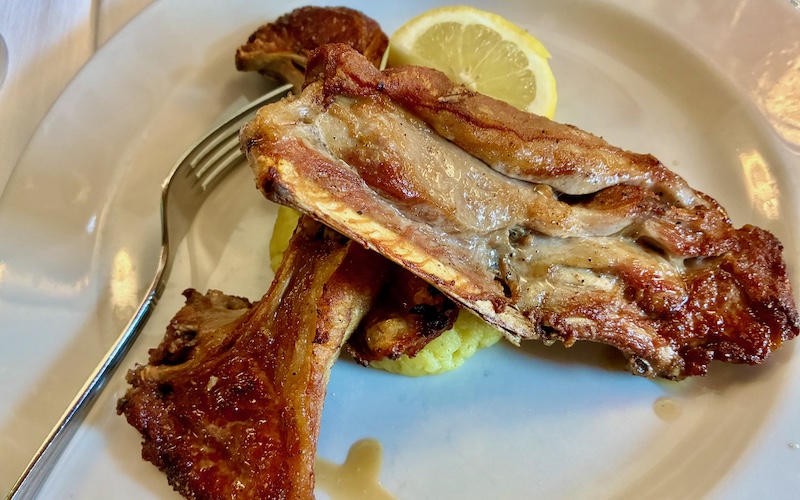
Abbacchio a Scottadito
As puntarelle signals winter, this lamb dish traditionally announced the arrival of spring. Tiny chops from milk-fed lamb – seasoned with garlic, rosemary and perhaps some lemon or sage – are cooked for just a couple of minutes on a hot grill. The name means ‘burned fingers’ as the bones are picked up by hand to be eaten. At Trattoria Sora Lella, on the Isola Tiberina in the Tiber River, scottadito is a much-anticipated spring delicacy.

Polpette alla Romana (in sugo with polenta) at Salumeria Roscioli - one of the Classic Roman Dishes

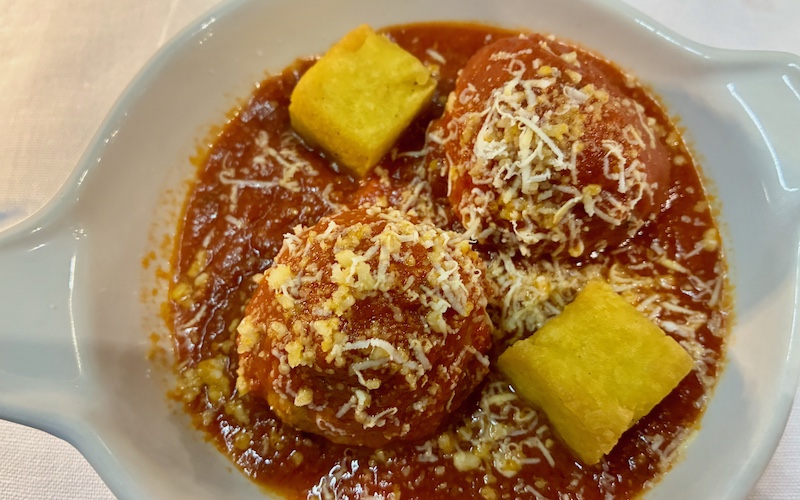
Polpette alla Romana
Polpette – Roman meatballs – are much softer than those found elsewhere. They’re traditionally made from minced beef and pork (often mortadella or prosciutto) mixed with plenty of milk-soaked stale bread. Today, polpette al sugo – cooked in a rich tomato sauce – are common, like those at Salumeria Roscioli. More traditional but less common are crumbed and fried polpette di lesso, made from leftover boiled beef rather than mince.

Fagioli con le Cotiche (beans and pork rind) at Cesare al Pellegrino - one of the Classic Roman Dishes

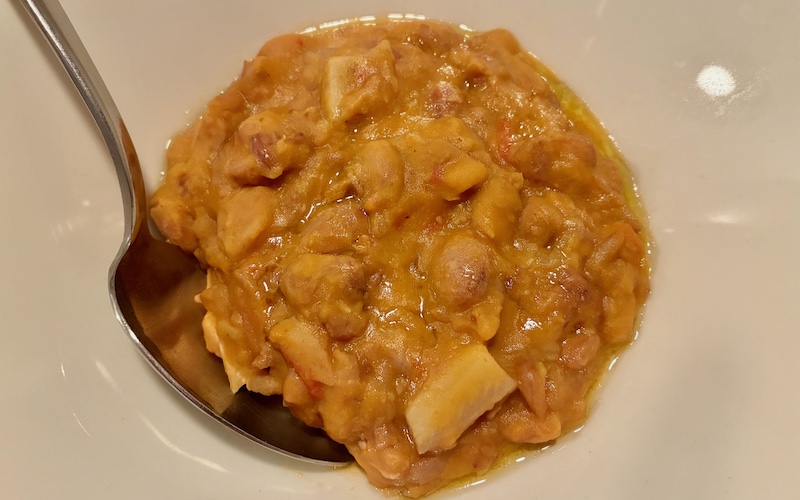
Fagioli con le Cotiche
This is another delicious dish born from necessity. Inexpensive dried cannellini or borlotti beans were slowly simmered with the pork skin discarded by wealthy kitchens to absorb its meaty flavour and rich fat. A soffritto of garlic, onion, celery and lardo forms the base, tomatoes add acid, and the long slow cooking creates a dish far greater than the sum of its humble parts. Cesare al Pellegrino, near the Campo de’ Fiori, serves a superb version.

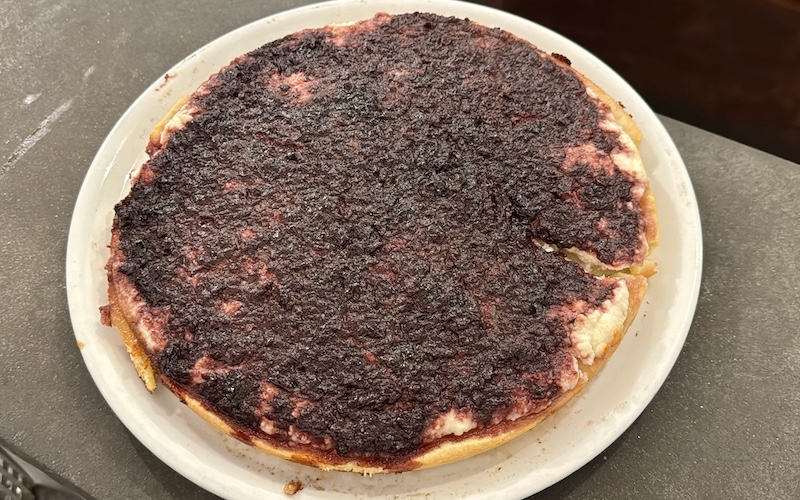
Ricotta e Visciole Tart at Nonna Betta - one of the Classic Roman Dishes

Crostata di Ricotta e Visciole
This delicious creamy ricotta tart, with a base of sour cherry conserve, is another dish from the Roman Jewish kitchen. It’s a traditional dessert for the Shavuot holiday in late spring when dairy is a key part of the menu and the local sour cherries (visciole) have their short season. The two come together beautifully in sweets served in restaurants and bakeries across the city – Nonna Betta sets the standard for me.

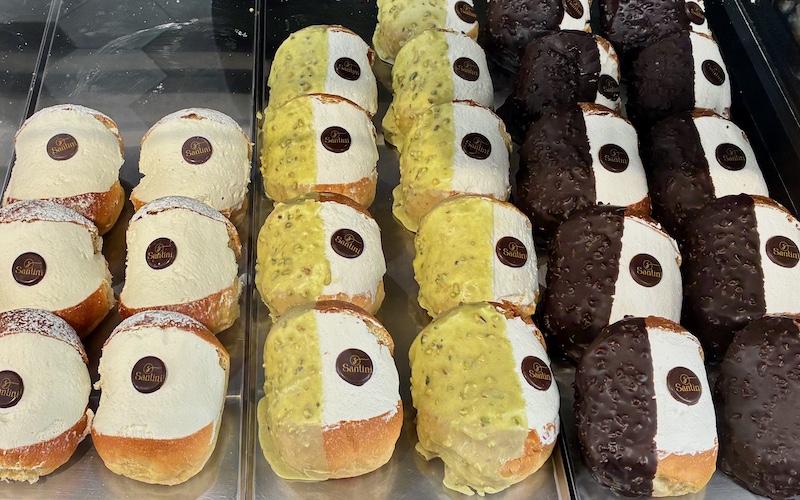
Plain, pistachio and chocolate maritozzi at Pasticceria Santini (Antico Forno Santini) - Classic Roman Dishes

Maritozzi
Rome’s famous cream buns descend from the sweet loaves ancient labourers carried for sustenance. The signature whipped cream only arrived post-WWII, when the dough was also lightened with butter and milk, like brioche. The name maritozzo (‘almost husband’) comes from young men hiding an engagement ring in the buns for their sweethearts. I like the way the pistachio cream and glaze at Pasticceria Santini balance the richness.

Published 03 Nov 2026

Rome & Southern Italy Food Tour

Roman Food FAQ

Rome’s love of fritti owes much to its Jewish community. Kosher law forbids pork fat, so where Catholic Romans cooked with lard, Jewish cooks fried in olive oil – readily available and cheaper than butter, which couldn’t be eaten with meat anyway.

After a papal decree confined Rome’s Jews to the Ghetto in 1555 and restricted them to a handful of trades, many sold food in the streets, and frying needed little space or equipment.

Frying also turned inexpensive, second-rate produce and offcuts into irresistible golden morsels – a tradition every Roman now claims as their own.

What is the quinto quarto?

The quinto quarto (literally ‘fifth quarter’) is the offal and other cuts left over once a carcass has been divided into four prime quarters for those who could afford them.

In Rome, slaughterhouse workers in Testaccio were traditionally paid partly in these leftovers, which became the backbone of Roman working-class cooking.
Classic quinto quarto dishes in Rome include coda alla vaccinara (oxtail braised with tomato and celery), trippa alla Romana (tripe with tomato, mint and Pecorino) and rigatoni con la pajata (milk-fed veal intestines).

Today offal dishes are popular on many Roman trattorie menus.

Why does Roman Jewish cuisine feature so much salt cod (baccalà) and small fish?

From the 16th century, Rome’s Ghetto bordered the city’s fish market, held for centuries among the ruins of the Portico d’Ottavia.

Roman Jews, however, were restricted to small, less valuable fish such as anchovies and sardines, along with scraps and inexpensive salt cod – and they turned these into much-loved dishes, from filetti di baccalà to fried anchovies.
A marble plaque beside the Portico d’Ottavia records a rule that the heads of any fish longer than the slab – often sturgeon from the Tiber – had to be given to the city’s officials, as they were then considered the choicest part, prized for making rich soups. The privilege was abolished in 1798.

When is artichoke season in Rome?

Rome’s prized Romanesco artichokes – protected under the appellation Carciofo Romanesco del Lazio IGP – are in season from late autumn to spring, at their best from January to April. That’s when market stalls are piled high with them.

Locals call them mammole or cimaroli, and the first, largest artichoke from the top of each plant – the cimarolo – is the most prized. Round, thornless and choke-free, they’re tender enough to eat almost whole.

Today, many restaurants across the city serve both carciofi alla romana and carciofi alla giudia year-round, using artichokes from other parts of Italy and abroad when Romanesco are out of season – but they’re at their best in season, made with local Romanesco.


What is Pecorino Romano and where is it made?

Pecora is the Italian word for ‘sheep’ and Pecorino Romano means ‘sheep cheese from Rome’.

Despite its name, however, most Pecorino Romano is now made in Sardinia. Its protected designation (DOP) covers Lazio, Sardinia and the province of Grosseto in Tuscany.

Sardinia’s vast sheep flocks produce the lion’s share of Pecorino Romano, which is very different to its home-grown Pecorino Sardo and much sharper than Tuscany’s Pecorino Toscano.

This salty sheep’s milk cheese is one of Italy’s oldest cheeses – said to have been part of the rations of Roman legionaries – and is essential to Rome’s classic pasta dishes and many others. In Rome you’ll often see it simply called ‘pecorino’.

What Other Travellers Say

Diane (Cremorne Point, NSW, Aus.)
Relaxed, organised and well-paced – a wonderful bespoke small group tour, starting in Rome, then travelling down the Amalfi Coast to stay at a family estate where we were treated like old friends. This tour included some hidden gems too, notably on our way to Matera, a fascinating town built into the side of a mountain. We finished with Naples and Pompeii – with plenty of wine and more new tastes. Roberta is a specialist and very personable as she hosts and explains every detail of the food and wine experience.
Belinda (Balmain, NSW, Aus.)
I’ve been on three of Roberta’s food and wine tours so far and each one has been an amazing well-organised experience. From historic Rome and Pompeii to the spectacular Amalfi Coast, remarkable Venice and the charming villages of Switzerland, each tour offers something special. Then there’s the food in fabulous places where you can truly eat like a local. I highly recommend Roberta’s tours to anyone who wants to discover inspired travel through great food, wine and company. I’m already looking forward to the next one!
Michael (Cremorne, NSW, Aus.)
Starting in Rome then spending time on the Amalfi Coast and further south before heading back to Rome for the last couple of days made for a nice ‘round trip’. Roberta’s choice of eateries was excellent with some very enjoyable meals – and a nice mix of other activities, like vineyard visits, between meals. Everything was very well organised: transport, nice hotels in close proximity to most activities, and a relaxed pace with enough time to follow your nose if that took your fancy. A very worthwhile tour and I’m already looking forward to another!
Di (Manly, NSW, Aus.)
I absolutely recommend Roberta’s Southern Italy tour! We’ve always been independent travellers so were a little apprehensive – by day 2 we knew we’d made a great decision! Roberta knows people and places far from the tourist trail so we visited wineries where we were always invited for lunch as well as wine-tasting, a family lemon grove high on the Amalfi Coast and a 3rd generation cheesemaker. We stayed in a stunning cave hotel in Matera and a gorgeous family hotel in Scala – and book-ended the tour with the vibrancy of Rome. So many highlights, such a brilliant experience. We will do another tour with Roberta.
Neville (St Ives, NSW, Aus.)
We had an absolutely fantastic time in Southern Italy and Rome with Roberta. Incredible food and wine experiences combined with authentic cultural encounters, fascinating history and breathtaking scenery. From the charming streets of Trastevere and the stunning Amalfi Coast to Matera, Pompeii and the hidden gems of Basilicata, every day brought something memorable. Meeting local winemakers, farmers, chefs and families who welcomed us with genuine warmth made this trip exceptional. Roberta's passion for Italy, attention to detail, warmth, knowledge and care for every guest made the experience unforgettable. We will gladly travel with Roberta again.
Subscribe To My Newsletter & Get A Free Online Italian Cooking Class (RRP $39)