What does Scotland’s most sociable city eat for dinner?
On this Glasgow food tour, the answer spans inventive tasting menus in the Merchant City, premium Scottish seafood in the West End, and Indian restaurants that have made Glasgow the curry capital of Britain.
Glasgow doesn’t do things quietly. Once the second city of the British Empire, it has reinvented itself as one of Europe’s most energetic cultural capitals — and its food scene has kept pace every step of the way.
Glasgow is a city you feel as much as see, in the warmth of its welcome, the pride of its people, and the brilliance of its restaurants.

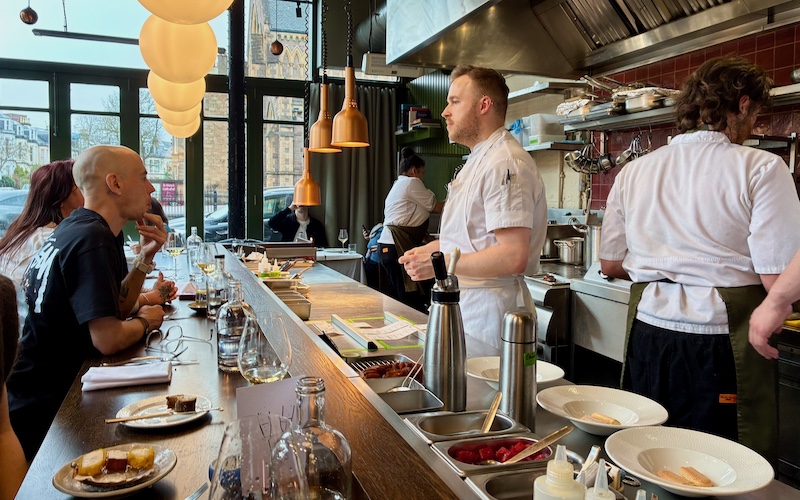
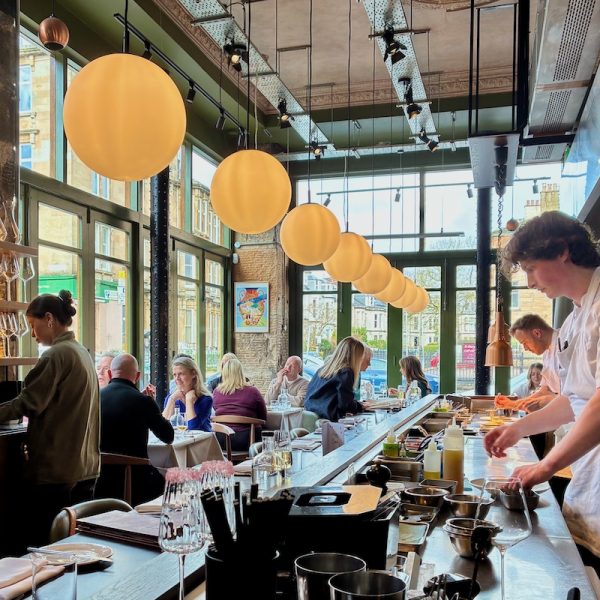
After pre-dinner drinks at elegant Blythswood Square we'll head to Michelin-recommended Brett. This is one of Glasgow's most exciting restaurants: deceptively relaxed in atmosphere and seriously ambitious in execution. We'll have a ringside seat at the kitchen counter, watching chef Colin Anderson and his team transform Scotland's finest seasonal produce into inspired dishes served with memorable wine pairings.
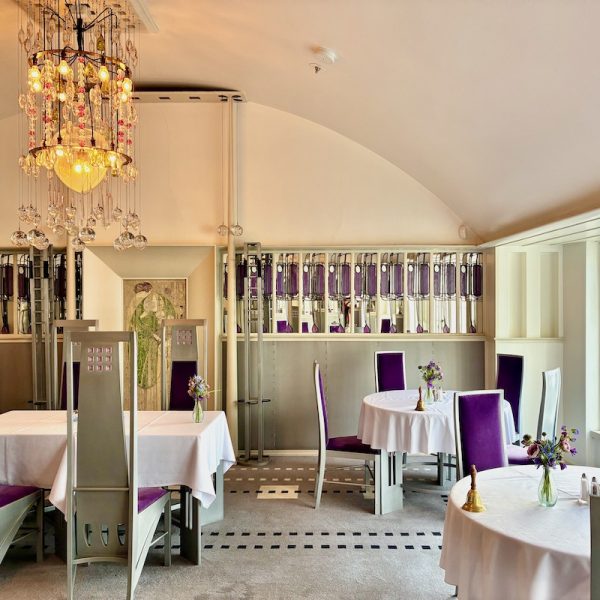
On a private tour of the Mackintosh Tearooms — where Victorian entrepreneur Miss Cranston collaborated with young architect Charles Rennie Mackintosh — we'll discover interiors that inspired Art Nouveau across Europe. Glasgow's West End is home to some of its best food, including our seafood lunch at Crabshakk and casual bistro dinner at Kelvingrove Café, with time in between to explore the historic Botanic Gardens.
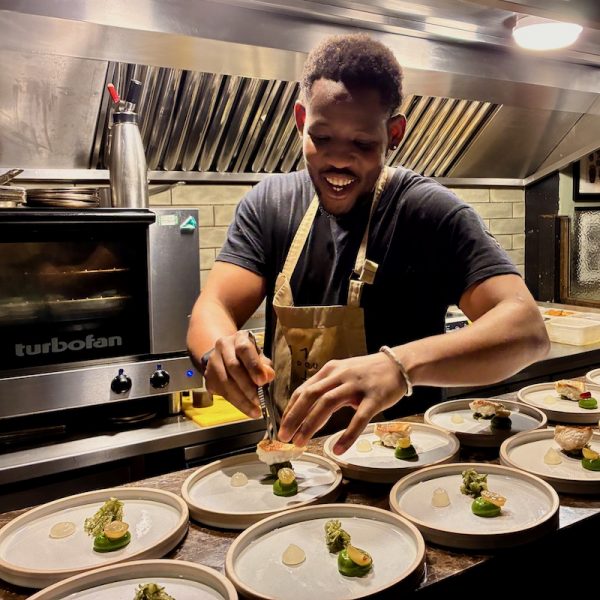
A private morning tour with passionate Glaswegian storyteller Bruce Downie will bring the city's architecture, culture and history to life. While a visit to Britain's largest covered market – the historic Barras Market – is an irresistible slice of authentic Glasgow. At Six by Nico, the six-course dinner menu – built around a destination or theme – changes entirely every six weeks and is guaranteed to be inventive, theatrical and delicious.

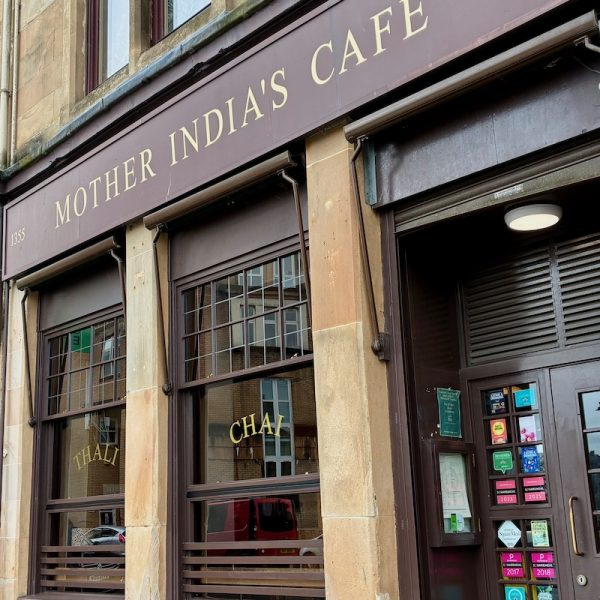
Glasgow has been voted curry capital of Britain three times, so an Indian meal is essential on any Glasgow food tour. We'll have time to browse acclaimed Kelvingrove Art Gallery & Museum – with its eclectic collection from Dalí to the Glasgow Boys – before lunch at nearby Mother India's Café, a Glasgow institution. The Indian street food-inspired menu is the perfect farewell to Scotland's most generous city.

Immerse yourself in Glasgow’s vibrant food culture — dining in some of Scotland’s most exciting restaurants, exploring a city that wears its history on its sleeve, and discovering why this warm, proudly working-class city has become one of Britain’s most dynamic culinary destinations. All in the company of like-minded food and wine lovers.
The above itinerary covers the tour highlights, the order of activities and locations may vary.
Airport transfers not included. Car transfers can be arranged on request.
Share page on:
Glasgow’s food scene has undergone a remarkable transformation in the past two decades — from its working-class roots to one of Britain’s most dynamic and talked-about culinary cities. Those roots are what gives Glasgow its egalitarian spirit, its lack of pretension, and its neighbourhood restaurants where the cooking is every bit as serious as the welcome is relaxed. From brilliant seafood shacks and legendary curry houses to inventive sharing-plate restaurants and Michelin-recognised dining, Glasgow is a city where extraordinary food comes without ceremony.
Glasgow’s West End is the city’s most rewarding food neighbourhood — centred on Great Western Road and Byres Road, it’s home to Michelin-recommended Brett, fresh seafood at Crabshakk and some of the city’s best Indian restaurants. Nearby Argyle Street in Finnieston has also emerged as one of the city’s most exciting dining strips over the past decade. Closer to the city centre, The Merchant City, Glasgow’s beautifully restored 18th-century warehouse district, has become a hub for innovative restaurants and lively bars including Margo and Six by Nico.
Glasgow has been voted curry capital of Britain three times — a title it wears with considerable pride. Post-WWII immigrants from India, Pakistan and Bangladesh built a restaurant culture so vibrant and deeply woven into the city’s fabric that Indian food is now considered as Glaswegian as square sausage. It was in Glasgow, at the Shish Mahal in the 1960s, that chicken tikka masala is widely said to have been invented. Mother India’s Café on Argyle Street — serving Indian street food-inspired sharing plates since 2004 — is among the city’s most beloved institutions.
The Barras is Glasgow at its most authentic — a covered street market in the city’s East End that has been trading since 1921. Born out of post-WWI hardship and the extraordinary enterprise of one woman – Maggie McIver who started minding a street trader’s handcart at 13 years old – the Barras grew into Britain’s largest market. Above it, Maggie built the Barrowland Ballroom — one of the world’s great live music venues, still attracting sell-out crowds today. Open on weekends, the Barras Market remains an irresistible slice of real Glasgow life.
Glasgow’s West End is the city’s cultural and culinary heart — a leafy, bohemian neighbourhood of Victorian terraces, independent shops, and some of the city’s best restaurants and bars. It’s home to the Kelvingrove Art Gallery & Museum, one of Britain’s most visited museums with an extraordinary collection from Dalí to the Glasgow Boys; the magnificent Kibble Palace glasshouse in the Botanic Gardens; and the University of Glasgow, whose Gothic towers are said to have inspired Hogwarts. Great Western Road was named one of the world’s coolest streets by Time Out.
Opened in 1903 and now owned by the National Trust for Scotland, the Mackintosh Tearooms on Sauchiehall Street are the only surviving tearooms designed entirely by Charles Rennie Mackintosh — the only commission where he had complete creative control over both the exterior and interior (right down to designing staff uniforms). Victorian entrepreneur Miss Catherine Cranston gave Mackintosh and his artist wife, Margaret Macdonald, free rein to create designs that would go on to influence Art Nouveau across Europe. Fully restored to the original designs between 2014 and 2018, this A-listed building is one of Glasgow’s most important architectural treasures.