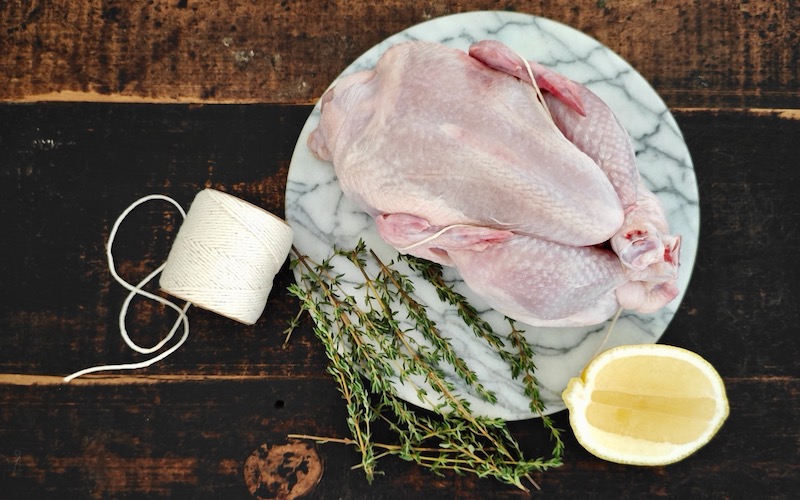
It’s easy to learn how to truss a chicken, or any poultry. Trussing just means tying the bird securely with twine so its wings and legs stay close to the body.
This makes the bird more compact so it cooks evenly and the wings and drumstick tips don’t burn.
Trussing also gives the cooked chicken a neater, more attractive appearance which is important for dishes such as chicken in half mourning.
Use a strong, unbleached cotton twine, called kitchen twine, butcher’s twine or cooking twine; it’s important to use pure cotton twine as synthetic twines may melt or burn.
You’ll need:
Here’s how to truss a chicken (or how to truss any poultry). Scroll down for a step-by-step video:
Now you know how to truss a chicken you can make roast chicken with preserved lemon; chicken in half mourning; poussin with preserved lemon salata; spatchcock with lemon, garlic & olives.
Share page on:
Trussing poultry isn’t essential, but it makes a real difference. A trussed chicken cooks more evenly because the legs and wings stay close to the body, preventing the thinner parts from overcooking before the breast is done. It also gives the finished bird a neater, more attractive appearance.

Use strong, unbleached pure cotton twine — sold as kitchen twine, butcher’s twine or cooking twine. It’s important to use pure cotton as synthetic twines can melt or burn in the oven.
For a full-sized chicken, cut about 130cm (51 inches) of kitchen twine. For smaller birds like poussin (spatchcock) or quail, you’ll need less.
Yes — the same trussing technique works for any poultry including duck, guinea fowl, spatchcock (poussin) and quail – even turkeys. Simply adjust the length of twine to suit the size of the bird.
Trussed poultry takes slightly longer to cook than an untrussed one because the legs and thighs are tucked close to the body rather than splayed out. To check, pierce the thickest part of the thigh with a skewer, the juices should run clear.